
B5 · Materials & Performance
WPC vs MDF vs Solid Wood vs Melamine Interior Doors: Which One Survives Your Climate?
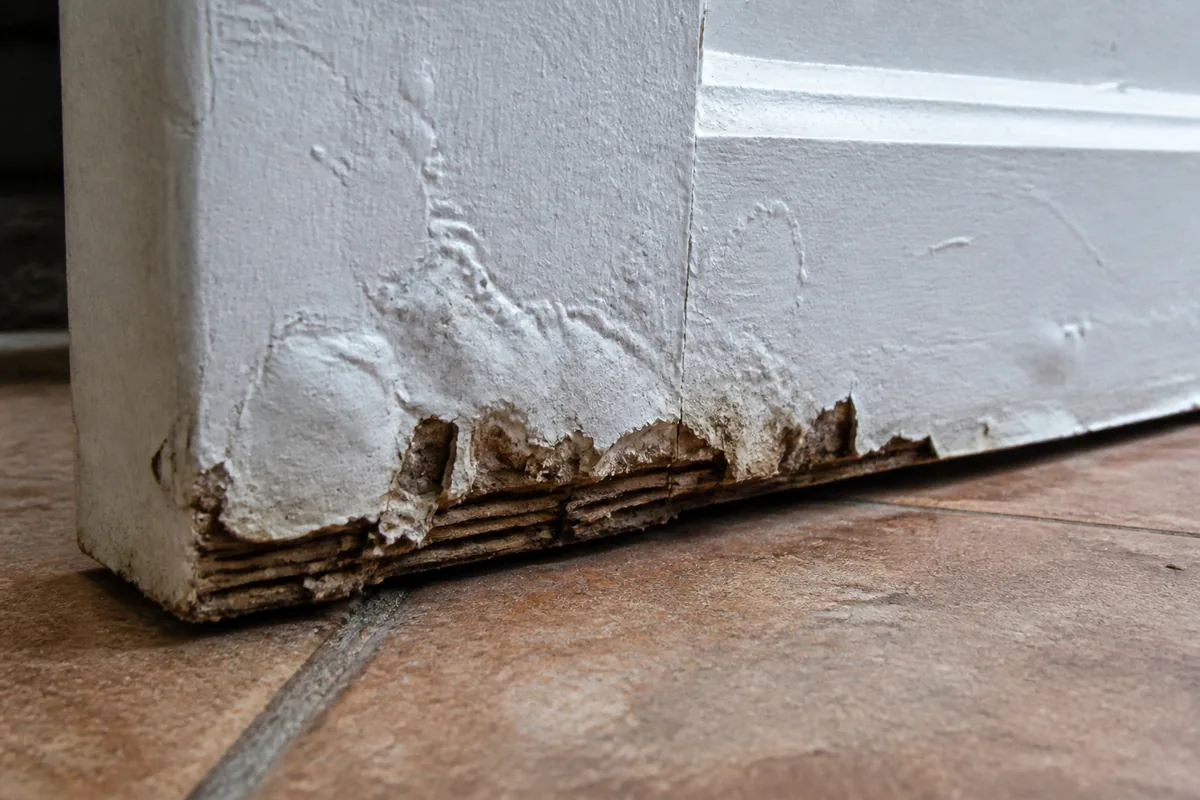
In humid tropical and coastal markets, MDF doors swell within two rainy seasons while WPC does not. A material-by-material comparison with humidity and cost data.
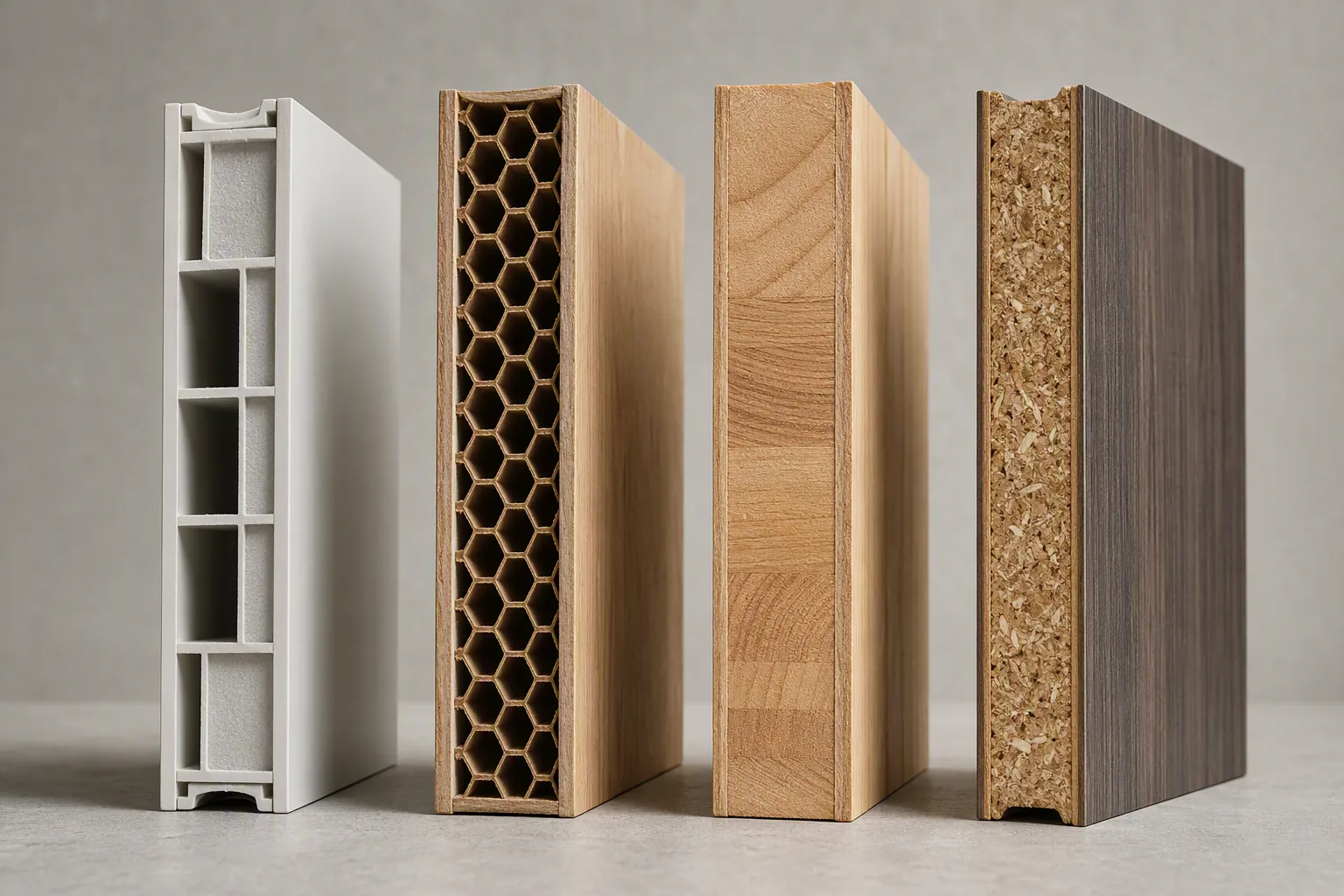
Direct Answer
For humid tropical and coastal projects, WPC doors are often the safest specification because their composite core absorbs very little water. MDF can deliver a strong painted finish at a lower relative cost in controlled interiors, while solid wood offers repairability and acoustic value at a higher cost. Melamine-faced doors sit between these options for scratch-resistant apartment applications.
What is a WPC door and how is it different from MDF?
WPC combines polymer, wood flour or mineral fillers and additives in a moisture-resistant composite construction. Primed MDF is a dense fibre panel designed for a smooth painted surface, but exposed edges and prolonged moisture require careful sealing. Confirm the actual core and edge treatment in the approved specification.
Interior door material comparison
| Criterion | WPC | MDF (primed) | Solid wood / veneer | Melamine faced |
|---|---|---|---|---|
| Moisture resistance | Excellent | Poor–fair | Fair | Fair–good |
| Relative FOB cost index | 100 | 70–80 | 200–300 | 85–95 |
| Surface finish quality | Good | Excellent for paint | Excellent | Good and scratch-resistant |
| Typical acoustic performance | 26–30 dB | 24–28 dB | 32–38 dB | 26–30 dB |
| Termite resistance | High | Low | Material dependent | Material dependent |
| Repairability on site | Limited | Good | Excellent | Limited |
| Best fit | Bathrooms and humid spaces | Dry painted interiors | Hotels, villas and premium rooms | Apartments and volume projects |
Which door material should I use in a tropical climate?
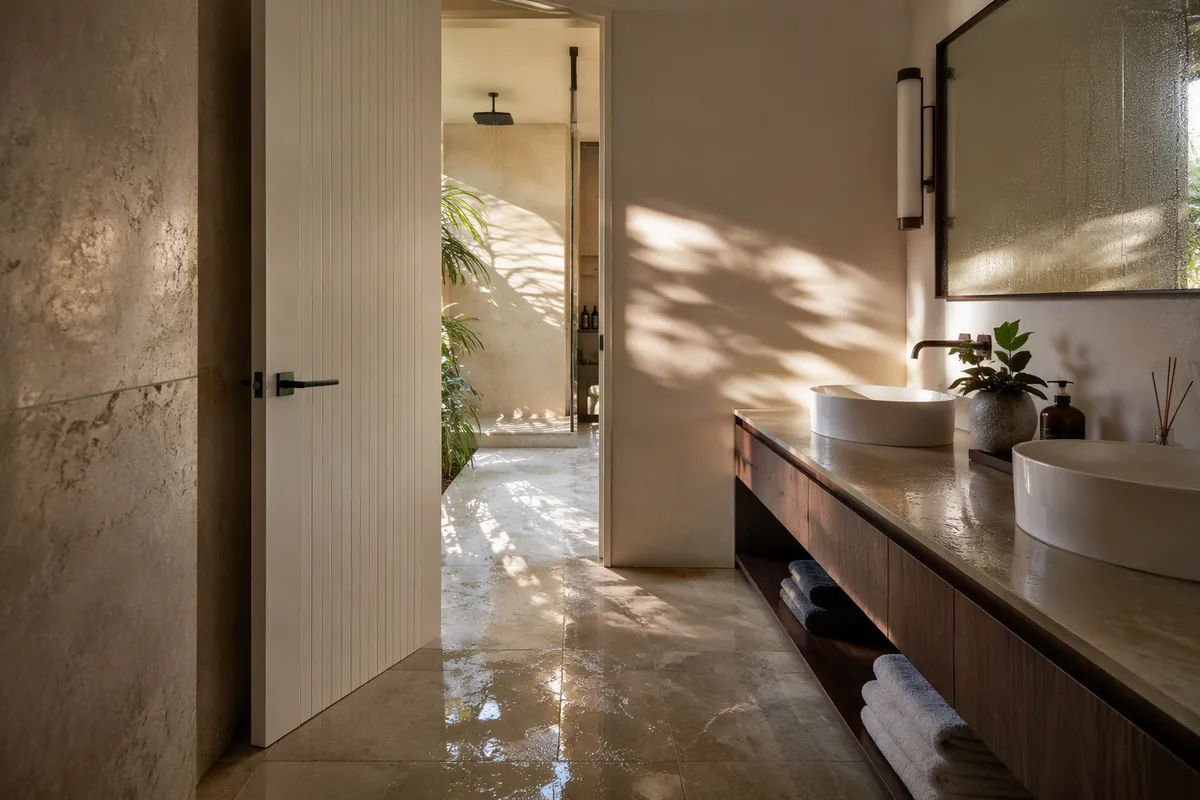
Use WPC as the default starting point for bathrooms, wet corridors and coastal rooms. MDF can work in dry, conditioned bedrooms and living areas when all edges are sealed. Solid wood or engineered wood is appropriate when acoustics, repairability and a natural finish matter. Melamine is practical for repeat apartment interiors where scratch resistance and consistent colour are priorities.
Do WPC doors warp in direct sunlight?
WPC is moisture resistant, not immune to heat movement. Dark finishes absorb more solar energy, so exposed west-facing corridors should use lighter colours, allow the specified expansion clearance and avoid unventilated installation conditions.
How long does each material last in a rental apartment?
A useful planning model is to compare the expected maintenance cycle rather than promise a universal lifespan: WPC may reduce wet-area replacement risk, MDF may perform well in controlled dry rooms, melamine can reduce cosmetic replacement from scuffs, and solid wood can often be repaired instead of replaced. Site use, cleaning and installation quality remain decisive.
Which material is cheapest per door delivered?
The lowest factory price is not always the lowest landed cost. Compare packed CBM, weight, frame inclusion, hardware cartons, damage protection and replacement risk alongside the door price. A slightly higher-priced WPC door can be cheaper delivered when it avoids wet-area failures or repeat replacement freight.
FAQ
Questions buyers usually ask
Is a WPC door waterproof?
The composite core is effectively non-absorbent, but the frame, edge details, seals and hardware still need a moisture-appropriate specification.
Can WPC doors be painted?
They can be painted with a compatible adhesion primer, although a factory finish is usually more consistent and durable.
Are MDF doors suitable for bathrooms?
Only when a moisture-resistant core, sealed edges and suitable frame are specified; WPC is the safer starting point for wet areas.
Which door material is best for soundproofing?
Solid wood or an acoustic composite construction usually offers more mass than a hollow-core door, but the complete leaf, frame, seals and installation determine performance.
Do melamine doors fade?
Indoor melamine surfaces are generally stable under normal conditions, but direct sunlight and heat can affect colour over time.
Buyer questions
Confirm the applicable opening schedule, size reference, leaf and frame construction, finish, handing, hardware preparation and destination requirements before using WPC vs MDF vs Solid Wood vs Melamine Interior Doors: Which One Survives Your Climate? as a buying reference.
Include opening IDs, quantities, dimensions, wall thickness or frame depth, room exposure, finish reference, hardware schedule, performance notes, delivery destination and any sample-approval requirement.
Approve one complete representative opening—including the leaf, frame, finish, hardware preparation and packing reference—then release the final schedule only after every revision is recorded.