
B12 · Materials & Performance
How to Choose Bathroom and Utility Room Doors for Humid Projects
A room-by-room guide to WPC, painted composite and veneer door considerations.
Quick answer
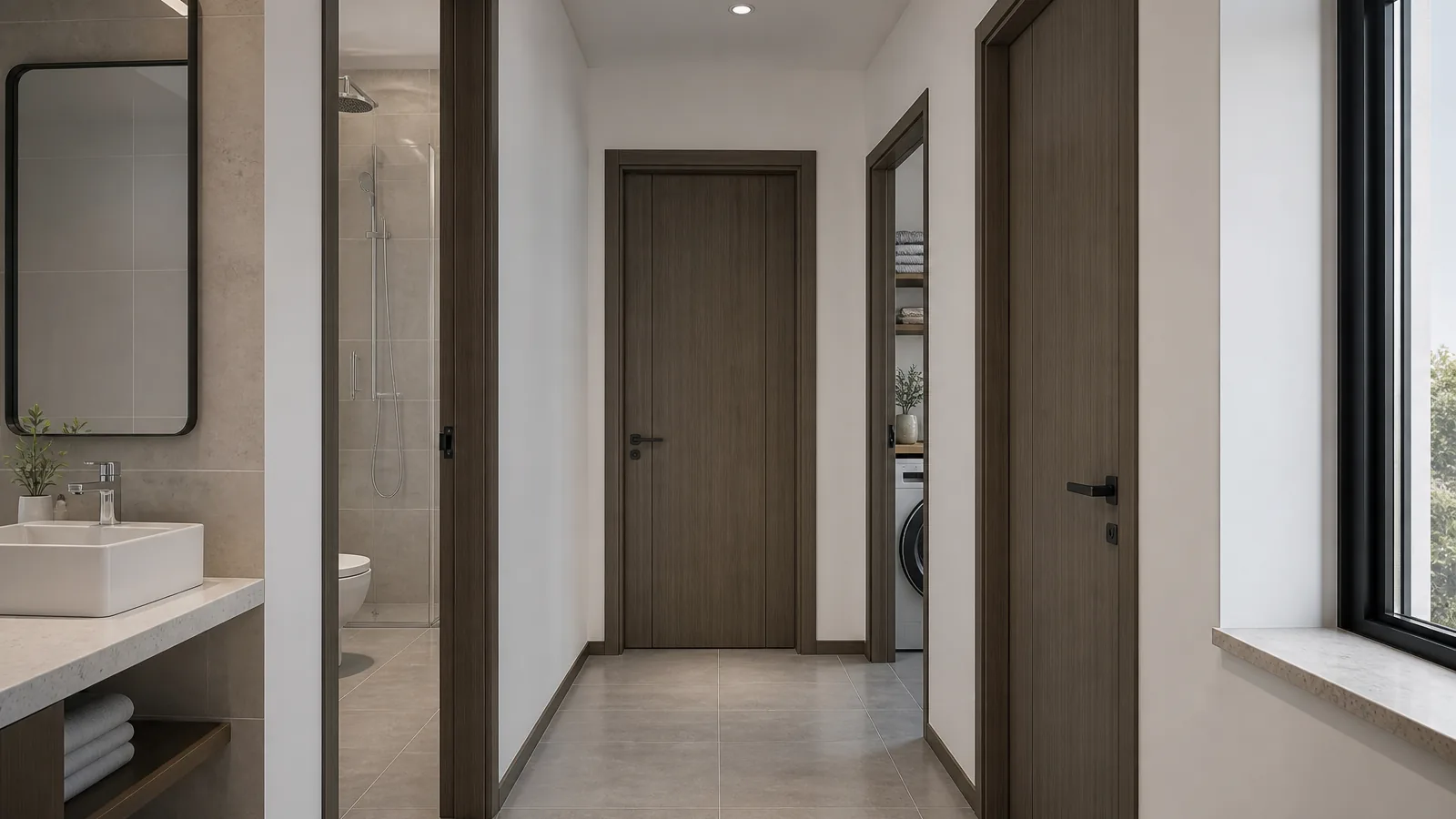
For bathroom and utility-room doors, compare the room exposure, ventilation, splash risk, frame material, edge treatment, threshold and maintenance plan—not only the surface finish. WPC-style doors are often considered for recurring humidity, while painted composite or veneer doors may suit drier, well-ventilated rooms when the complete door set is specified correctly.
Classify the room before choosing the material
A bathroom vanity area, a shower-adjacent opening and a laundry-room corridor do not have the same exposure. Start with the room and installation condition, then compare the door leaf, frame, edge and hardware as one assembly.
| Room condition | Main risk to review | Specification focus |
|---|---|---|
| Dry bathroom corridor | Periodic humidity and cleaning | Finish, edge sealing, ventilation and frame depth |
| Laundry or utility room | Humidity, detergents and frequent cleaning | Surface durability, threshold, edge and hardware finish |
| Near shower or wet zone | Splash and standing water risk | Door-set exposure, seals, frame, threshold and installation detail |
| Hospital or school wash area | Frequent use and cleaning cycles | Cleanability, impact resistance, hardware and maintenance access |
Compare WPC, painted composite and veneer carefully
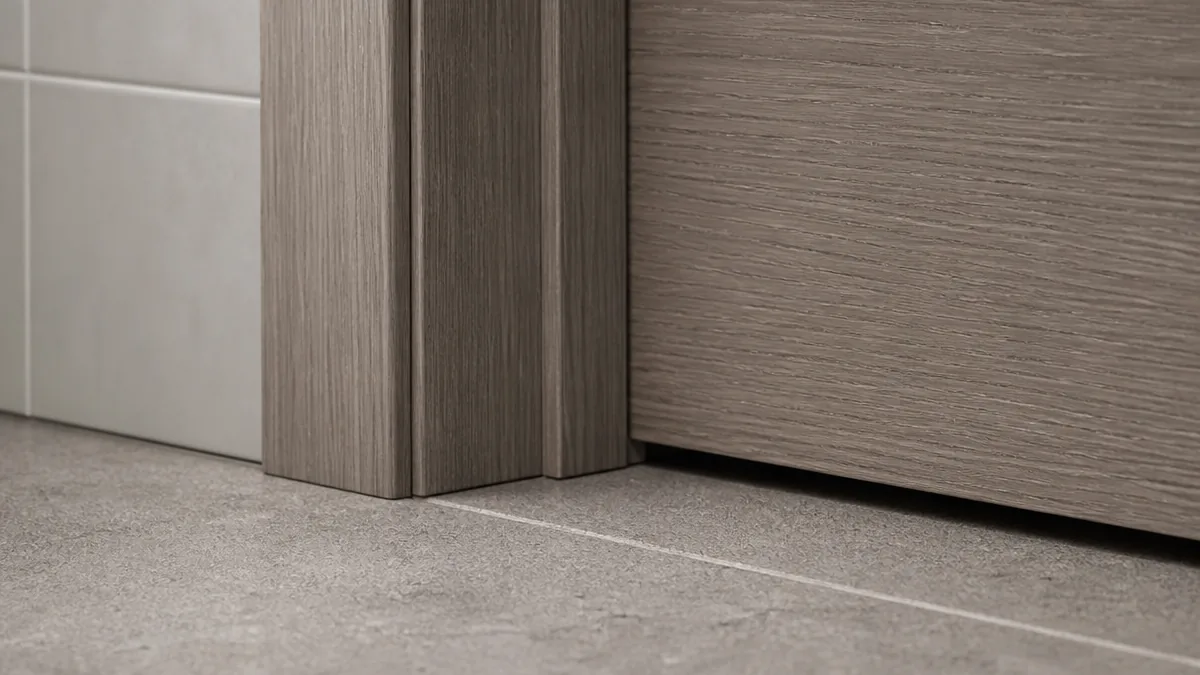
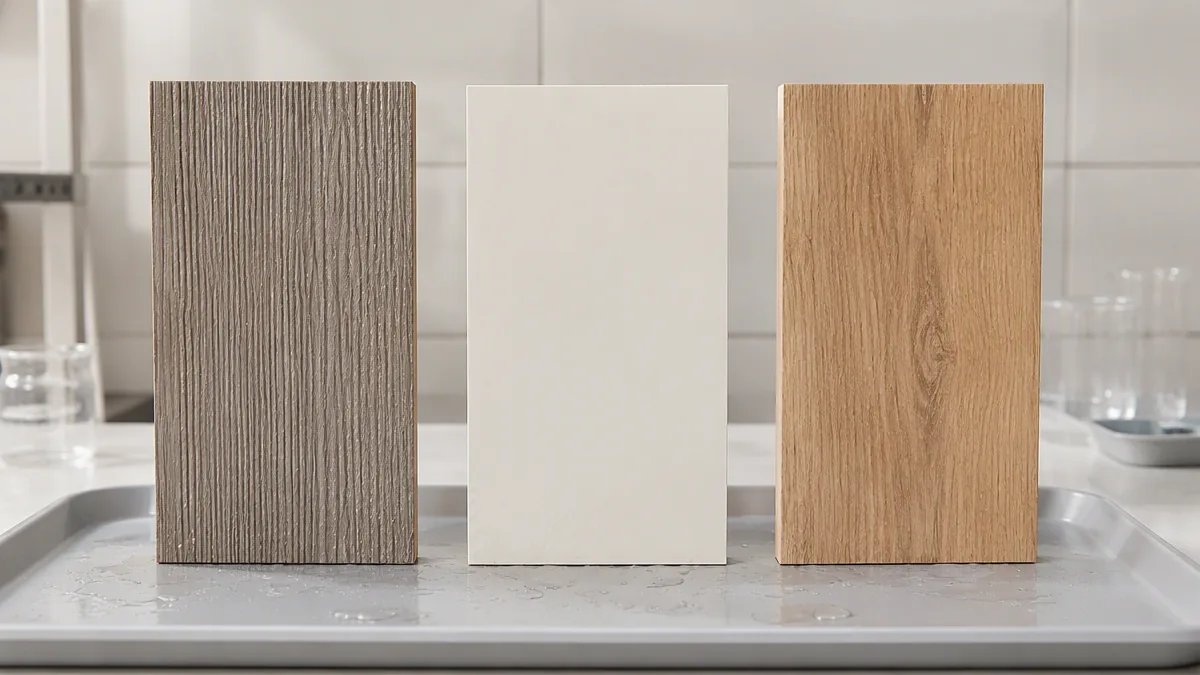
WPC, painted composite and veneer are not interchangeable specifications. Ask how the material behaves at the edge, how the frame is constructed, how the finish is repaired and what cleaning conditions the project expects. A moisture-resistant surface does not remove the need for correct installation and drainage.
- WPC-style construction: commonly reviewed for recurring humidity and easy-clean project areas.
- Painted composite: useful when a consistent painted appearance and controlled room exposure are required.
- Veneer or wood finish: attractive for drier interior rooms, with edge and exposure requirements confirmed in the schedule.
Specify the frame, hardware and cleaning routine
For humid projects, the frame and hardware can become the weak point even when the door face looks suitable. Confirm frame depth, edge treatment, threshold, hinge and handle finish, ventilation, cleaning chemicals and the expected replacement or maintenance routine.
Send the room schedule and exposure notes with the quantity and destination port so the supplier can recommend the right product family instead of quoting a generic interior door.
Buyer questions
Do not assume that every WPC door set is waterproof. Confirm the specific door, frame, edge, seal and installation assembly for the expected humidity and water exposure.
Check the frame material, threshold, edge treatment, hardware corrosion requirements, ventilation, wet-zone distance and cleaning routine.
They can be suitable for some low-splash or well-ventilated applications when the finish, edge sealing, frame and installation conditions are appropriate. The room exposure should be reviewed first.
Send the room type, humidity or splash exposure, ventilation, wall thickness, door size, finish direction, quantity and project location.
Tell us the room exposure, quantity and finish direction for a bathroom or utility-room door review.
Request a Project QuoteRelated humid-area comparison
For buyers comparing WPC with PVC laminated wooden doors in bathrooms and utility rooms, see WPC Doors vs PVC Laminated Wooden Doors for Humid Areas and review product options in WPC Doors.