
B47 · Material Selection
Complete Guide to Choosing Between Wooden, WPC and Composite Doors by Project Area
Choose a project door route by room exposure, design intent, frame scope and hardware preparation - not from a material name alone.
Direct answer
Match the door route to the project area first. WPC can be reviewed for bathrooms, utility rooms and other moisture-sensitive interiors; wooden and composite systems can be reviewed for apartments, villas, hotels and repeated interior openings. Confirm the final construction, frame, finish and hardware for every Door ID.
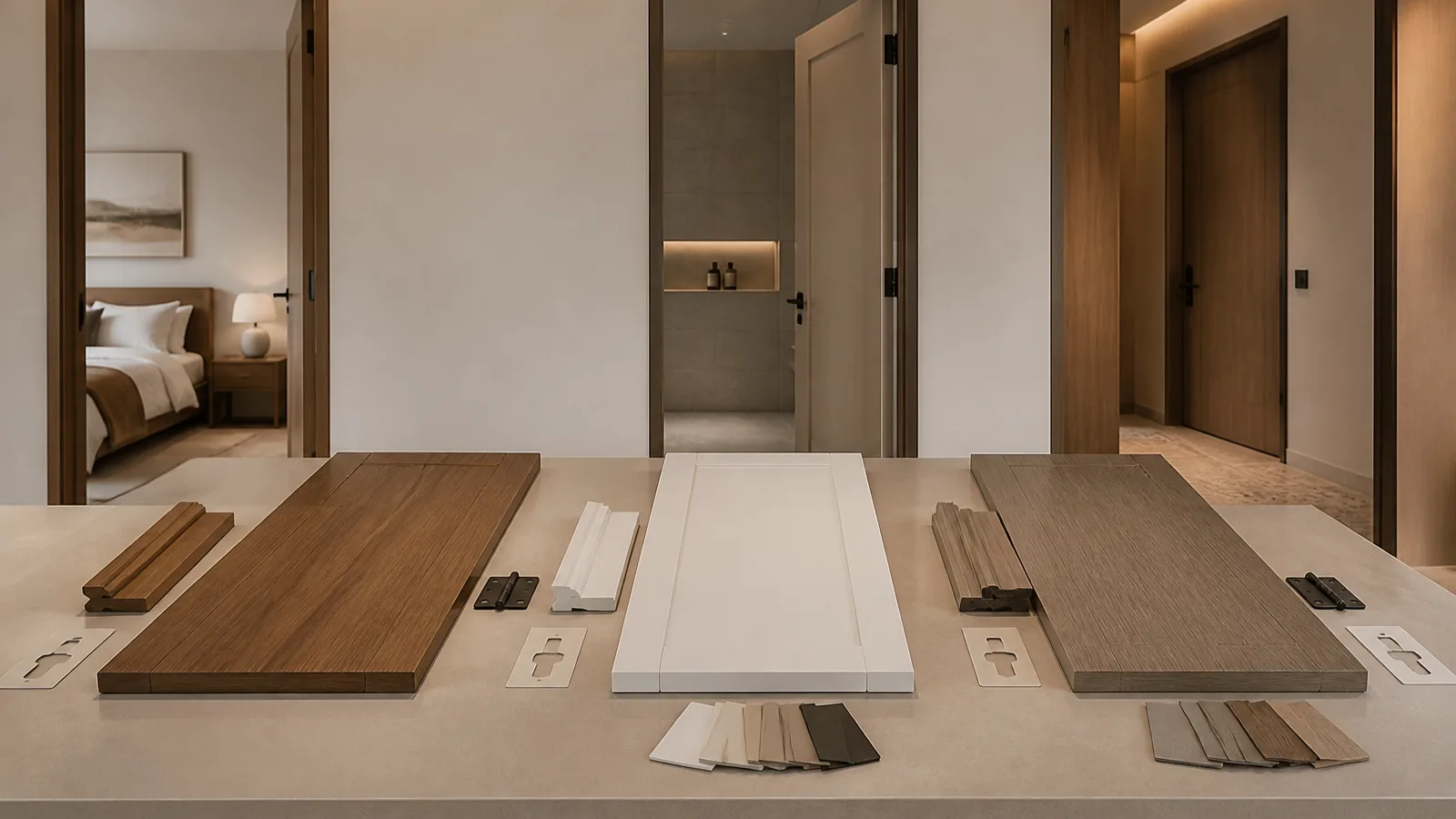
Choose by project area, then confirm the door set
| Project area | Starting review route | What to confirm |
|---|---|---|
| Bedrooms, living areas and standard apartment interiors | Wooden or composite interior door route. | Finish reference, leaf and frame scope, wall thickness, handing and hardware preparation. |
| Bathrooms, utility rooms and moisture-sensitive interior areas | WPC route can be reviewed. | Complete construction, matching frame or architrave, threshold condition, hardware compatibility and project exposure. |
| Hotel and serviced-residence interiors | Wooden, composite or WPC route by room type. | Repeated opening schedule, finish consistency, frame and trim scope, hardware preparation and any project-specific requirement. |
| Villas, lobbies and design-led interiors | Wooden or engineered composite route. | Approved finish sample, glass or panel design, frame interface, opening direction and hardware route. |
The table is a starting point for a procurement review. It is not a universal performance classification, product warranty or certification claim.
Four checks that prevent the wrong material decision
- Room condition: identify whether the opening is a standard interior, bathroom, utility room, guestroom or design-led public area.
- Door-set scope: state whether the quote includes the leaf only or also the frame, jamb and architrave.
- Finish reference: use an approved color, veneer, paint, PVC or sample reference rather than a general description.
- Hardware preparation: provide the lock and hinge requirements early so compatibility can be reviewed before machining.
How this differs from a material-only comparison
A material-only article asks what one product is made from. A project-area selection guide asks where the opening will be used, what the frame must cover, what finish the buyer expects and how hardware will be prepared. That makes it easier to use mixed routes in one schedule without losing coordination control.
For further material context, read WPC vs MDF vs Solid Wood vs Melamine Doors. For the submission structure, download the VISFURN Project Door Guide.
Buyer questions
Can WPC be used for every interior opening?
The selected WPC route should be reviewed against the project area, opening condition, frame scope and hardware compatibility. Do not treat one material label as a complete door-set specification.
Can one schedule include wooden, composite and WPC doors?
Yes. Keep each Door ID or repeated room type clearly identified, then record the selected product series, finish, frame and hardware requirement for that group.
What should buyers send for a material recommendation?
Send the room list, opening schedule, wall thickness, finish preference, hardware requirement, quantity and destination. This lets the selected route be reviewed in project context.
Turn room requirements into a quote-ready schedule
Use the product series, rough openings, wall thickness, finish reference and hardware details for each repeated opening. The team will review the configuration before quotation.