
B7 · Specifications / Acoustic Doors
How to Specify Acoustic Doors for Apartment and Hotel Projects
A practical buyer checklist for coordinating the complete acoustic door set: leaf, frame, seals, hardware preparation, testing notes and installation conditions.
Quick answer
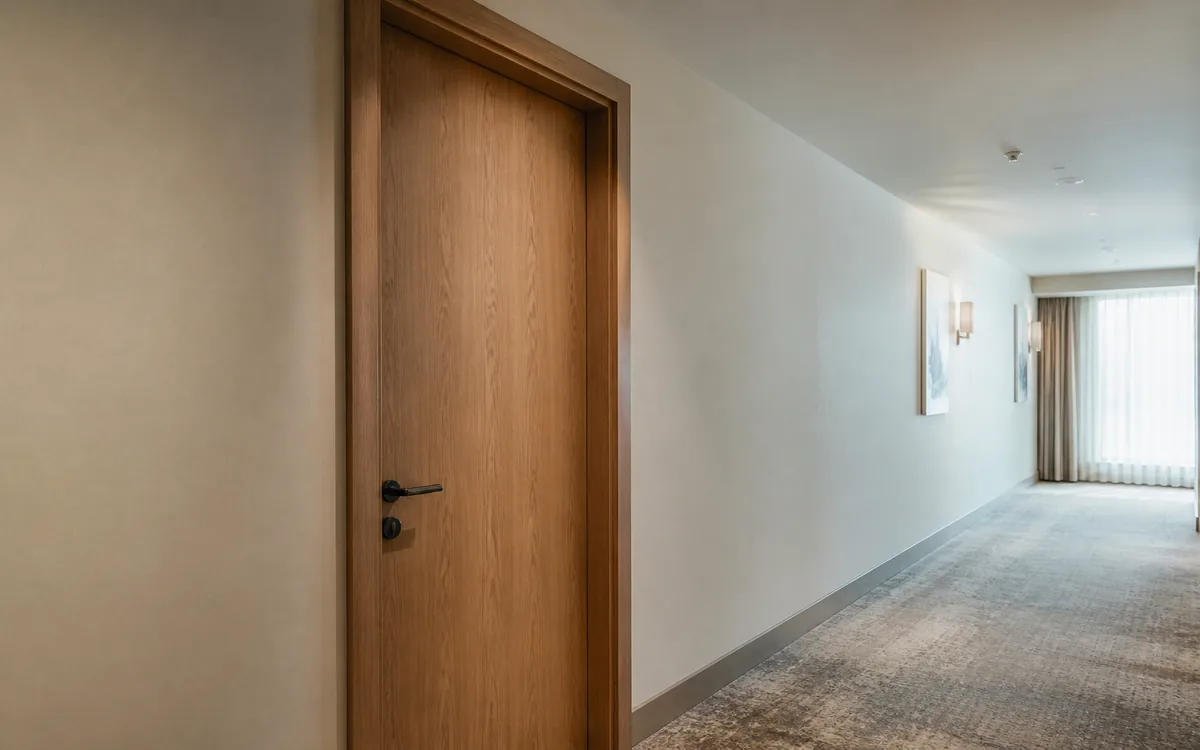
For apartment and hotel projects, specify an acoustic door as a complete opening system by confirming the required performance, leaf and frame construction, perimeter seals, threshold detail, hardware preparation and the tested or approved configuration before production.
Acoustic performance starts with the complete door set
In an apartment, hotel or office project, the door leaf is only one part of the sound-control path. The frame, seals, threshold, wall construction, hardware and installation all influence the final result. Start with a room and opening schedule rather than a generic “soundproof door” label.
Start with the room and adjacency schedule
List bedrooms, guest rooms, meeting rooms, corridors, service spaces and plant rooms separately. Note what sits on the other side of each opening and whether the door is used continuously, periodically or only for maintenance. This gives the factory a practical reason for each specification.
- Room mark and adjacent space
- Opening width, height and wall thickness
- Required handing and swing direction
- Finish, frame and threshold notes
Specify the leaf, edge and frame
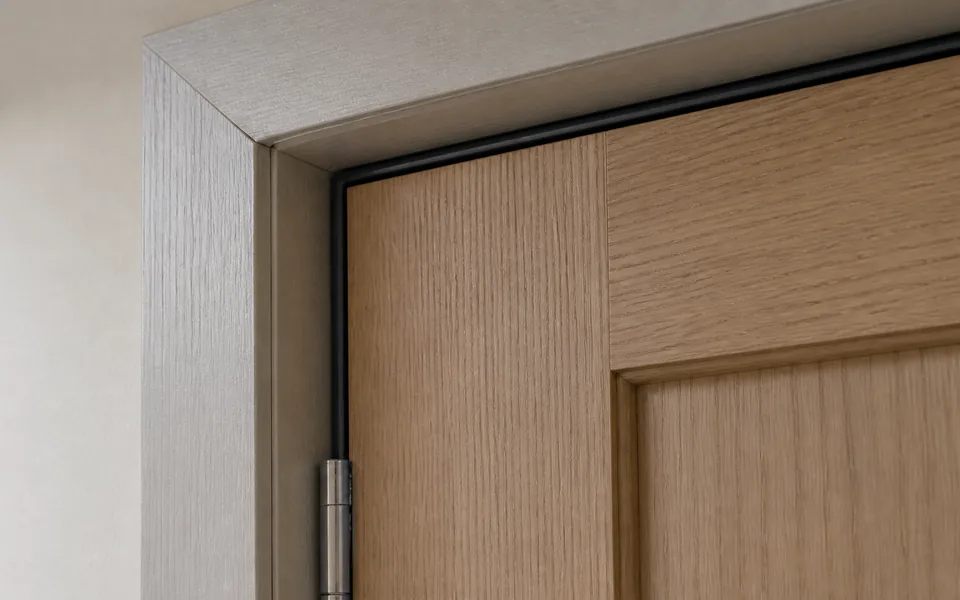
Record leaf thickness, construction, face finish, edge treatment and the lock and hinge sides. Then match those fields to the frame material, frame depth and installation joint. A frame that does not match the finished wall thickness can compromise both installation quality and the intended seal line.
Coordinate seals, threshold and hardware
Perimeter compression seals, door-bottom treatment and threshold details should be considered before hardware is released. Separate “hardware preparation” from “hardware supplied” so the quotation and site responsibility remain clear.
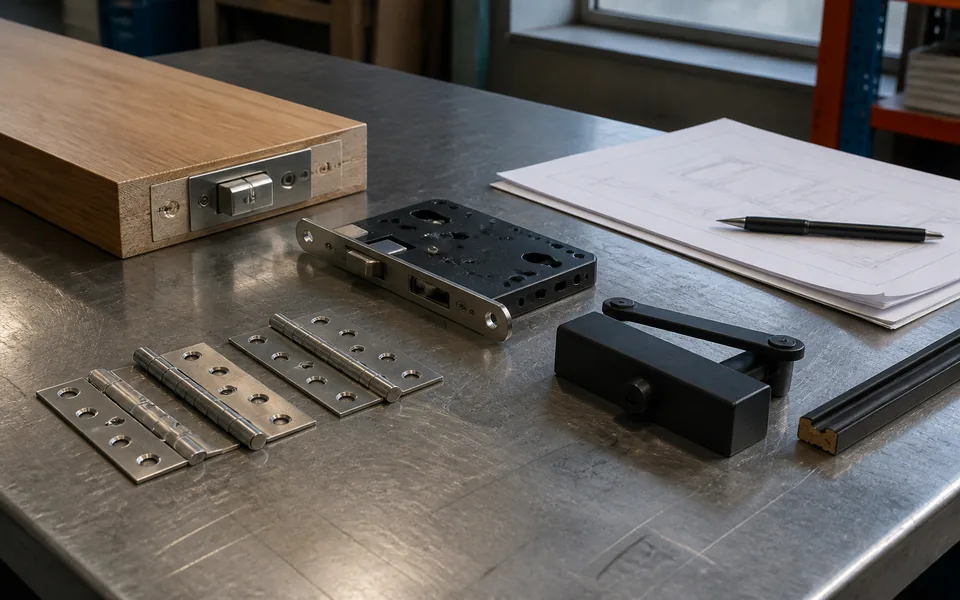
For locks, hinges, closers, door stops, electronic access and hold-open devices, use a hardware set code on the schedule. This prevents a visually similar door from receiving the wrong preparation.
Testing and installation boundaries
If a project requires a sound-control target, provide the applicable test requirement and the complete door-set definition. Laboratory results belong to a defined specimen and test condition; they should not be presented as a universal site guarantee. Wall build-up, installation tolerance and seal continuity still need to be checked on site.
A buyer-ready acoustic door schedule
A useful schedule can include: Mark, Location, Leaf Size, Wall Thickness, Frame, Finish, Seals, Hardware Set, Threshold, Handing and Notes. When those fields are complete, the factory can review the door set, identify open points and prepare a more useful quotation.
For a first review, send the schedule together with drawings, finish references and any project testing requirement.
Does a solid-core door automatically meet an acoustic target?
No. “Solid core” describes a construction choice; it does not establish the performance of the offered door set. A buyer comparing a solid-core leaf with a hollow-core alternative should request the results for the actual model and configuration, rather than assigning a rating from the material name or weight.
For example, JELD-WEN’s interior-door acoustic rating tables distinguish specific designs, core options and seal sets. Those are that manufacturer’s results, not VISFURN specifications. The Steel Door Institute’s acoustic guidance, which applies to steel door assemblies, also explains why the assembly and sealing conditions must be identified.
Compare these details before approving a bulk order
- Evidence: model, test report reference, specimen size and whether the reported result covers an operable assembly.
- Interfaces: frame, perimeter seals, door bottom, threshold, glazing and hardware included in the tested or proposed configuration.
- Site scope: adjacent wall, installation joints, floor condition and responsibility for fitting and checking seal contact.
For a hotel or apartment RFQ, send the required acoustic target or consultant’s specification with opening IDs, quantities, drawings and destination. If the offered configuration lacks suitable evidence, record that as an unresolved approval item before ordering. Review hotel door packages or interior door options, then send the acoustic opening requirements for review.
Buyer questions
Include room mark, leaf size, wall thickness, frame, finish, seals, hardware preparation, threshold and installation notes. A label such as “soundproof door” alone is not enough for production.
No. Laboratory results apply to a defined door set and test condition. Wall construction, installation, seals, hardware and site workmanship can change the field result.
Yes. Send the room schedule, opening sizes, wall thickness, finish and hardware requirements through the inquiry form so the complete door set can be reviewed.
Send door sizes, finish and destination for a practical project review.
Request a Project Quote