
Bulk interior & WPC door procurement
Pre-Shipment Door Inspection: A Buyer Video Checklist
For importers, distributors and project contractors planning inspection evidence before a bulk door order is released for shipment.
Direct answer
A useful pre-shipment door video identifies the approved order, shows which units were checked, records visible findings against agreed criteria and leaves unresolved items open for review. It cannot establish unobserved batch quality, hidden construction or certified performance by itself.
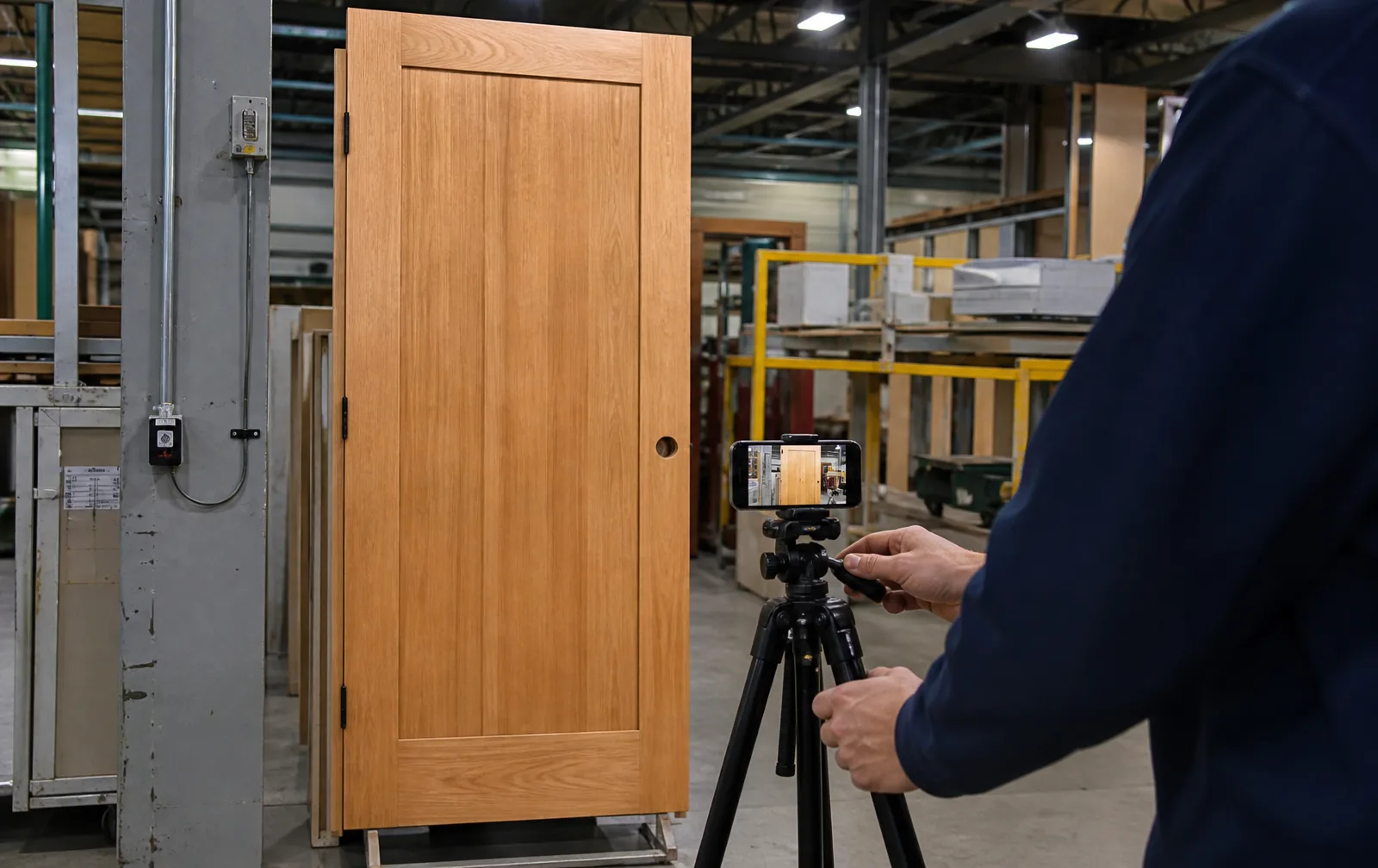
Agree the inspection boundary before production is complete
Decide what the review must answer: whether selected units match the approved finish, whether dimensions and hardware preparation follow the drawing, or whether packed components match the order. Assign the buyer representative, camera operator and person authorised to decide shipment release. A supplier-recorded clip, buyer-directed live review and independent inspection are different arrangements; name the agreed arrangement in the order.
Keep the approved sample, current door schedule, frame section, hardware preparation drawing and packing requirements available during the call. Record their revision references. A video of a finished door is difficult to assess when the participants are using different drawings. Use the sample approval checklist to establish the reference before manufacturing.
Separate lot coverage from the units actually inspected
Group the shipment by door design, material, size, finish, frame and special hardware preparation. State the lot quantities separately from the inspected quantities. Record how units will be selected and who can request an additional view. A camera tour of convenient display pieces is not a documented selection method.
For illustration only, a project might contain bedroom doors, bathroom doors and double-leaf corridor sets. Those groups create different review questions even when the finish colour is shared. Showing one bedroom leaf does not establish the bathroom frame detail or the operation of a double-leaf set.
Agree any sampling plan, sample size, acceptance criteria and escalation rules with the buyer or appointed inspector before inspection. This guide does not prescribe a universal inspection percentage or an AQL value. A proposed review of selected door types is a coordination plan, not a statistical acceptance claim. List inaccessible or unfinished groups as pending.
Capture a traceable check, not just a close-up
- Identify: show the order reference, unit or package ID and the relevant drawing revision.
- Orient: show the complete leaf or frame so the inspected component is recognisable.
- Measure or demonstrate: show the agreed endpoints, units, measuring tool and readable result, or the operation being checked.
- Record: connect the finding to the unit ID, criterion and evidence file or timestamp.
For dimensions, identify whether the number refers to the leaf, frame outside size, jamb depth or prepared opening. Keep the tool in view with the same component. If the camera angle, connection or resolution prevents a reliable reading, mark the check not verified and repeat it. Do not turn an unclear view into a pass. See the frame, jamb and casing scope guide for component references.
Match finish and hardware checks to the supplied configuration
Review both faces, edges, corners and machining areas against the approved reference, using stable lighting and both overall and close views. Screen settings, reflections and lighting can change apparent colour and sheen. Retain the agreed physical finish reference for decisions that cannot be settled on camera.
For a prehung set, agree which assembly and operating checks can be demonstrated safely. For separately supplied hardware, show kit identity and preparation references instead of implying that the lock or hinges are fitted. Describe what is actually supplied with the selected interior door or WPC door.
A visible face cannot establish every internal layer, cut-edge treatment or fixing detail. A short opening demonstration is not a durability test. Fire, smoke, acoustic and other specified performance require applicable evidence for the actual model and assembly; a video review does not create certification.

Reconcile packing evidence separately from loading evidence
Show package counts and component labels against the packing list, including separate frames, trim and hardware kits. Identify the condition of the protection and how opening marks remain readable. Review grouping by floor, room or delivery phase where the project requires it. Use the door packaging and room-label guide to keep those references consistent.
Goods filmed in a packing area have not necessarily been loaded. If loading or sealing must be witnessed, agree who will observe it, which identifiers and records are required and whether remote evidence is suitable. Keep that scope separate from product inspection and from destination-specific conformity requirements.

Close exceptions before approving release
Use an exception register containing unit ID, quantity affected, observation, agreed criterion, photograph or clip reference, responsible person, corrective action and recheck result. Keep not checked, awaiting correction and accepted findings distinguishable. The buyer and supplier should agree the disposition rather than silently treating an open finding as resolved.
After a correction, show the same identifiable unit and the relevant check again. Record whether the finding changes the scope of further inspection. Retain a dated release decision from the authorised person, together with any exclusions or partial-release agreement. This proposed workflow does not alter contract, payment or carrier-claim terms.
Include inspection requirements in the RFQ
For an initial review, send the product or design reference, quantities by type, dimensions or drawings, frame and hardware scope, destination country or port and project dates. Add required standards, sample references, planned inspection arrangement, evidence needed and who will make release decisions. Identify unknowns so they can be resolved before an inspection slot is agreed.
Inspection availability, access, timing and any independent service must be confirmed for the order. If installation is delayed, also review delivery and storage readiness. A completed pre-shipment review does not replace the receiving check after transit.
Buyer inspection questions
No. A video can show selected visible checks, but performance claims require applicable model and assembly documentation. Agree any independent inspection or testing separately.
Agree the lot, selection method, sample size and acceptance criteria with the buyer or appointed inspector before the review. Record the actual inspected IDs; do not treat a few examples as proof of the whole shipment.
Mark that check as not verified. Request a clearer repeat measurement or arrange another inspection method before the responsible person approves release.
Record the affected unit and finding, agree the correction, then retain evidence of the recheck against the same approved criterion. Keep unresolved items visible in the release record.
No. A packing-area recording does not establish what was loaded or which seal was fitted. Agree separate loading and seal evidence when required.
Reference scope
Reviewed 25 October 2026. SGS describes guided remote inspection and retained video/image records; Intertek describes expert participation through live video. These are examples of inspection methods, not VISFURN service partnerships, product approvals or a guarantee that remote inspection suits every order. Confirm the required scope with the buyer and the appointed inspection provider.