
B13 · Export & Delivery
Door Packaging Labels and Room Schedule Mapping for Project Delivery
A practical way to connect door marks, packing lists, container loading and site installation.

Quick answer
Project door labels should use the same door marks as the approved room schedule and packing list. Group leaves, frames and hardware by floor, unit, room type or installation sequence, then verify package counts and loading photos before shipment. Clear mapping reduces site searching and wrong-opening installation risk.
Use the door schedule as the single reference
Do not create a separate label language at the packing stage. The door mark used by the architect, contractor or procurement team should remain visible in the production list, packing list and shipment record. If the site uses floor or unit codes, include them as controlled fields rather than handwritten guesses.
| Control field | Example purpose | Check before loading |
|---|---|---|
| Door mark | Connects the package to the approved opening | Matches the latest schedule revision |
| Unit / floor / room | Supports site distribution | Uses the contractor’s agreed coding |
| Handing and quantity | Prevents wrong-side installation | Matches leaf and frame count |
| Hardware kit | Keeps lock, hinge and accessory items together | Counted and listed by door mark |
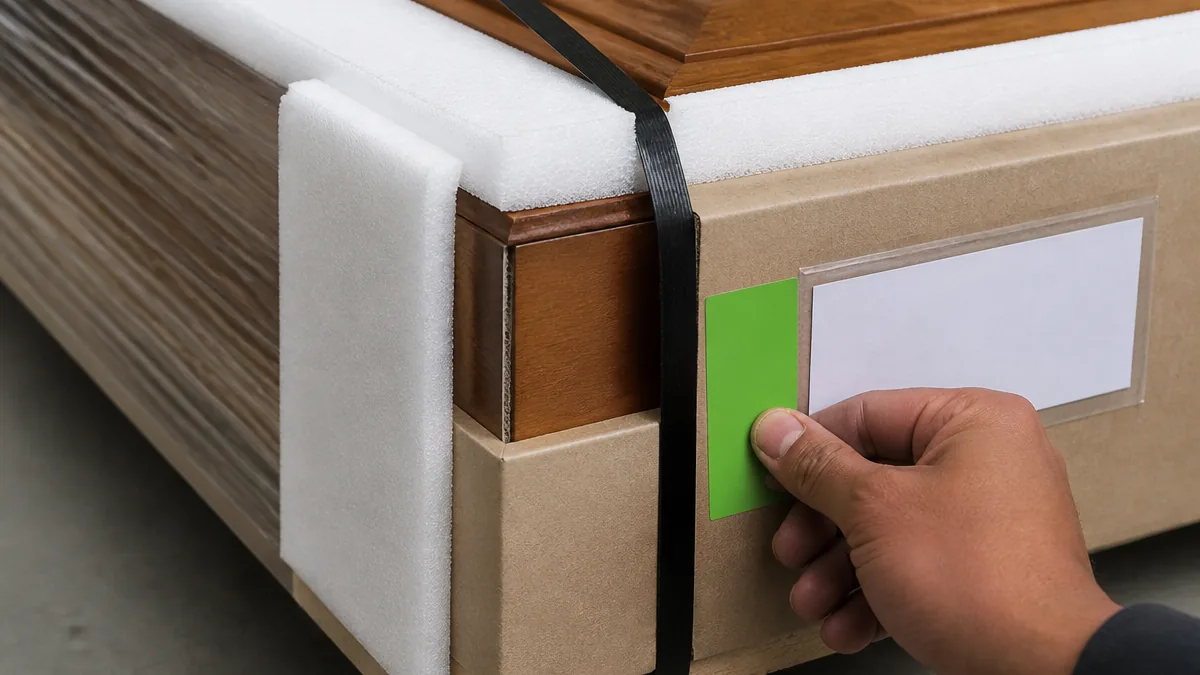
Protect the package without hiding the identity
Corner guards, foam, straps and moisture protection protect the door set during handling. The label should remain visible on the outside of the package, while the packing list carries the controlled details. Avoid placing loose paper where it can detach during loading or sea freight.
- Protect door corners, finished faces, frames and glass if included.
- Separate or secure hardware kits so they cannot scratch the finish.
- Keep the door mark visible on the outside of the package.
- Photograph the loading sequence and package condition before the container is sealed.
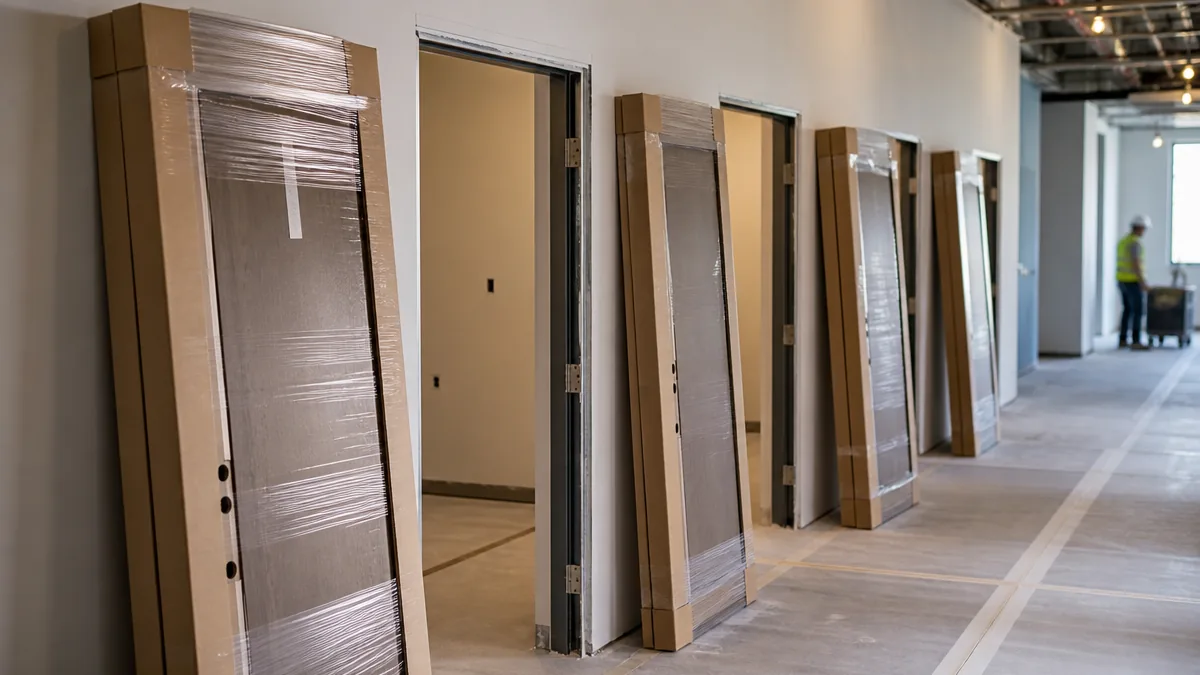
Plan the unloading and installation sequence
A container can arrive in good condition and still create delays if the first packages needed on site are buried behind later-stage openings. Review the installation sequence with the packing plan: common areas, lower floors, repeated apartment rooms and special openings may need different loading priorities.
Send the room schedule, door marks, floor or unit codes, hardware grouping rules and unloading plan with the quotation so the packing approach can be reviewed before production.
Buyer questions
The label system should match the approved door mark, room or opening reference, quantity, handing and packing list. Use the same identifiers in the schedule and shipment documents.
That depends on the project and installation plan. Hardware can be grouped by door mark or packed in clearly controlled kits, but the method must be shown on the packing list.
Group packages by floor, unit, room type or installation sequence, then provide a packing list and loading photos that use the same door marks as the schedule.
Check package count, corner protection, moisture protection, visible damage, packing-list sequence, hardware kits and container loading photos before release.
Send your room schedule and packing requirements for a project delivery review.
Request a Project Quote