
Buyer Guide · Sample & Mock-up Approval
Door Sample Approval Checklist: What to Confirm Before Mass Production
For importers, contractors and project procurement teams: turn a sample review into a documented release decision for repeated interior door orders.
Quick answer
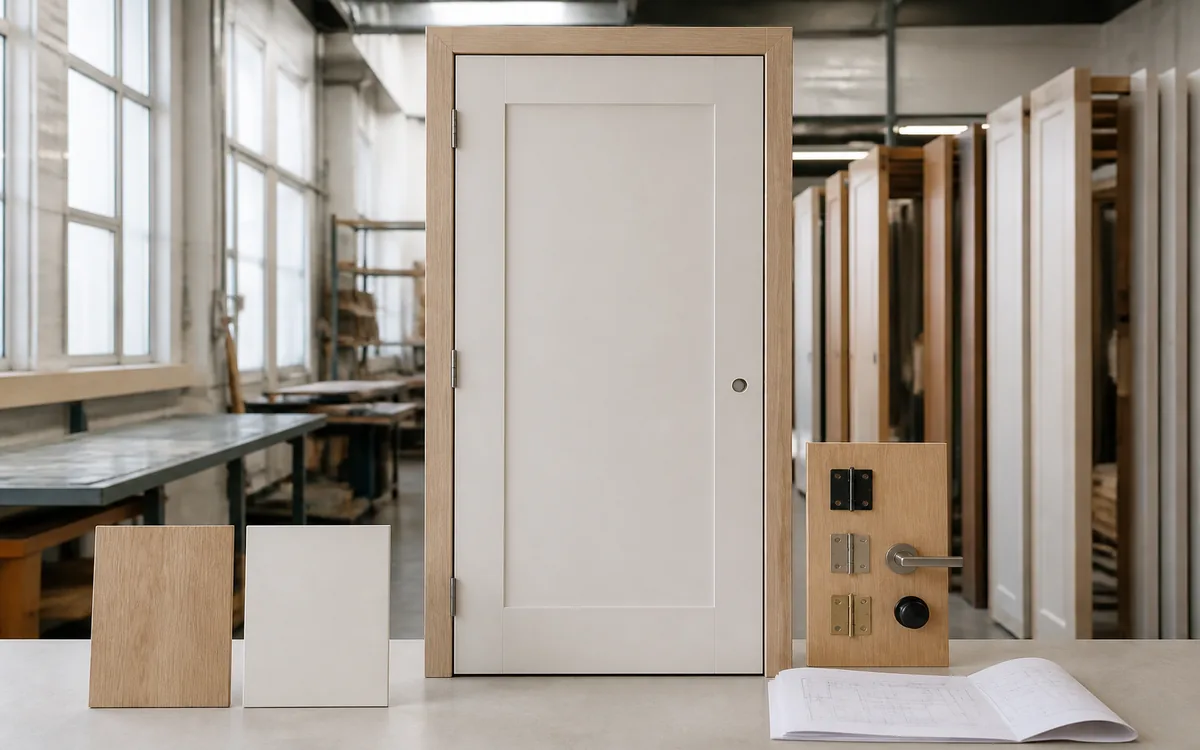
Before bulk production, identify what the sample proves, review the complete door set against the current schedule, and close any issues from a representative installed mock-up. Release only the door types and revisions covered by written approval. A finish swatch or an attractive photograph cannot confirm installed fit or regulatory performance.
1. Define the sample and the decision it supports
A colour swatch, a loose door leaf and an installed door set answer different questions. Agree the review scope before ordering a sample so neither buyer nor supplier mistakes a limited approval for permission to manufacture every opening.
- Finish sample: colour, texture, sheen and an agreed range of variation. It does not approve the door construction.
- Complete door-set sample: the proposed leaf, frame, architrave, seals and hardware preparation, with supplied and buyer-supplied components identified.
- Representative installed mock-up: the assembly in the planned wall and floor condition, checked for fit, operation and interfaces with adjacent work.
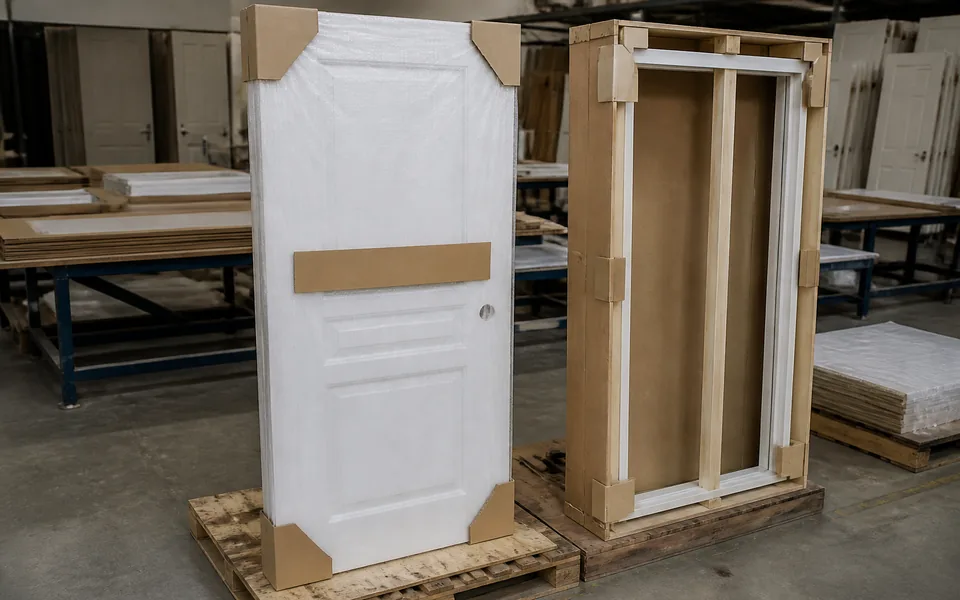
- Packing reference: protection, identification and the agreed grouping of leaves, frames and loose parts.
This checklist supports procurement of interior door packages, including wooden doors and WPC door systems. Sample availability, cost, construction and the required approval process must be confirmed for the quoted product. It is not a certification or installation instruction.
2. Select a representative opening before the review
Choose a door mark that represents the configuration you intend to repeat. Record its leaf size and thickness, finished wall build-up, frame profile, handing, floor finish, threshold and hardware set. A sample for a plain single door does not automatically cover a double door, a different frame depth or an access-controlled opening.
Where the project has several materially different configurations, ask the design and installation teams which additional samples or mock-ups are needed. Map each approved configuration to its covered door marks; leave unrepresented types on hold until reviewed.
Confirm whether dimensions describe the leaf, the rough opening or the completed assembly. Use the door leaf, opening and jamb-depth guide to keep those measurements separate. Do not apply a universal clearance or tolerance to different door systems.
3. Review the complete set in the intended site condition
Have the responsible installer check the proposed installation against the applicable product instructions and project drawings. Record actual measurements and the document defining acceptance, rather than signing off a photograph with no dimensions.
- Wall and frame: confirm finished wall thickness, opening condition, frame depth, fixings and trim interfaces. Check that the proposed trim covers the intended junction without concealing an unresolved fit issue.
- Floor and swing: account for the finished floor build-up, threshold and door sweep. Check the full movement for clashes with walls, fittings and other doors.
- Leaf and hardware: verify handing, hinge positions, lock and strike alignment, closer preparation and any planned cable route. Record the actual hardware model and template revision.
- Operation: review closing, latching and locking in the intended configuration. Assess any specified operating-force, accessibility or safety criteria using the project’s required method and competent reviewer.
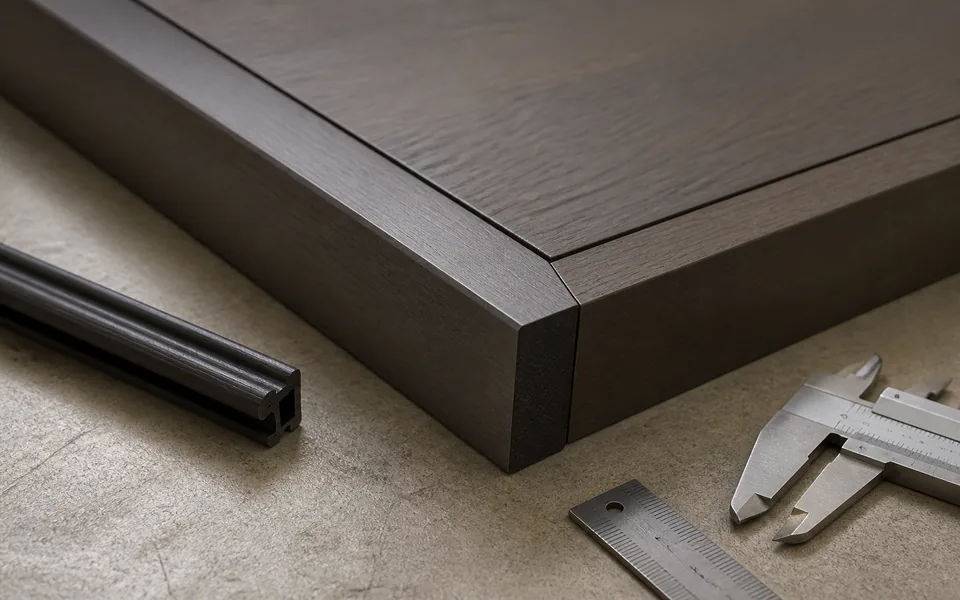
- Seals and appearance: inspect the intended seals, edge treatment, visible gaps, finish, grain direction and sheen under useful daylight and the planned interior lighting.
Do not drill or alter a door set just to make the mock-up work without a documented review of the change. For fire, smoke, acoustic or other specified performance, a site demonstration does not replace the evidence required for the exact assembly. Obtain the applicable documents and approval from the responsible project reviewer.
4. Keep one approval record that the order can follow
The record below can be copied into the project’s existing submittal form. Use the same identifiers in the drawing, quotation and purchase order.
- Sample identity
- Sample ID, review date, physical location and photographs showing its identification label.
- Covered order scope
- Door marks, room or opening types, quantities and any configurations excluded from approval.
- Controlled documents
- Door schedule and drawing revisions, finish reference, frame section, hardware model and machining-template revisions.
- Review evidence
- Measured dimensions, installation observations, photo references and the project document used to judge each item.
- Open issues
- Each issue, responsible party, corrective action, evidence required to close it and agreed review date.
- Release decision
- Hold, revise and resubmit, or release the explicitly listed scope; authorized reviewer, date and written confirmation.
- Retained reference
- Who keeps the approved sample or finish reference and how it remains identifiable during production and later inspection.
“Approved with comments” is ambiguous unless the comments state exactly which work may proceed and which remains on hold. Agree that boundary in writing before the supplier acts on the approval.
5. Close issues before releasing the affected batch
For example, if a pilot opening reveals that the selected lock template conflicts with the proposed preparation, record the affected door marks and hold that machining scope. Review the corrected template and drawing, verify the revised sample as agreed, then issue the updated release. This is a planning example, not a VISFURN project case study.
Use the door hardware preparation checklist when coordinating locks, hinges, closers and buyer-supplied fittings. Cornell University’s published door hardware standard, section 1.02 illustrates why the final hardware schedule and related submittals may need approval before fabrication. Its requirements apply to Cornell projects; they are not a universal specification or a VISFURN product claim.
A later change to size, frame, finish, hardware or preparation needs an identified revision and a decision on what must be reviewed again. Retire superseded documents from the active order package. Confirm the effect on price, production and delivery with the supplier instead of assuming an earlier approval still applies.
6. Confirm packing and prepare a quote-ready brief
Approve the packing reference separately where the door sample did not include it. Identify corner and surface protection, loose hardware, frame components, door-mark labels and grouping for receipt on site. Coordinate the delivery and storage plan before agreeing a dispatch sequence.
For a quotation or sample-scope review, send the product or door type, use and exposure, door schedule, quantities by type, dimensions and wall build-up, drawings, finish reference, hardware responsibility, destination and project dates. Include any specified standards and the documents the project reviewer requires. Identify which information is provisional and who will authorize the final release.
VISFURN can review the submitted scope through the project quotation form. Product suitability, sample arrangements, commercial terms and any performance evidence must be confirmed in the project response.
Buyer questions
A colour sample checks finish and tone. A complete door sample also allows review of thickness, edge treatment, frame, gaps, handing and hardware preparation.
Create a new revision whenever size, finish, frame, hardware preparation, packaging or other production information changes. Do not use an older sample as the final production reference.
Photographs are useful for early screening, but a physical sample or documented material sample is safer when finish, edge detail, hardware and installation tolerances matter.
Send your door schedule, quantities, drawings, finish, hardware scope, destination and project dates for a sample-scope and quotation review.
Request a Project QuotePublished by VisFurn
VISFURN is the project-door brand of Tianjin Visfurn Furniture Co., Ltd. This guide supports buyers comparing door packages, specifications and quotation scope.