
B27 · Door Schedule Guide
Door Handing, Swing Direction and Hardware Prep for Project Door Schedules
A schedule-led guide for confirming door handing, swing direction, hinges, locks and opening IDs before a bulk-project RFQ or production release.
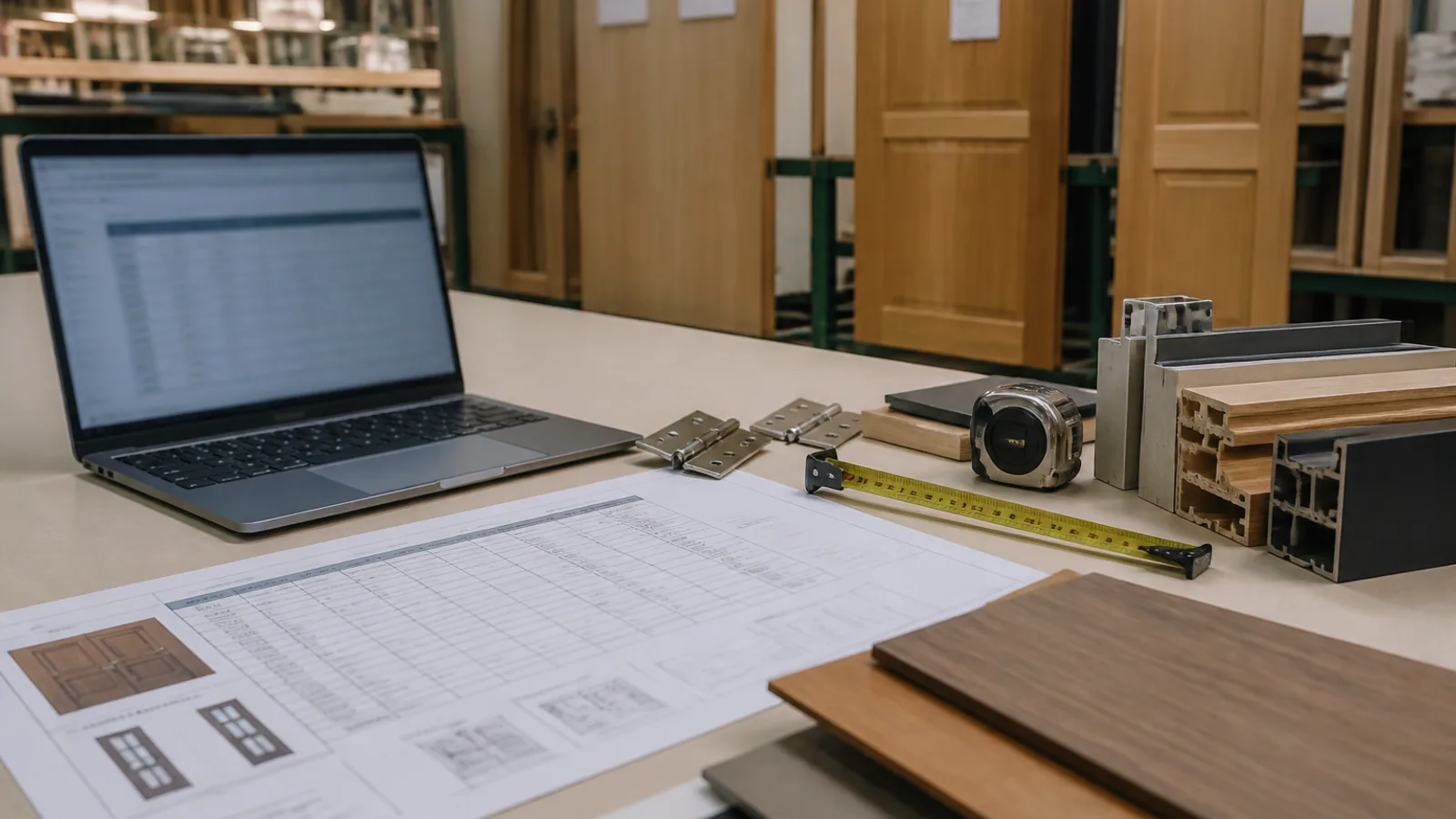
Direct Answer
For a project door package, record handing and swing direction against an opening ID and drawing reference, then match the leaf thickness, hinges, locks, closers and any electronic-lock preparation to that exact opening type before release.
Why “left hand” and “right hand” are not enough
Door handing terms are interpreted from different reference sides in different markets and teams. For a supplier RFQ, the safest instruction is an opening ID linked to a floor-plan swing arc, a door elevation or an approved handing chart. That makes the intended pull side, hinge side and opening direction visible before hardware preparation begins.
Minimum door-schedule fields for handing and hardware
- Opening ID, room name and floor or zone.
- Leaf size, frame type, jamb depth and finished wall thickness.
- Single or pair configuration, handing and swing direction with a drawing reference.
- Hinge quantity, position, type and any reinforcement requirement.
- Lock case, latch, backset, handle, closer, viewer and electronic-lock preparation.
- Fire, acoustic, moisture or access requirements that change the hardware set.
- Quantity, finish, packing label and installation sequence.
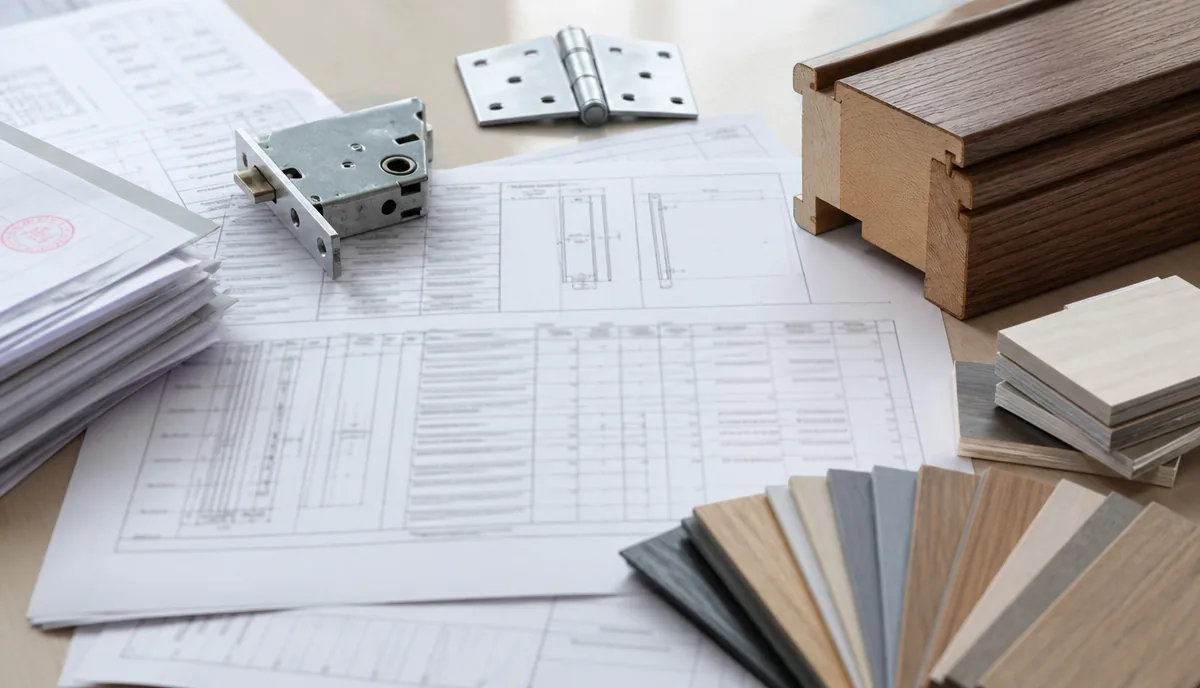
Review hardware preparation before the repeated openings go into production
Once the first typical opening is agreed, compare the approved drawing, leaf thickness and hardware templates against every repeated opening type. A room schedule can contain visually similar doors that need different lock preparation, closers, viewers, seals or access requirements. Keep those types separate rather than applying one generic machining pattern.
Use opening IDs to protect the site sequence
Opening IDs should stay consistent from takeoff through sampling, packing and installation. When cartons and door sets are grouped by the same ID, floor and room type, the receiving team can verify the package without sorting every leaf on site.

RFQ checklist before release
- Provide the current door schedule and the latest floor plans.
- State the handing reference used by the project team.
- Share a hardware set or manufacturer template for each distinct opening type.
- Confirm the typical approved opening before bulk machining.
- State whether packing is required by building, floor, room type or opening ID.
Related VISFURN buyer guides
- Start with the door schedule takeoff checklist when an architectural schedule needs to become an RFQ.
- Confirm leaf, frame and jamb decisions with the prehung interior door guide.
- For a renovation package, review the hotel existing-frame and hardware checklist.
- Explore coordinated repeated-opening solutions in the interior doors collection.
Buyer questions
Use the opening ID with a plan, elevation or swing diagram, and identify the viewing side or reference convention. Do not rely on the words left hand or right hand without the project drawing reference.
Confirm leaf thickness, handing, hinge quantity and positions, lock case, latch, backset, handle set, closer, viewer, electronic lock template and any reinforcement needs.
Only where the opening type and hardware set are genuinely the same. Guestroom, bathroom, service, accessible and special openings should be separated when their requirements differ.
Send opening IDs, room types, quantities, leaf and frame sizes, wall thickness, handing or swing drawings, finish references, hardware preparation, performance requirements, packing sequence and destination.