
B16 · Specification Guide
Prehung Interior Doors from China: Rough Opening, Jamb Width and Hardware Prep Guide
A B2B guide for sourcing prehung interior doors from China, covering rough opening, jamb width, wall thickness, handing, hinges, lock prep, packing and RFQ details.
Direct Answer
For a prehung interior door quotation from China, buyers should provide the door schedule, rough opening or leaf size, finished wall thickness, jamb width, frame type, handing, hinge position, lockset type, finish reference, quantity and destination. A complete opening-by-opening schedule helps avoid fit problems, wrong hardware preparation and unclear packing cost.
What is a prehung interior door set?
A prehung interior door set usually includes the door leaf, frame or jamb, hinges and factory preparation for hardware. Compared with slab-only doors, it gives project buyers better control over repeated openings, wall thickness, handing and installation sequence.
Why rough opening matters before quotation
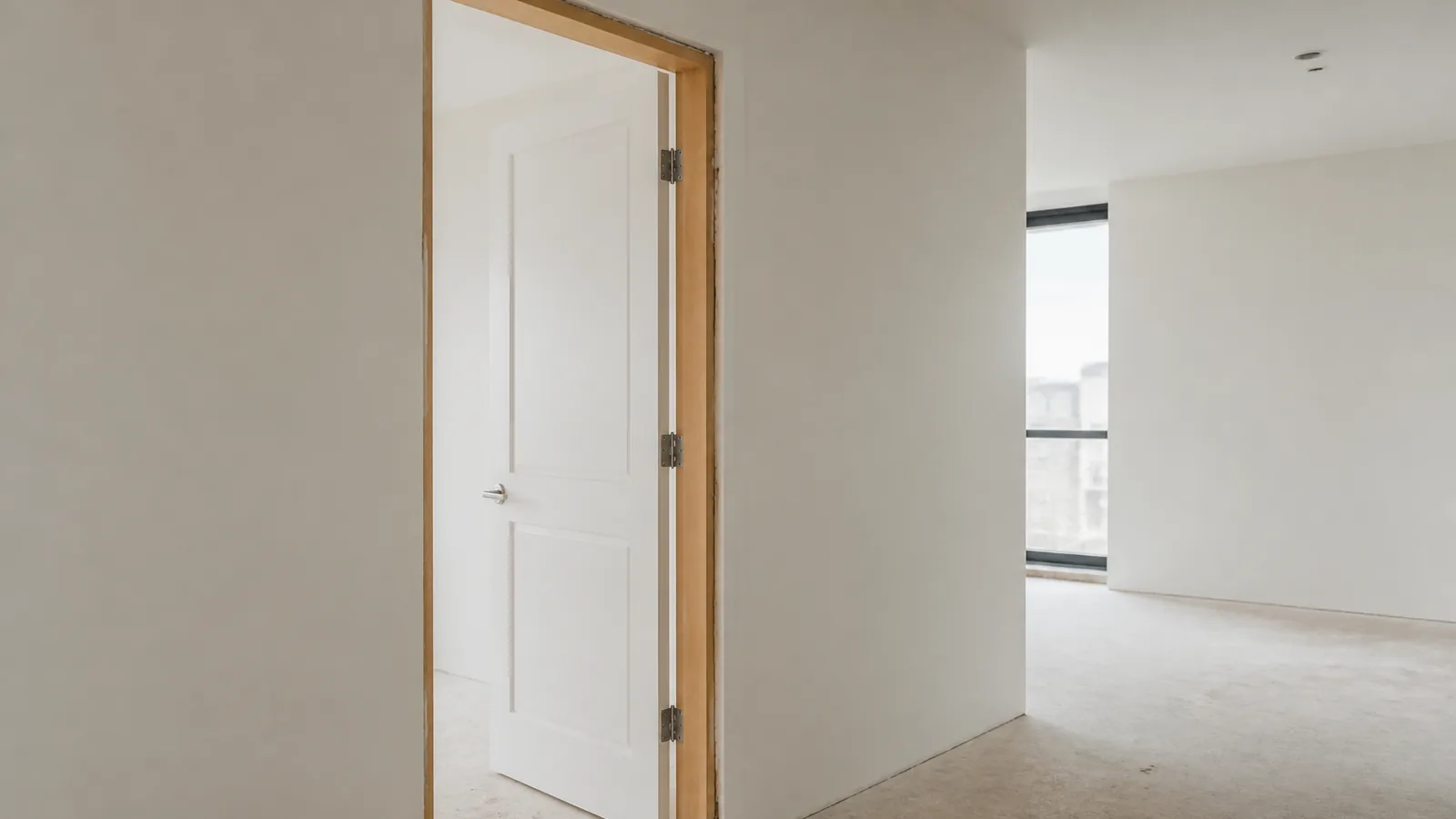
Rough opening affects whether the frame can be installed correctly after wall finish. If buyers only send a finished leaf size, the supplier may not know the wall condition, frame tolerance or trim requirement. Send both rough opening and expected leaf size when available.
Jamb width, wall thickness and frame depth
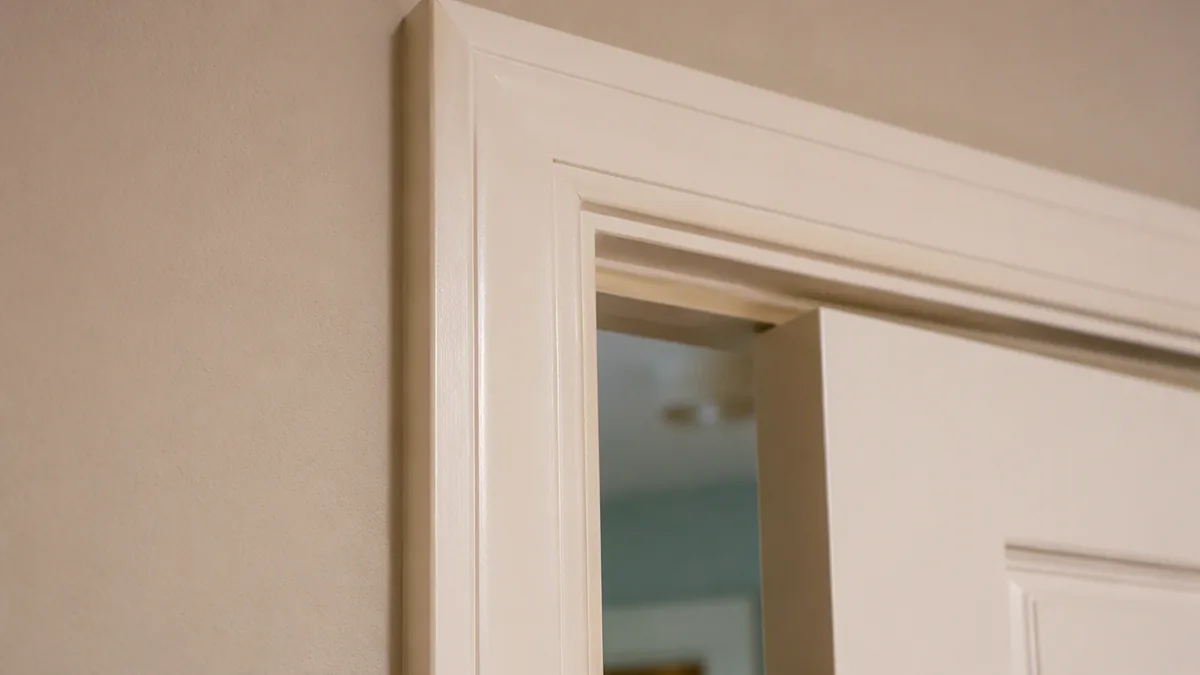
Finished wall thickness affects jamb depth, architrave coverage and final appearance. For US and Canada projects, imperial sizes should be clearly marked. If metric and imperial dimensions appear in the same documents, add notes before quotation.
Hardware preparation before mass production
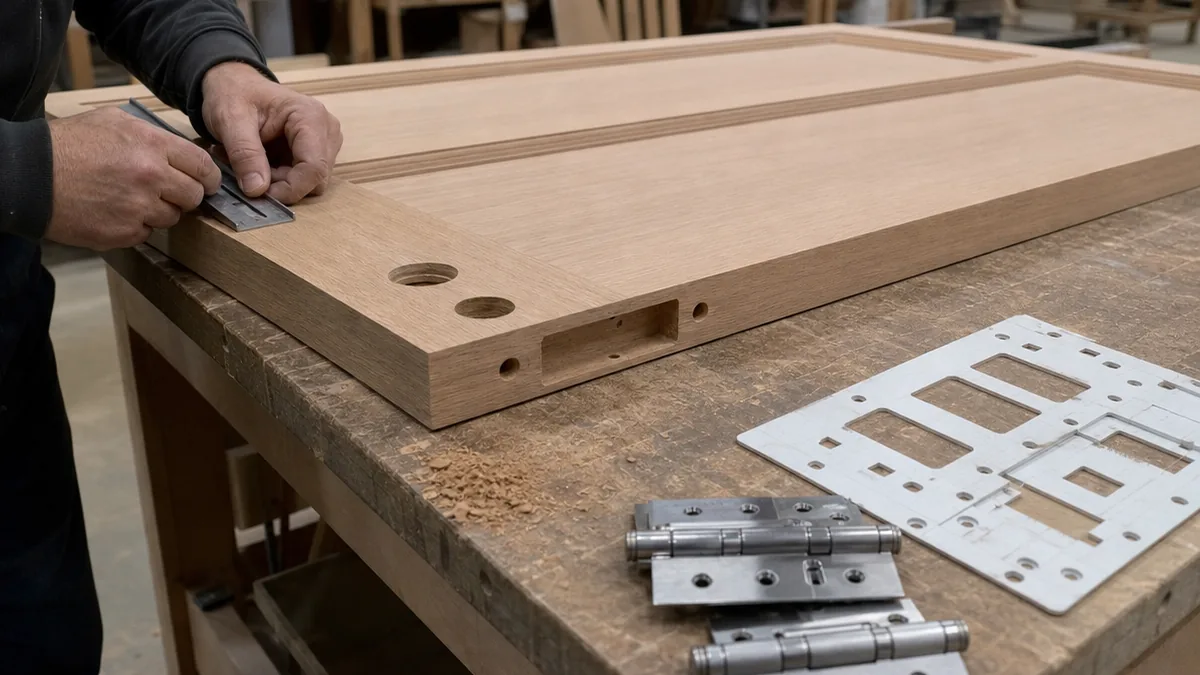
Hinge count, hinge size, hinge position, lock body, backset, handle height, latch type, closer, door stop and handing should be confirmed before production. Hardware templates are especially useful when locks will be sourced locally.
Packing and labels for prehung door projects
Prehung door sets require stronger packing because door leaves, frames and hardware preparation must arrive together. Room labels, opening marks and floor-by-floor grouping reduce installation confusion.
RFQ checklist
- Door schedule and opening marks
- Rough opening and finished leaf size
- Finished wall thickness and jamb depth
- Frame or casing requirement
- Handing and swing direction
- Hardware template, hinge and lock preparation
- Finish reference and approved sample direction
- Destination port, packing method and requested delivery window
Buyer questions
Send the schedule, sizes, wall thickness, frame type, handing, hardware template, finish, quantity and destination.
Preparation can be reviewed when hardware type, template, handing and door specification are confirmed before production.
Send both when available. Rough opening helps frame planning while finished leaf size helps confirm the visible door size.
Jamb width affects frame material, trim, packing volume and installation fit.
Yes. Packing can be grouped by room, floor, opening mark or installation phase when the schedule is confirmed.
Related buyer guides
These supporting guides answer the specification questions buyers usually raise before requesting a container quote.