
B14 · Procurement Guide
Door Schedule Takeoff Checklist for Bulk Orders
A practical guide for turning an architectural schedule into a supplier RFQ without missing openings or hardware.
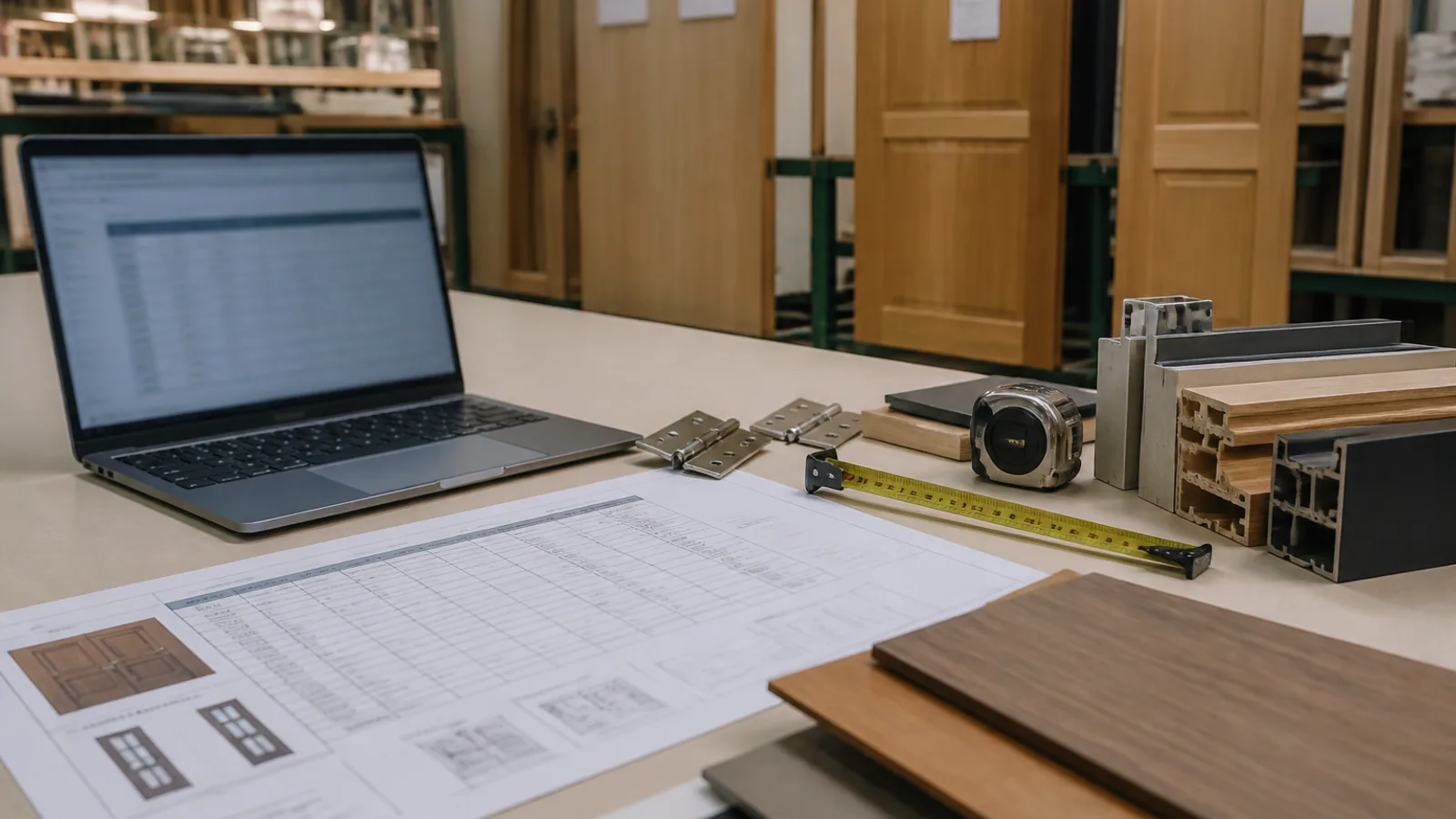
Quick answer
A quote-ready door schedule identifies the opening ID, room or zone, quantity, size source, handing, finished wall thickness, frame detail, finish, hardware preparation, revision number and delivery phase. Keep rough opening and leaf size separate; when any of these fields change, issue a dated schedule revision before production is released.
What every bulk door takeoff should contain
Openings are useful to a supplier only when each line describes the same detail set. A clean takeoff keeps estimation, sample approval, production and packing aligned.
| Takeoff field | What to capture | Why it matters |
|---|---|---|
| Opening ID | Door mark, room number or zone reference | Tracks every opening across quotation, packing and installation |
| Quantity and room type | Quantity by opening, floor, room type or building zone | Separates repeated standard rooms from special openings |
| Size and source | Leaf size or rough opening, clearly named with drawing reference | Avoids quoting the wrong dimension basis |
| Frame and wall | Frame profile, jamb depth and finished wall thickness | Prevents a frame mismatch after wall finishes are complete |
| Handing | Left, right, push, pull or pair | Controls hinge and lock preparation |
| Finish | Finish code, sample reference and visible face direction | Keeps repeated rooms consistent |
| Hardware preparation | Lock, hinge, closer, viewer or access-control template | Determines machining and sample approval requirements |
| Revision control | Drawing or schedule revision number and date | Shows which changes replace the quoted version |
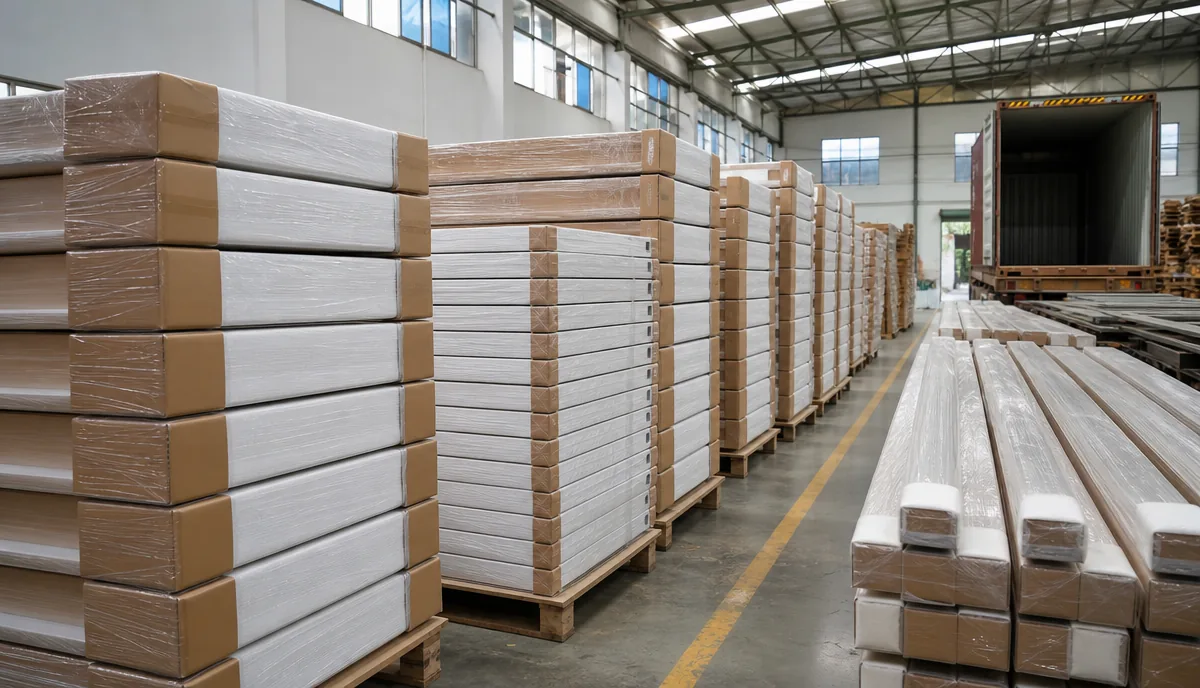
| Packing and release | Room label, floor, installation phase or delivery batch | Reduces site sorting and installation mix-ups |

Where bulk RFQs usually go wrong
- The schedule mixes rough openings and leaf sizes without naming which one is used.
- Door handing is missing for some openings.
- Frame depth is not matched to finished wall thickness.
- Hardware preparation is assumed rather than specified.
- Bathrooms, service areas or fire doors are not separated from standard openings.
- A drawing revision changes sizes, wall finishes or hardware details without a new revision number and date.
- Packing labels do not identify the room, opening mark or installation phase.
Use the hardware preparation checklist together with the schedule takeoff.
For frame depth, rough opening and hardware-prep coordination, review the prehung interior door guide. For project-ready interior door options, see Interior Doors.
What to send before asking for quotation
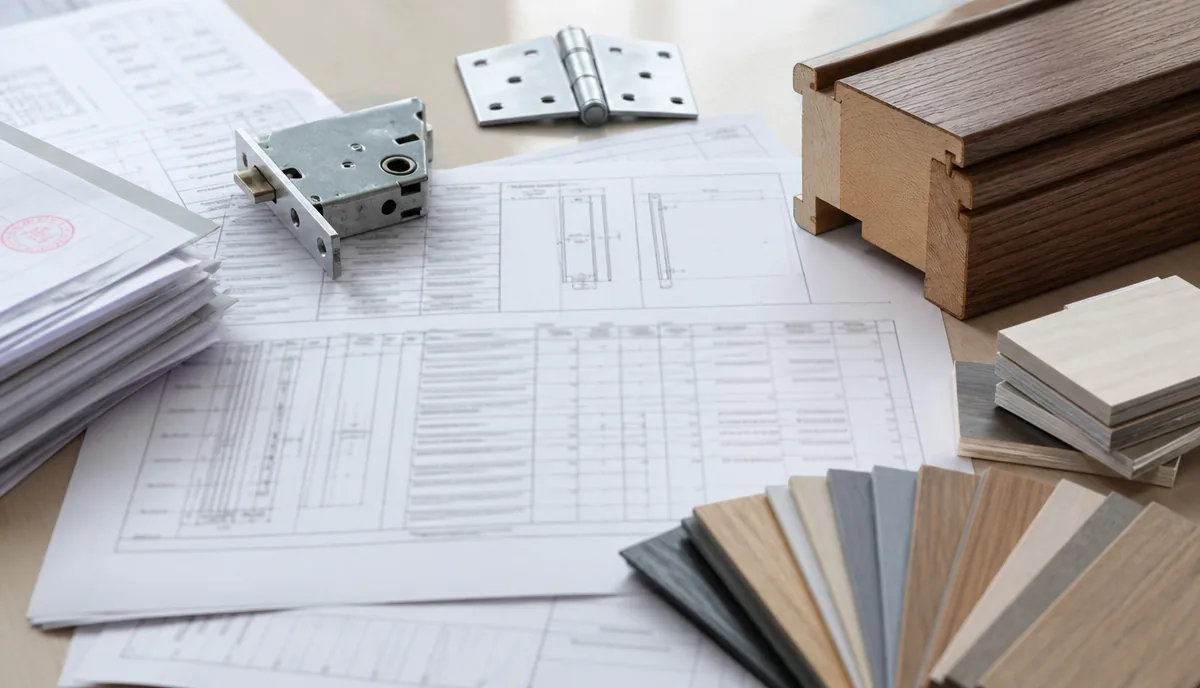
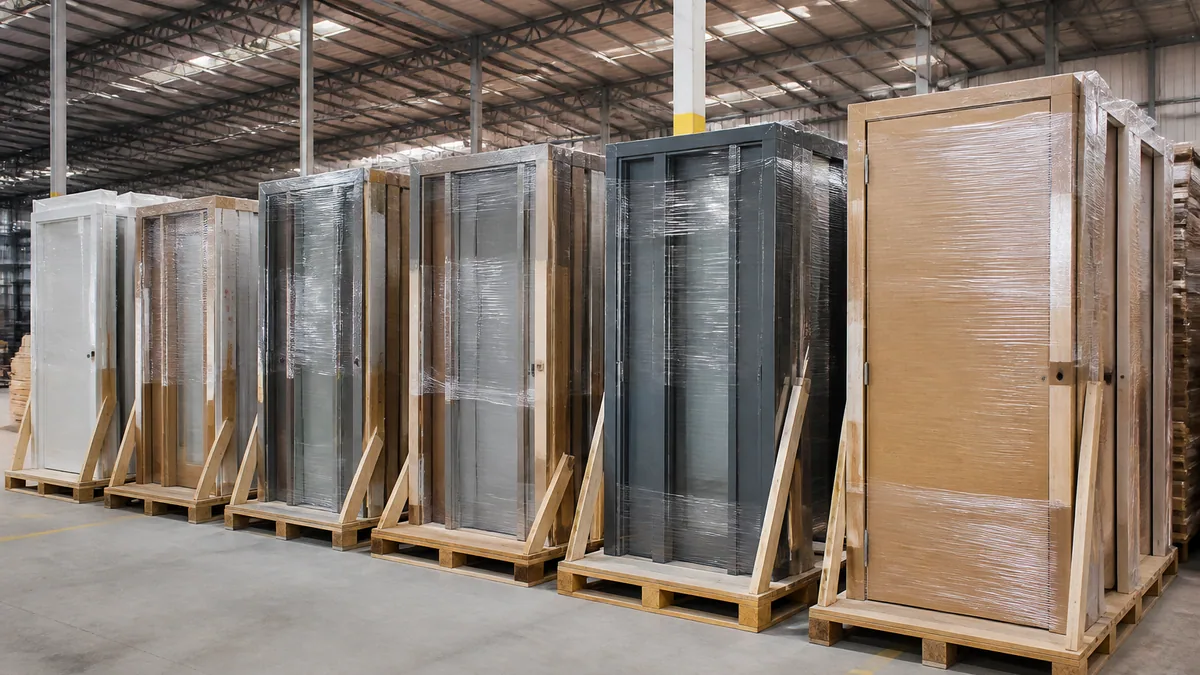
Send the latest dated schedule, drawings, door marks, quantities, dimensions, wall thickness, finish direction, hardware requirements, packing sequence and destination port. If a field is still provisional, flag it before quotation rather than assuming a standard detail.
For apartment packages, see the apartment door package supplier page. Before releasing hardware machining, use the door handing and hardware preparation guide.
Buyer questions
It is the process of reading the architectural door list opening by opening and converting it into quantities, sizes, handing, frames, finishes and hardware items for quotation or production.
Include door mark, quantity, size, handing, opening direction, frame depth, wall thickness, finish, hardware preparation, fire or acoustic notes and destination port.
Revisions usually happen when the schedule is incomplete, hardware is unclear, wall thickness is missing or one room type was grouped with another opening.
A schedule list is useful, but drawings help confirm handedness, frame depth, non-standard openings and special hardware preparation.
Send the revised schedule with a revision number and date, then identify every opening affected by size, wall thickness, handing, finish, hardware or packing changes before production is released.
Send your door schedule for a bulk-order takeoff review.
Request a Project Quote