
Bulk wooden door procurement
Custom Wooden Door Lead Time: Plan the Project Milestones
A planning guide for importers, distributors and hotel or apartment contractors working back from a required site date.
Direct answer
Plan custom wooden door lead time as separate approval, production, inspection, cargo-ready, transport and site-receiving milestones. Ask when each period starts, which decisions must be closed and what remains unconfirmed. A production estimate or cargo-ready date does not establish the installation date.
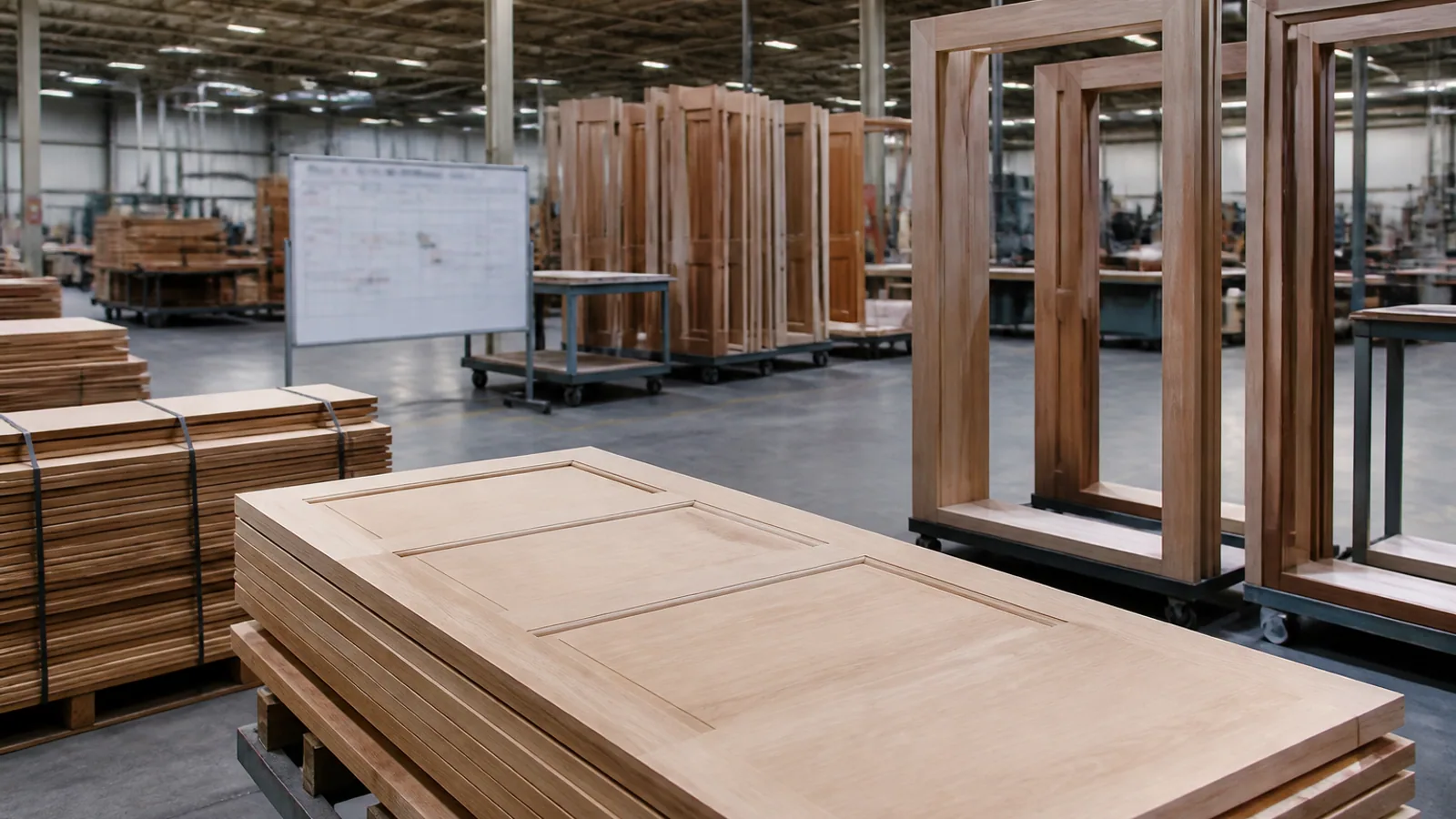
Define the date the project actually needs
State whether the deadline means goods ready for collection, departure from origin, arrival at the destination port, delivery to the building or the start of installation. Put the destination and milestone name next to the date. A request to “deliver in time for opening” leaves several responsibilities and activities undefined.
For hotel or apartment work, list the opening groups and phases needed first. The installer may require complete leaf, frame, trim and hardware packages for a floor, rather than the first available leaves. Compare the proposed delivery sequence with access, protected storage and site readiness before treating an arrival estimate as a workable installation plan.
Ask what starts the production period
A supplier's estimate should state its basis: the quoted configuration, quantities, current material and production review, and the approvals or commercial conditions needed before release. Ask whether the period starts at order confirmation or after specified information is approved. Do not infer that paying or receiving a quotation automatically closes every technical hold.
The door submittal package checklist helps connect drawings, opening marks and review status. Use one controlled revision for leaf dimensions, frame profile, wall depth, finish, handing and hardware preparation. Identify missing information with an owner and a required response date.
This guide sets no universal production duration, capacity reservation, payment trigger or delivery commitment. Confirm those items for the actual wooden door model and order. WPC or other construction routes need their own confirmed timeline; a visually similar door does not establish the same process or availability.
Build a milestone record that can be updated
- Approval: drawing revision, finish/sample reference, hardware template and remaining questions.
- Production release: agreed conditions met, affected opening groups and written release reference.
- Production completion: selected configuration and quantity ready for the agreed checks, with outstanding components identified.
- Inspection and correction: review appointment, evidence, open findings, corrective action and recheck.
- Cargo readiness: complete approved quantities and packing available under the agreed collection arrangement.
- Transport and receipt: booking, departure and arrival estimates, onward delivery, receiving contact and installation release.
For each line, record the responsible party, required input, target date, latest forecast, status and evidence reference. Separate requested dates from supplier-confirmed milestones and carrier estimates. Update the record when assumptions change; do not leave the original target labelled as a current confirmation.
Close finish, frame and hardware decisions early
A finish image is not the same approval reference as a physical sample. Agree what must be reviewed, who will review it and how comments will be consolidated. If a sample must be delivered internationally, include its transport and buyer review in the plan. Review the sample approval checklist before fixing the production release date.
Hardware decisions can affect machining and frame preparation. Ask for exact model and template references where these are needed. A late lock change may involve more than replacing an accessory: it can alter a cut-out, strike, reinforcement or approved sample. Use the hardware preparation checklist to identify dependencies.
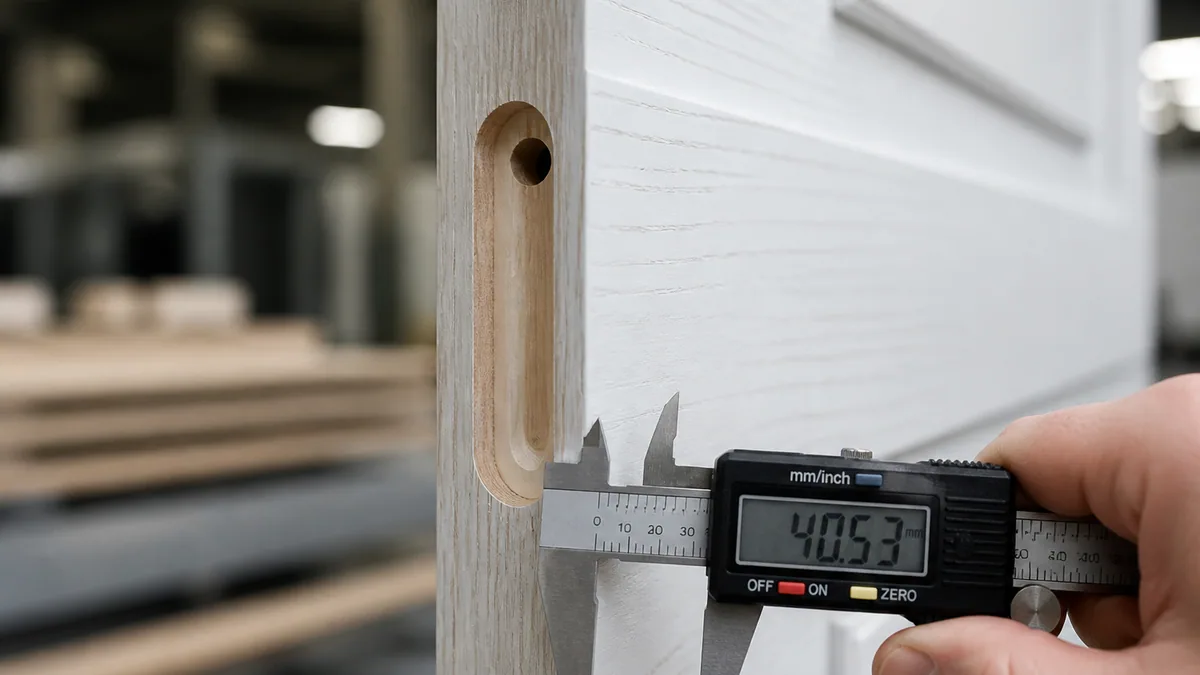
Review changes by affected opening mark
When a dimension, finish or hardware choice changes, identify the current revision, requested revision and affected quantities. Ask which work has already been released or completed and what needs reassessment. Request the effect on drawings, samples, material, machining, inspection, packing and the latest cargo-ready forecast before authorising the revision.
If the project date is fixed, discuss available options with the responsible team: retaining an approved configuration, revising installation sequence or reviewing a partial shipment. These are assessment routes, not promises of stock or faster manufacture. Any alternative still needs the project approval and evidence required for its intended opening.
Allow for inspection, correction and coordinated packing
Agree the inspection arrangement before the goods are due to finish. Name the buyer representative or appointed inspector, scope and decision route. A planned check can reveal an issue requiring correction and recheck; do not automatically place inspection and loading on the same date without reviewing that risk.
The pre-shipment inspection evidence guide separates selected-unit findings from a release decision. Packing must also reconcile leaves, frames, trim and hardware kits by the approved schedule. Ask whether the cargo-ready forecast includes those steps or only manufacturing completion.
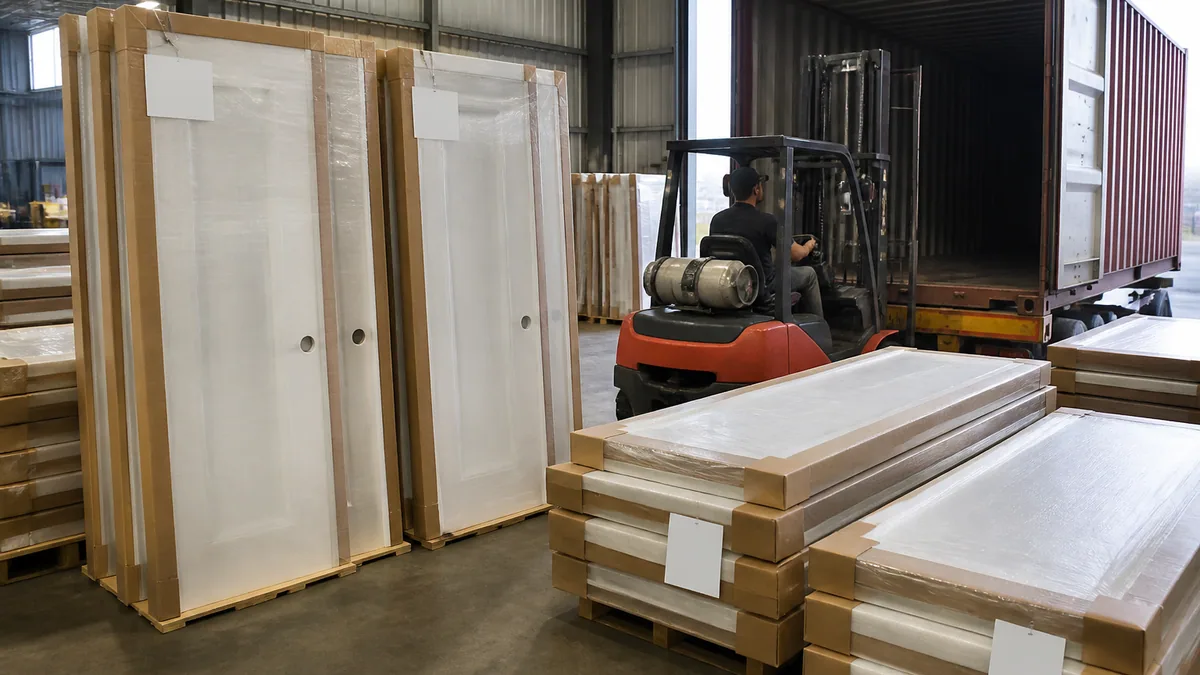
Keep shipping estimates separate from manufacturing
Confirm who arranges transport, the destination port or delivery point, booking status and the latest applicable carrier information. The expected departure and arrival can change after an initial quotation or booking. Include onward transport and receiving arrangements when the project deadline refers to the site.
Maersk's lead-time overview distinguishes material and production stages. Its shipping FAQ explains that arrival estimates can be updated during a shipment and that amended departures have revised timelines. These sources explain why a milestone needs a named basis; they do not establish a transit duration for a VISFURN order.
If arrival is earlier than site readiness, use the door delivery and storage readiness checklist. If it is later, reassess the installation sequence with the project team using the latest information. Neither a generic route estimate nor this article is a delivery guarantee.
Send a useful lead-time RFQ
Include the product/design reference, quantities by opening type, dimensions or drawings, finished wall and frame requirements, finish/sample status, hardware models and preparation scope. Add destination country or port, required site date and delivery phases, project standards, planned inspection and approval responsibilities.
Mark unconfirmed inputs and distinguish your required date from any forecast already received. VISFURN can review the requested configuration and timeline assumptions before confirming what can be quoted. A complete initial request helps identify dependencies; it does not remove the need for order-specific confirmation.
Buyer lead-time questions
Ask the supplier to name the agreed start conditions, such as approved drawings, finish and hardware references, order scope and commercial requirements. A quotation date alone does not establish production release.
No. Cargo readiness, vessel departure, estimated port arrival, site delivery and installation are separate milestones. Confirm the transport and receiving steps after the goods are ready.
It can affect preparation drawings, machining, components or samples. Identify the affected opening marks and request a revised impact assessment before authorising the change.
Ask whether the required opening groups can be completed, checked and packed as coordinated sets. Availability, extra handling, freight and storage consequences require order-specific confirmation.
There is no universal duration established here. Request a dated plan for the selected model, quantities, approvals, inspection arrangement and destination route, with its assumptions and unresolved items.
Sources and scope
Reviewed 26 October 2026. Maersk's lead-time overview (9 October 2024) and shipping scenario FAQ (25 October 2024) provide logistics context. Confirm the actual order plan with the supplier, project team and appointed transport provider.