
Material comparison · Project interiors
WPC vs Wood-Composite Interior Doors: Room-by-Room Selection
A room-by-room buying guide for apartment, hotel and office door packages, with the construction and documents to confirm before comparing prices.
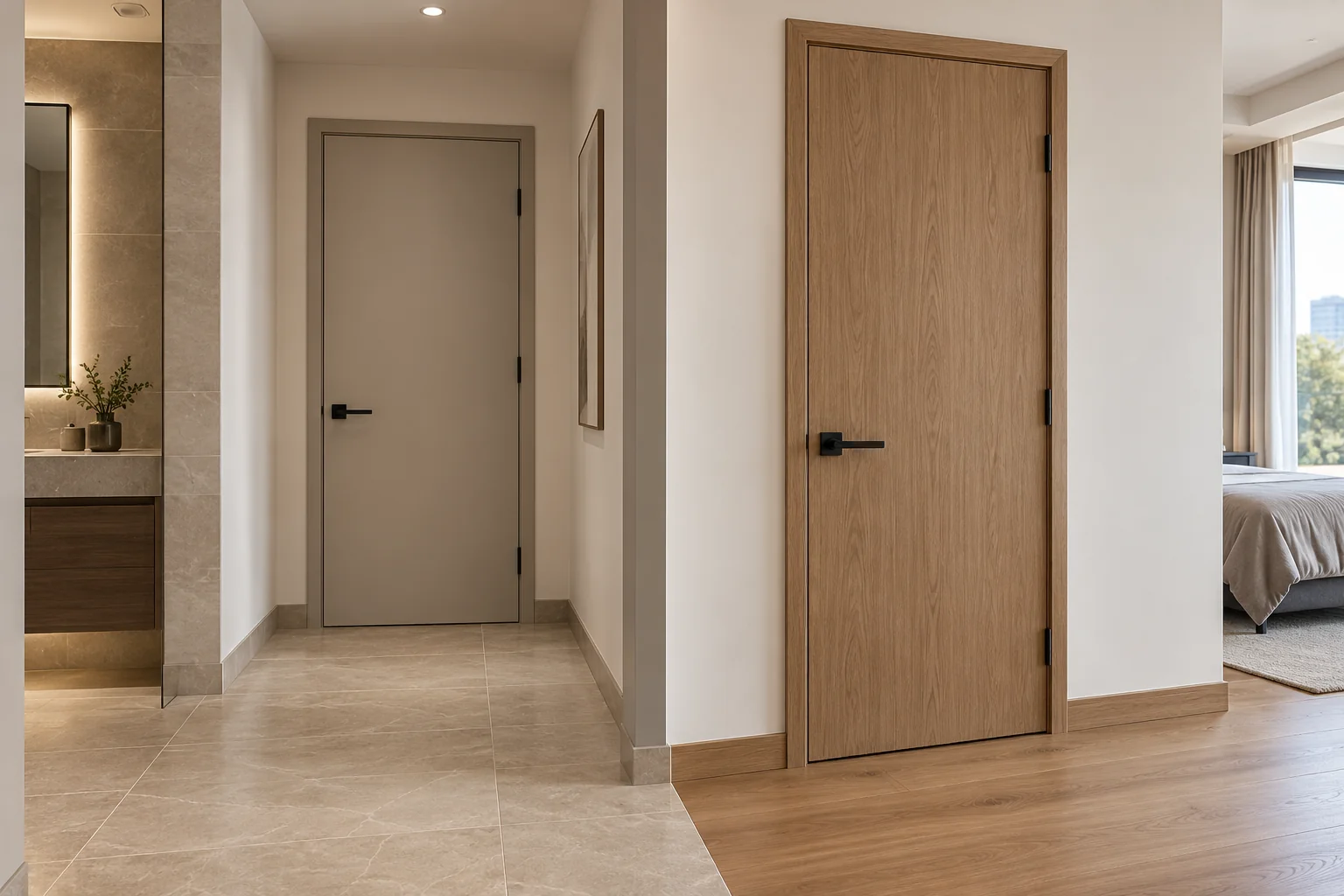
Direct answer
Choose WPC or wood-composite interior doors by the complete opening: construction, room exposure, hardware, finish and required evidence. Shortlist a documented moisture-suitable system for bathrooms; compare both constructions for dry rooms. Neither material name proves fire, acoustic or emissions performance.
First define what each supplier means by the material
WPC means wood-plastic composite, combining a wood component with a polymer. A WPC door quotation can describe a skin, an extruded hollow section or a different assembled construction. Ask which parts of the leaf, frame and architrave actually use WPC. Do not compare a WPC-faced leaf with a full extruded leaf as though their construction were identical.
Wood-composite interior door is a broad buying term here, not a single core specification. It can include engineered wood panels or a layered leaf using wood-based components. The European Panel Federation's interior-door guidance describes MDF skins used with different core constructions and decorative finishes. Specify the actual face, core, edge reinforcement and frame rather than relying on the name.
Solid wood is not interchangeable with wood-composite. Likewise, PVC film, melamine, paint or veneer describes a surface, not automatically what is underneath. A photograph is useful for finish approval but cannot verify the core.
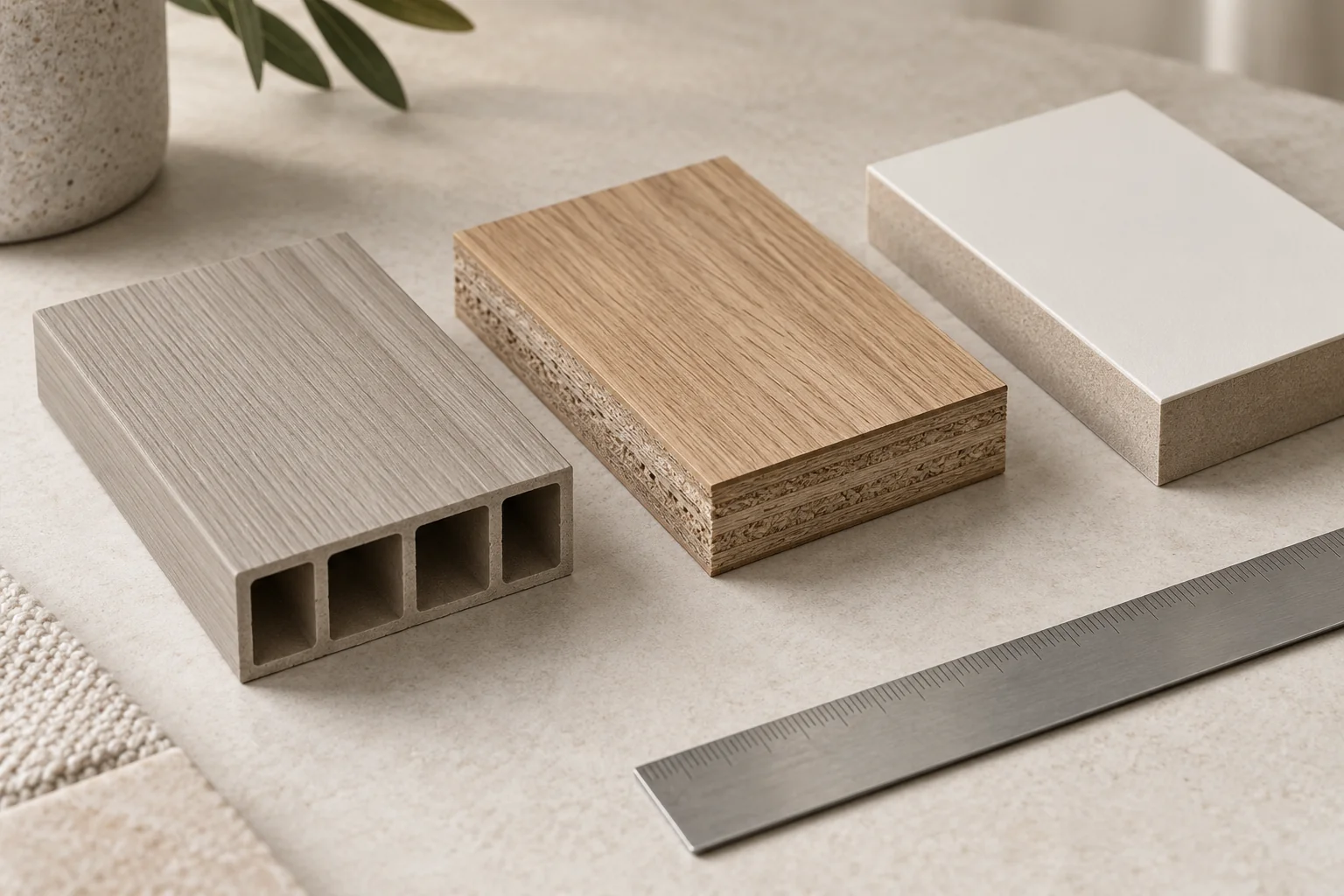
For detailed construction differences, see WPC skin versus hollow WPC doors. Then compare the selected systems in the WPC door collection and interior door collection.
Use the room schedule to narrow the comparison
The following is a procurement framework, not an approval of a particular product. Apply the project's opening schedule and the supplier's documented limits to each room.
| Room or opening | WPC option: confirm | Wood-composite option: confirm | Decision record |
|---|---|---|---|
| Bathroom or utility room | Leaf, frame, joints and hardware suited to the declared moisture exposure. | Permitted exposure, core and edge protection, especially after trimming or machining. | Humidity, splash and cleaning method; relevant evidence and installation detail. |
| Bedroom in a dry interior | Finish, hinge fixing and the required operating feel. | Actual core, finish, edge construction and hardware compatibility. | Approved sample set, dimensions and any acoustic requirement. |
| Office or meeting room | Hardware support and suitability for the expected use. | Core and reinforcement appropriate to the selected closer, lock and glazing. | Use intensity, hardware schedule and any documented acoustic requirement. |
| Hotel room entrance or protected corridor | Start with the specified fire, smoke, access and acoustic requirements, then assess the documented door assembly. Do not select on the generic material label. | Project-specific approval and matching leaf, frame, seals, hardware and permitted configuration. | |
A mixed package can be appropriate: one documented construction for moisture-exposed openings and another for dry rooms. Keep a separate opening code for each configuration, even when the visible finish is intended to match.
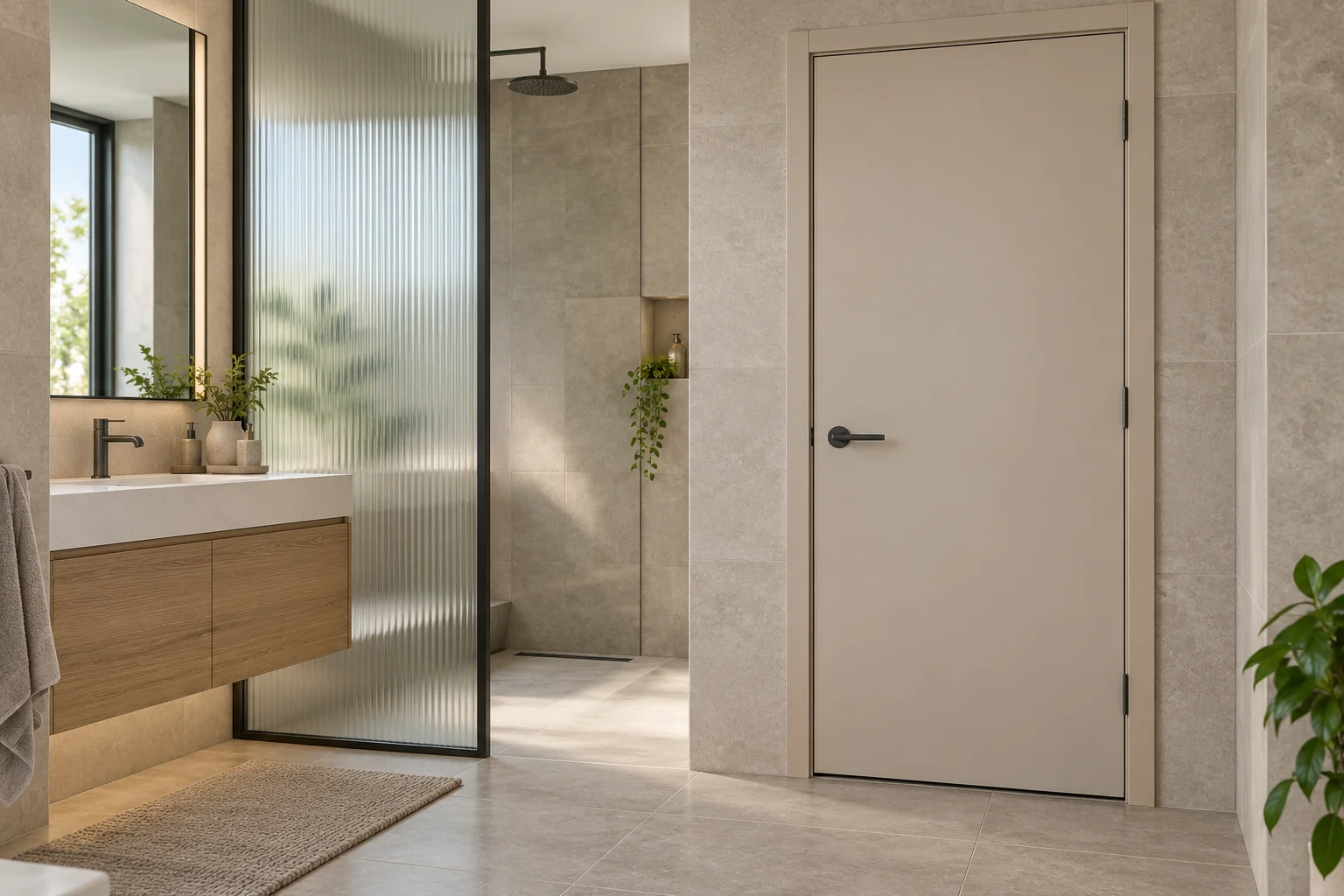
For moisture-exposed rooms, check the assembly rather than a waterproof slogan
Separate humid air, occasional splashes, wet cleaning and direct water exposure in the enquiry. They are different service conditions. Review the leaf bottom, lock cut-outs, frame joints and contact with tile or flooring, not only the front surface.
USDA Forest Products Laboratory research documents that moisture and formulation affect WPC durability. That research concerns broader material applications, not certification of a particular door. It is a reason to request product-specific evidence, not to transfer outdoor test results to an interior door.
- Confirm the exact leaf, frame and architrave construction.
- State the intended cleaning method and where water may reach the opening.
- Request the applicable test method, specimen description, result and limitations.
- Agree permitted site trimming, edge resealing and hardware preparation in writing.
- Coordinate the threshold, clearance and surrounding waterproofing with the project designer.
Use the bathroom frame and threshold guide for the junction details. This comparison does not replace that installation review.
For dry rooms, compare finish and operating requirements on equal terms
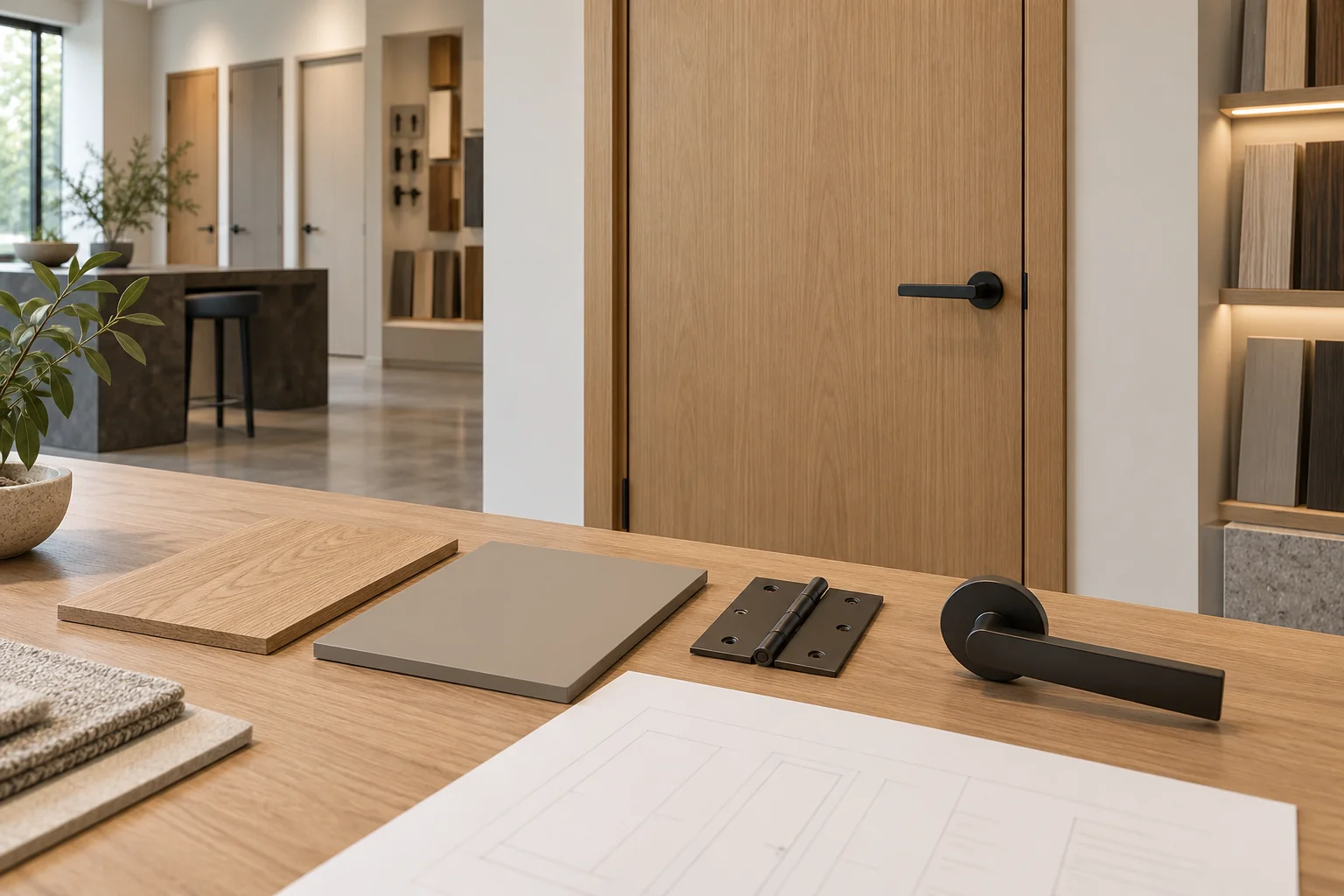
Start with the selected finish, opening size and hardware set. Request samples that show both faces and the edge; a small surface chip cannot show the complete leaf construction. For a mixed-material order, approve WPC and wood-composite samples beside the frame and architrave under the same lighting.
Check hinge positions, lock preparation, leaf weight information and any reinforcement needed for the proposed hardware. Where sound reduction matters, ask for evidence covering the proposed opening assembly and seals. Do not derive an acoustic rating from a heavy leaf or a solid-core description alone.
Ask for documents that match the proposed product
Record the model and construction shown in each document, its issuer and date, the tested configuration and its limitations. A report for one panel, leaf or assembly should not silently become a claim for every option in the catalogue.
- Material and construction: leaf build-up, core, surface, edge, frame and architrave.
- Performance: evidence relevant to the stated room exposure and specified use.
- Fire or acoustic scope, when required: documents covering the proposed assembly and applicable project requirements, reviewed by the responsible project professional.
- Emissions and destination requirements: identify the components and documentation required for the market.
For example, the US EPA identifies hardwood plywood, MDF and particleboard as regulated composite wood products. Confirm applicability and required documentation for the actual components and destination. A WPC label or an attractive finish is not an emissions certificate.
Prepare one comparable quotation schedule
Use the same scope for both alternatives. Include opening ID and room, quantity, leaf width/height/thickness, frame outer size, finished wall thickness, opening direction, finish reference, hardware, required documents, packing and destination port. Ask the supplier to identify exclusions instead of comparing two headline prices with different contents.
List the leaf, frame, architrave, hinges, lock and other hardware separately. Keep the commercial basis consistent, such as the same FOB port and packing scope. Do not assume a fixed price saving from changing material before the constructions and quantities are confirmed.
Browse wooden door options and WPC systems, then send the room schedule and finish references through the project quotation form. If the project still needs a construction decision, request a comparison of the proposed configurations rather than a generic material price.
Request a Door Material ComparisonFrequently asked questions
Is a wood-composite interior door the same as a solid wood door?
No. Wood-composite describes engineered wood components or a layered door construction; solid wood is a different description. Ask for the core, face, edge and frame materials. A wood-grain finish alone does not establish either construction.
Can every WPC door be used in a bathroom?
No. Confirm the specific leaf and frame construction, expected humidity or splash exposure, edge treatment, hardware and installation instructions. Ask for relevant evidence for that configuration rather than treating WPC as a universal waterproof rating.
Which interior door is better for a hotel bedroom?
Compare the complete opening against the project schedule. Appearance, use intensity, hardware, acoustic requirements and any fire or smoke requirements matter. Neither WPC nor wood-composite wording establishes compliance; request documents covering the proposed assembly.
Can WPC and wood-composite doors share one finish scheme?
They may be specified within one visual scheme, but approve physical samples together. Compare colour, sheen, grain direction, frame finish and edge appearance under the intended lighting before accepting a mixed-material package.
What information makes a WPC versus wood-composite quotation comparable?
Send room and opening IDs, quantities, leaf and frame dimensions, wall thickness, exposure, finish reference, hardware scope, required performance documents and destination port. Ask both options to use the same packing and commercial scope.