
B40 · Wet-Area Door Systems
WPC Bathroom Door Hardware: Hinges, Locks, Frames and Thresholds for Humid Projects
A specification guide for coordinating WPC bathroom door leaves, hinges, locks, frames, thresholds and wet-area transitions in hotel and apartment projects.
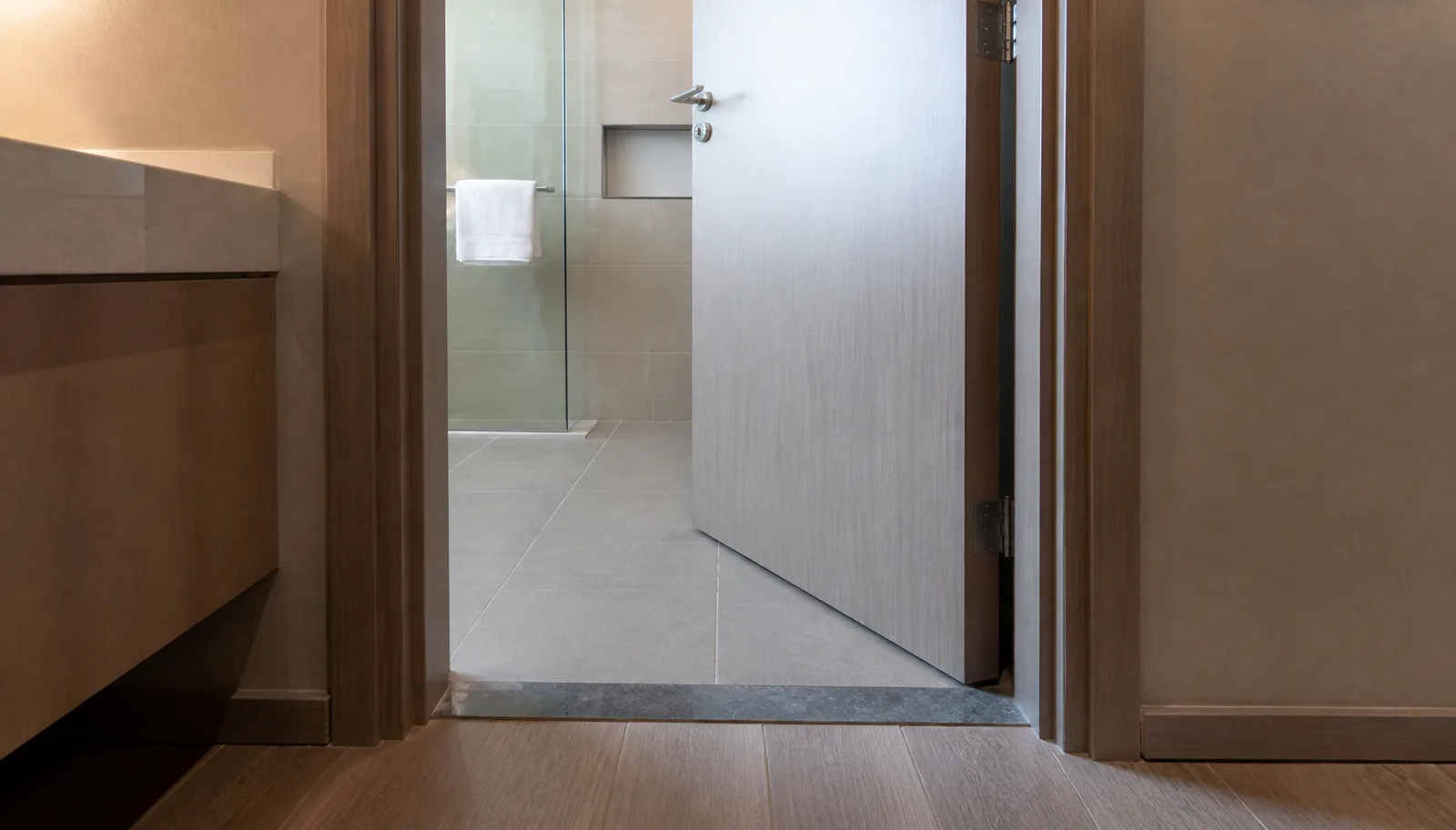
Quick answer
For a humid bathroom project, specify the WPC leaf, frame depth, corrosion-suitable hinges, lock preparation, threshold and tile transition as one coordinated door system rather than as separate parts.
Specify a wet-area door system, not only a door leaf
A WPC bathroom door may be selected for a humid location, but the result still depends on how its frame, wall finish, threshold, seals and hardware are coordinated. A leaf specification does not answer how the system meets the finished tile or how the frame depth works with the wall build-up.
Start by defining which openings are wet-area doors and what the finished floor and wall transitions will be.
Choose hinges and locks that match the operating environment
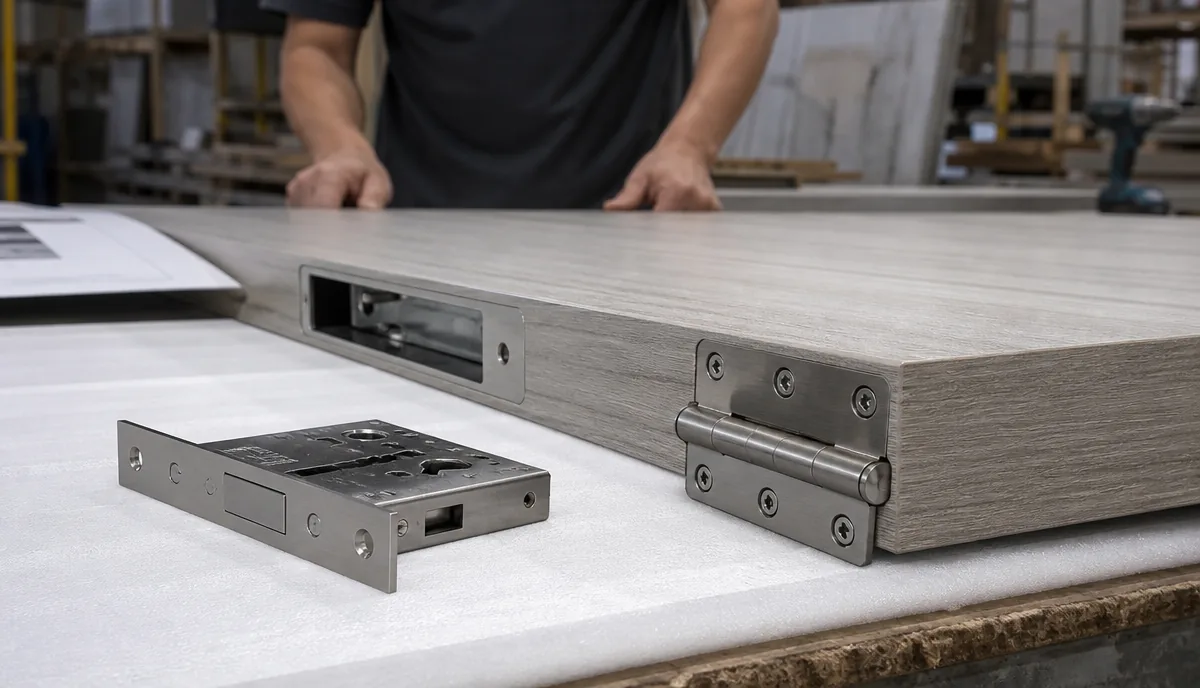
The hardware schedule should identify hinge type, quantity, handing, lock case or privacy function, strike preparation and any closer requirement. In humid or frequently cleaned environments, material choice and finishing need to suit the project conditions.
A clear drilling and mortising approval prevents a common failure: hardware supplied for a different leaf thickness, handing or frame geometry.
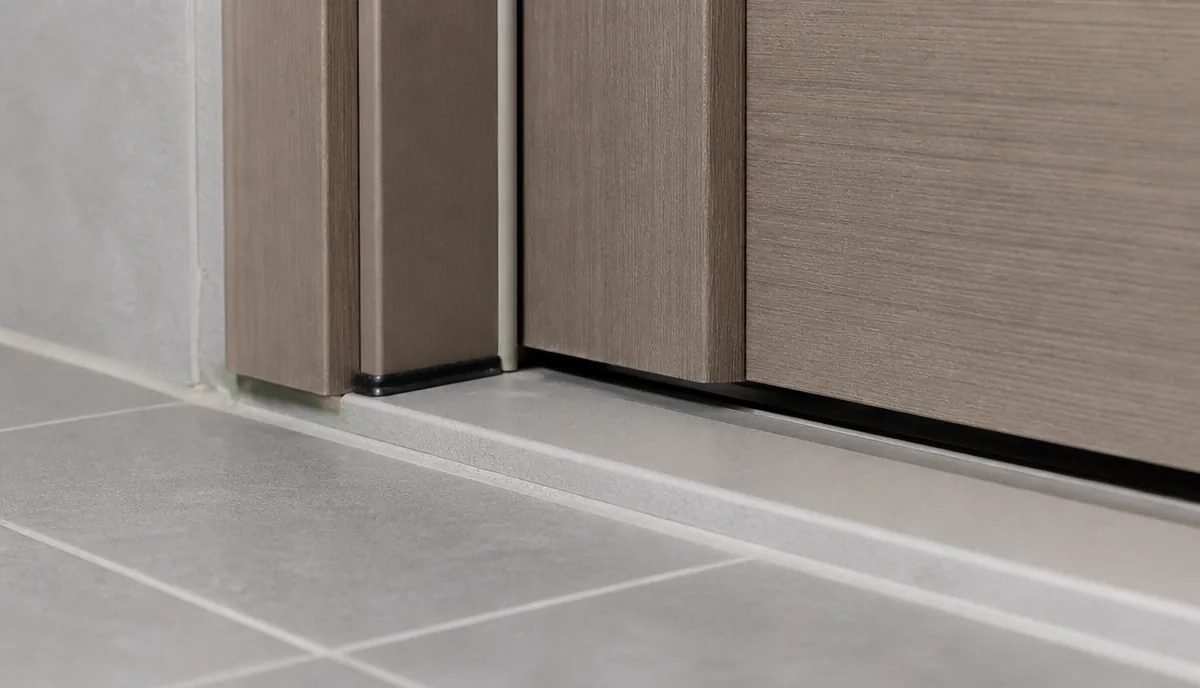
Review the frame, threshold and tile transition together
The lower door zone needs a coordinated view of the threshold level, floor finish, door bottom clearance, frame base and seal interface. These elements should be judged against the actual finished condition rather than a generic detail.
The goal is a stable, cleanable transition that respects the project’s water-management approach without forcing unrelated assumptions into the door package.
Approve hardware preparation before repeated production
For repeated bathrooms, one sample or representative opening can confirm the relationship among the WPC leaf, hinge recesses, lock preparation, frame, stop detail and threshold. Once approved, that condition becomes the reference for repeated openings.
Where a project has more than one bathroom type, keep each configuration separate in the schedule so the factory and site team do not treat similar-looking openings as identical.
What to send with a WPC bathroom-door enquiry
A clear RFQ allows the door set to be assessed as a complete wet-area opening.
- Opening schedule and the intended WPC door locations.
- Finished wall thickness, tile detail and threshold information.
- Leaf size, handing, finish, privacy lock and hinge requirements.
- Any closer, ventilation, accessibility or maintenance requirements.
- Destination and whether the package should be grouped by room type or installation phase.
Related VISFURN buyer guides
Buyer questions
Specify the hinge material and quantity, handing, lock or privacy function, lock preparation, strike detail, frame construction and any closer or seal requirement together with the WPC leaf.
The threshold, tile and door-bottom relationship determines how the finished wet-area transition is coordinated, so it should be reviewed against the real floor and wall build-up.
Use one repeatable detail only when the opening size, wall thickness, floor transition, handing and hardware configuration are genuinely the same; separate variants in the door schedule.
Approve the leaf and finish, frame depth, threshold relationship, hinge and lock preparation, handing, sample reference and packing sequence before releasing repeated quantities.