
B32 · Specifications
Shaker, Flush or Panel: A Door Style Guide for Distributors and Contractors
A visual and technical comparison of shaker, flush and raised-panel door styles for repeat residential and hospitality orders.
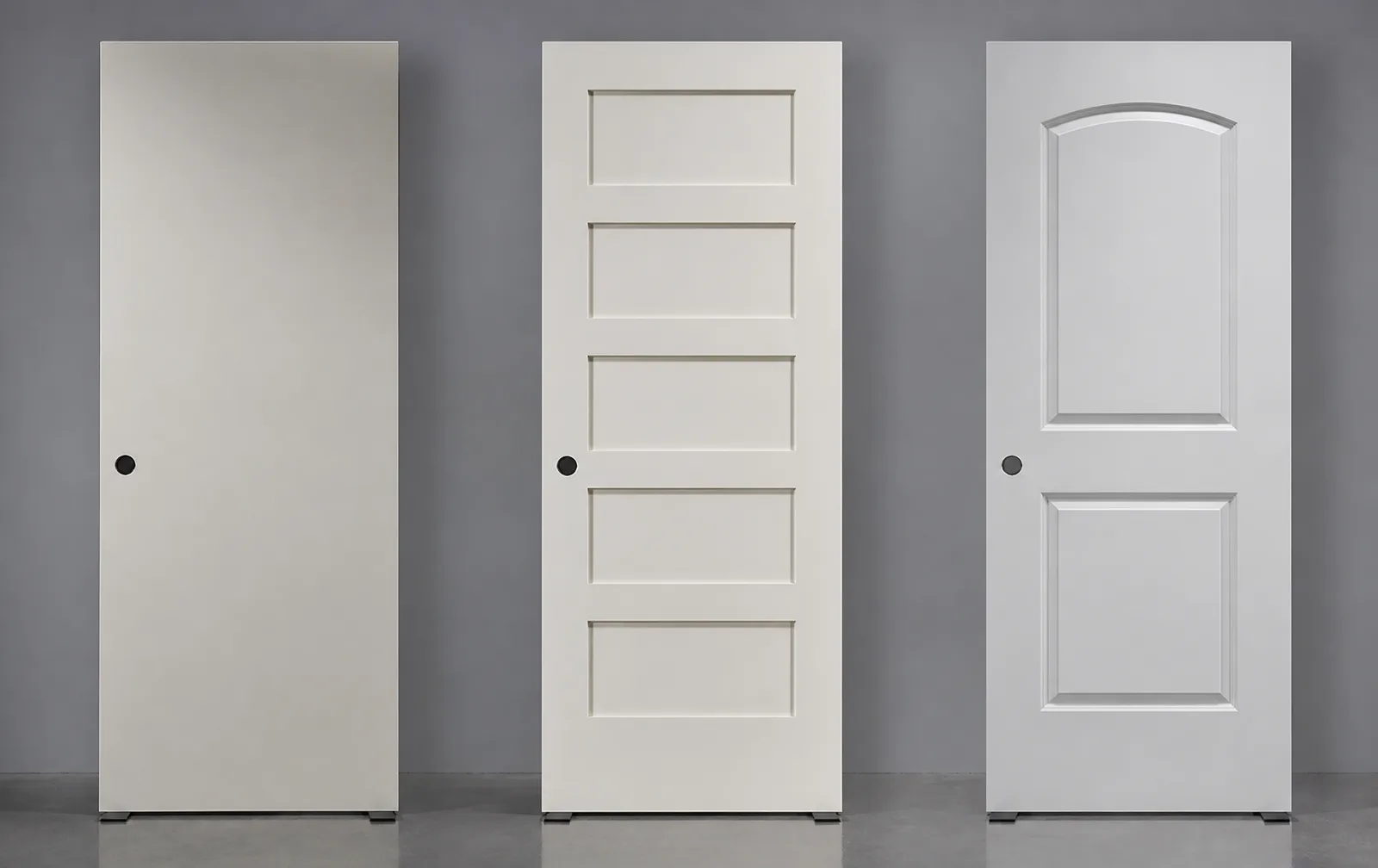
Quick answer
Choose shaker doors when a framed, versatile profile suits the project; flush doors when the brief needs a clean continuous face; and panel doors when the design calls for more visible depth and traditional character—then confirm the construction, finish and repeatability behind that appearance.
Three styles, three different procurement conversations
Shaker, flush and panel doors can all be used in apartments, villas, hotels and distribution ranges, but they create different questions for finish, profile consistency, edge detail and repeated production. The style name alone is not a full specification; the construction and sample should be defined with it.
Style comparison for repeated orders
| Style | Visual direction | Specification points |
|---|---|---|
| Shaker | Simple framed rails and stiles with recessed panel areas | Profile depth, rail layout, panel detail, finish and edge consistency |
| Flush | Flat and continuous face for a minimal look | Face material, edge banding, core, groove or inlay detail and sheen |
| Panel | Raised or shaped panel depth for a more traditional expression | Panel construction, routing profile, paint or veneer finish and movement tolerance |
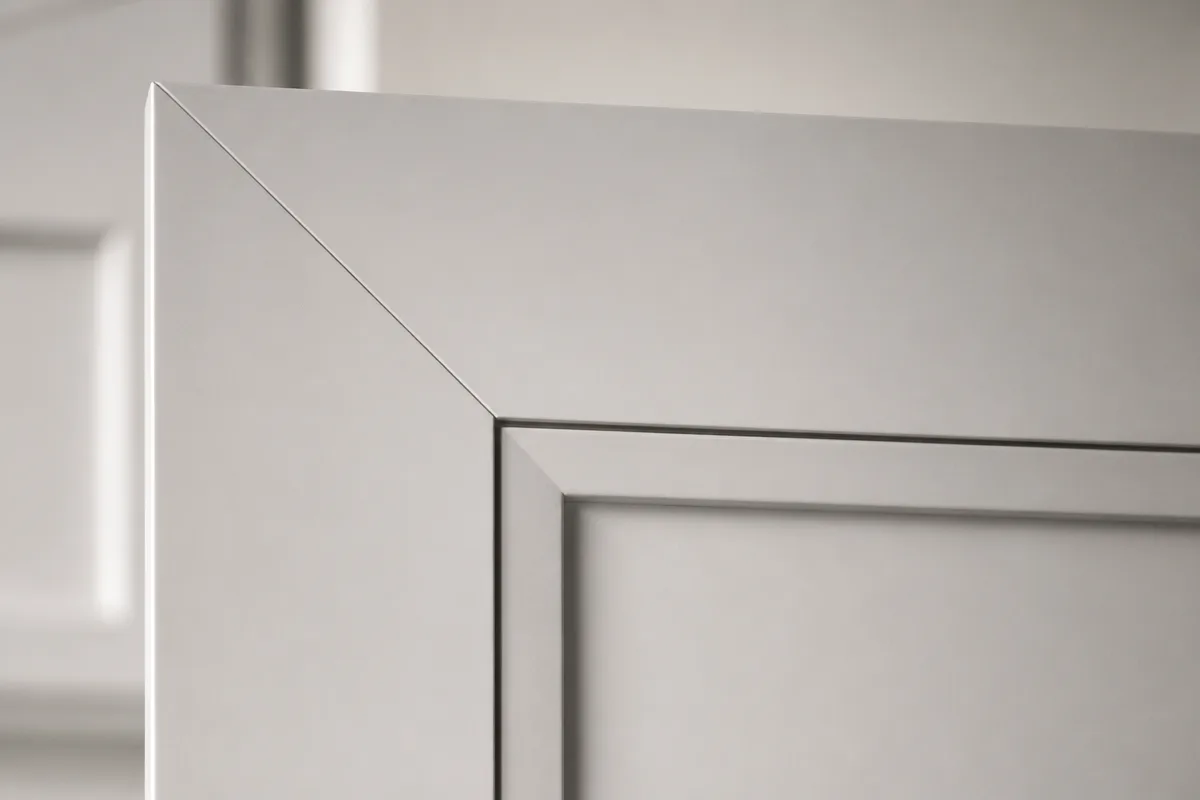
Shaker profiles and sample matching
Shaker proportions can change the look of a project door quickly. Confirm rail widths, panel layout, groove depth and finish reference on a full sample. For distributors, this protects the repeatability of the range when later orders use the same model name.
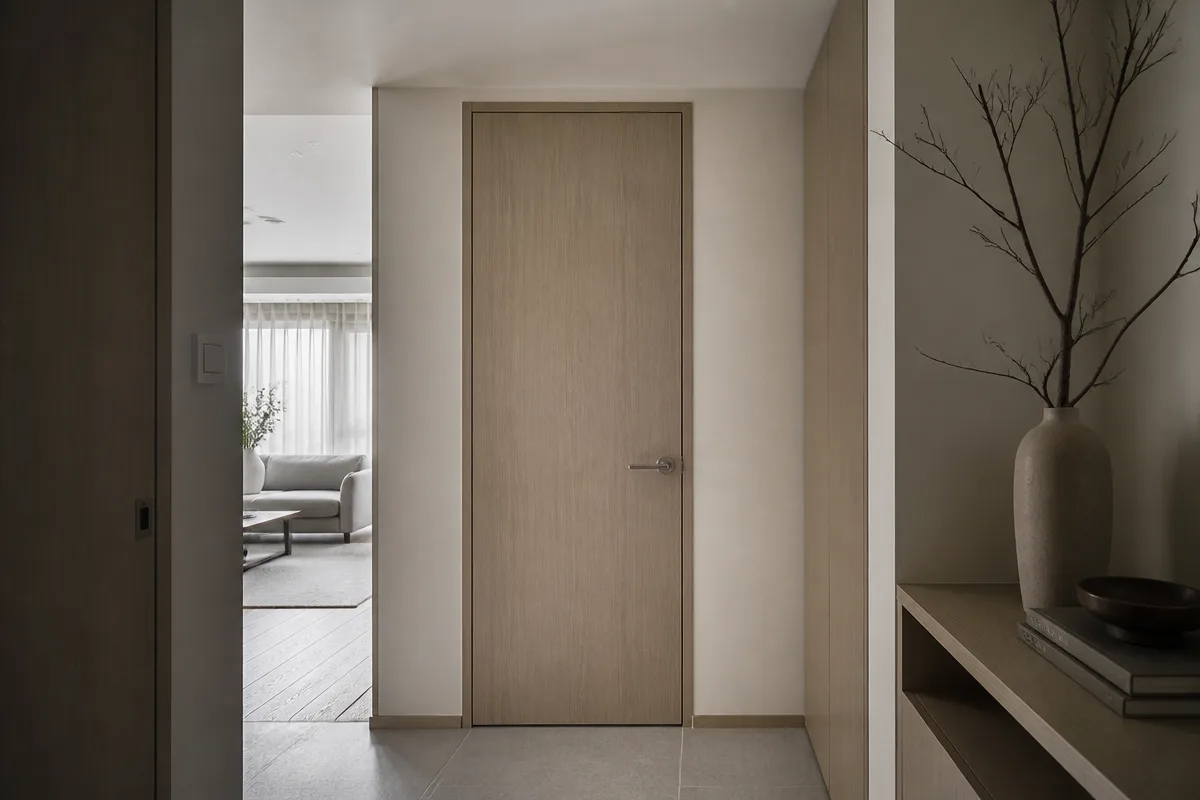
Flush doors and edge details
A flush face may look simple, but the face material, edge treatment and hardware preparation still need to be coordinated. The buyer should decide whether the finished look is painted, PVC laminated, melamine, veneer or another approved direction before the project sample is signed off.
What to include in a style-led RFQ
- Style reference image or approved sample.
- Leaf size, thickness, core and frame scope.
- Profile or panel layout for shaker and panel designs.
- Face material, colour, sheen and edge detail.
- Hardware preparation, quantity and packing sequence.
- Whether the range must match a previous order or local display sample.
Related VISFURN buyer guides
- Use the apartment interior door selection guide to coordinate repeated doors, frames and packing.
- For finish selection, review PVC laminated versus painted wooden doors.
Buyer questions
Shaker doors use a simpler framed layout with recessed panel areas, while panel doors often use more visible shaped or raised depth. The approved profile drawing or sample should define the project result.
Flush doors can suit repeated projects when the selected face material, edge detail, core, frame and hardware preparation match the room requirements.
No. Style and construction are separate decisions. Confirm the face, core, thickness, frame and performance requirements in addition to the visual profile.
Retain an approved sample, profile reference, finish direction and model specification so later orders can be checked against the same agreed basis.
Review a full sample for profile, finish, edge treatment, hardware preparation and frame coordination before repeated doors are released.
Send your style reference, sizes and finish direction for a repeat-order door review.
Request a Project Quote