
B30 · Specifications
How to Specify Custom RAL / Pantone Door Colors and Finishes for a Project
How to send a RAL or Pantone reference, avoid batch color drift and confirm sample approval before a bulk custom-color door order.
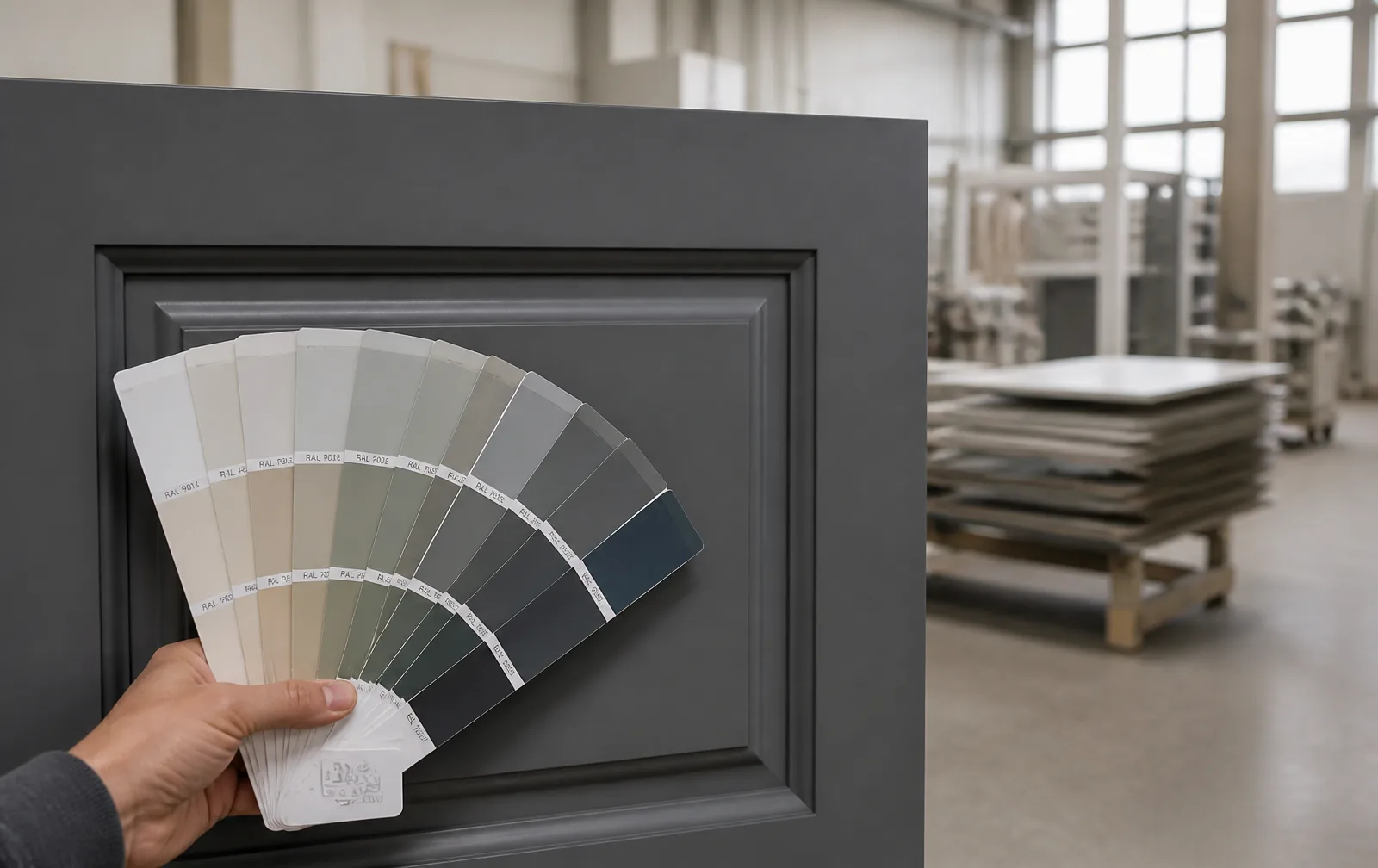
Quick answer
Specify a custom door colour with a named RAL or Pantone reference, the required sheen, a physical finish sample and an approved control sample so the factory can match the same finish direction across the production batch.
Why a colour name is not enough
Names such as charcoal grey, walnut black or warm white can mean different things across screens, paint systems and suppliers. A named RAL or Pantone reference gives the project a starting point, but the final finish should still be approved on the actual door construction and surface process.
Colour-control checklist
| Approval item | What the buyer provides | What the sample confirms |
|---|---|---|
| Colour reference | RAL, Pantone or an approved physical sample | Target hue and direction |
| Sheen level | Matte, satin or gloss expectation | How the finish reads under normal light |
| Door construction | Leaf, frame and architrave scope | Surface absorption and edge treatment |
| Control sample | Signed or referenced approved sample | Production comparison point |
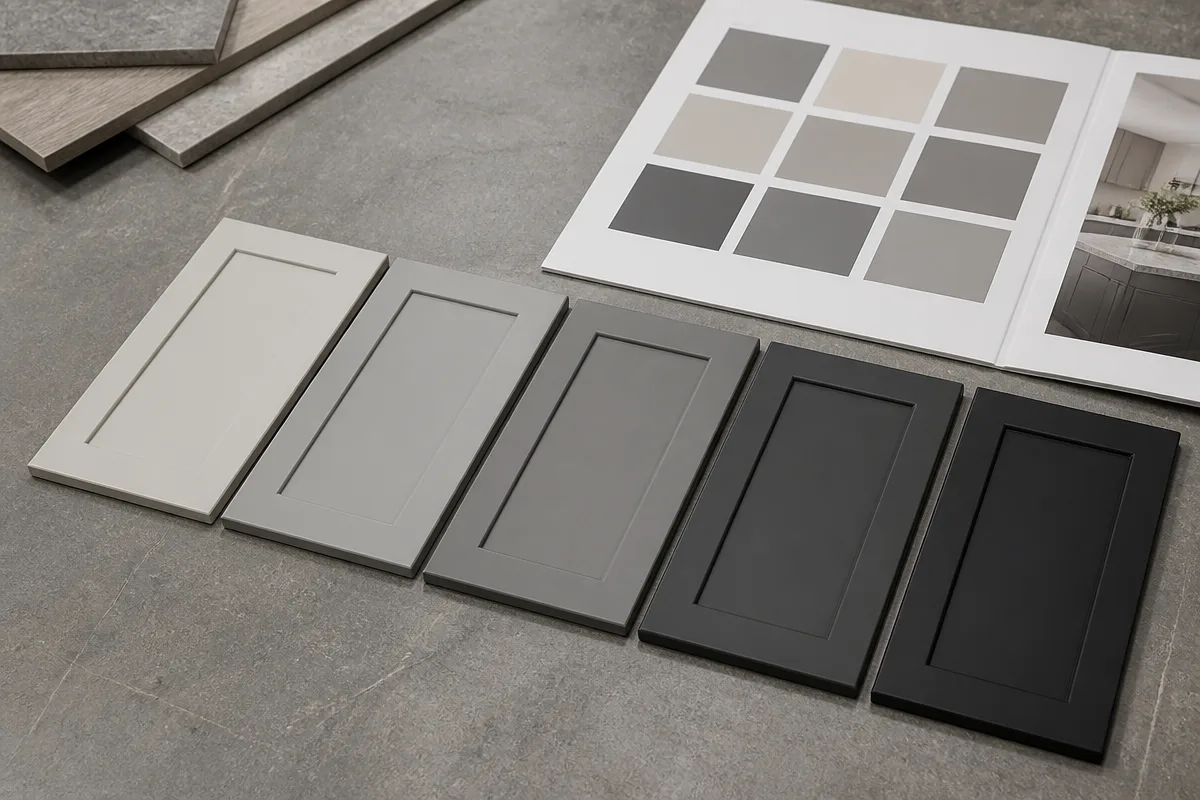
Sample panels and full-door approval
Small painted panels are useful for narrowing a colour direction. A full-door sample remains important because profile depth, edge treatment, frame material and viewing angle can change how the finish appears. Confirm whether the same colour must apply to the leaf, jamb, architrave and accessory pieces.
Matte, satin and darker finishes
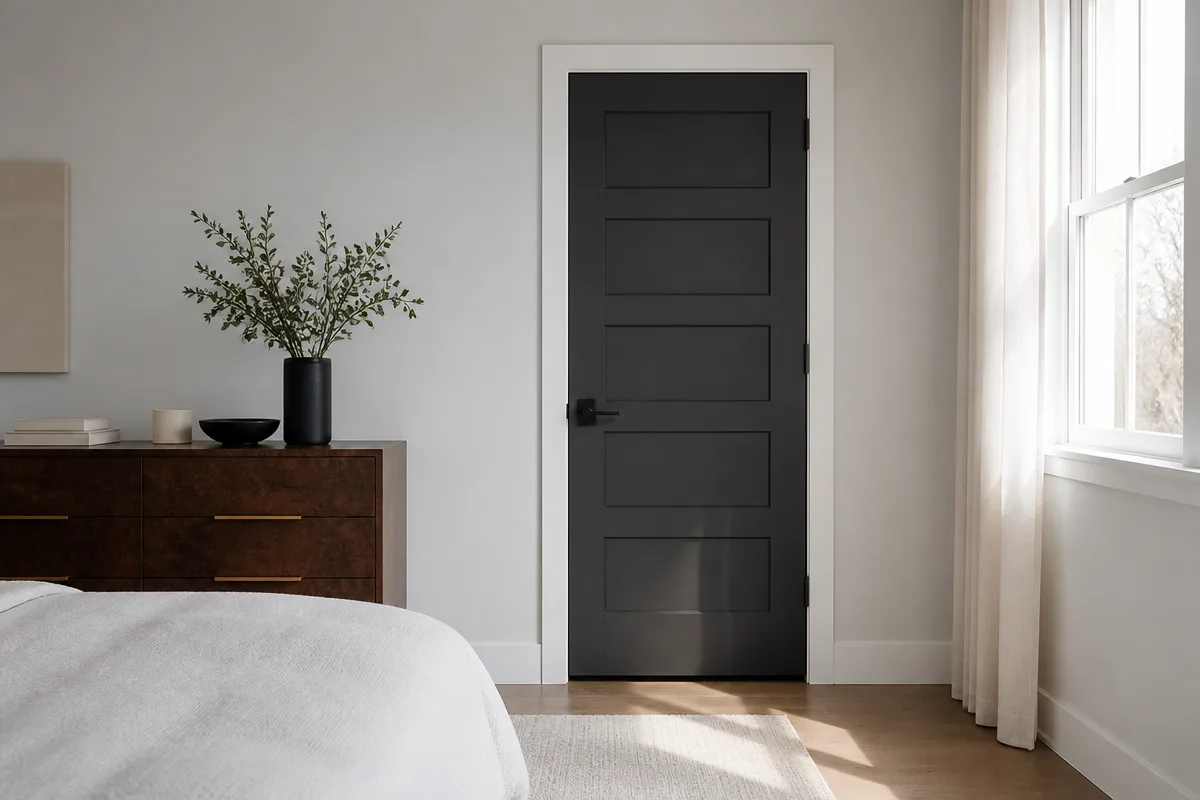
Sheen affects both appearance and inspection. Matte surfaces can show handling marks differently from satin or gloss surfaces, while dark colours can look warmer or cooler under different light. State the expected visual reference and the site environment so the approved sample represents the project decision.
How to avoid avoidable batch drift
- Use one agreed reference for each finish code.
- Approve the colour on the actual door construction rather than on screen only.
- Keep a control sample or approved panel for production comparison.
- Separate finish codes clearly in the door schedule and packing labels.
- Confirm whether replacement or phased batches must match an earlier approved sample.
Related VISFURN buyer guides
- Use the door sample approval checklist before releasing a custom-colour batch.
- Compare common project finish directions in PVC laminated versus painted wooden doors.
Buyer questions
It gives a clear reference, but the final finish should still be approved on the actual door material and surface process because sheen, texture and light affect appearance.
Use an approved control sample or signed panel, then compare the production finish against that reference during the agreed inspection process.
Yes. State the required sheen because the same nominal colour can read differently on a matte, satin or gloss surface.
Dark colours should be reviewed on a full sample in the intended finish because fingerprints, surface reflection and strong light can change the perceived result.
It can be reviewed against the retained approved sample or finish code, but the buyer should provide that reference when requesting the later batch.
Send your colour reference, preferred sheen and finish sample requirement for a project review.
Request a Project Quote