
B29 · Specifications
Smart & Fingerprint Lock Compatibility for Wooden, WPC and Steel Doors
How smart and fingerprint locks integrate with wooden, WPC and steel door leaves — backset, spindle, cutout and power-supply checks before mass production.
Quick answer
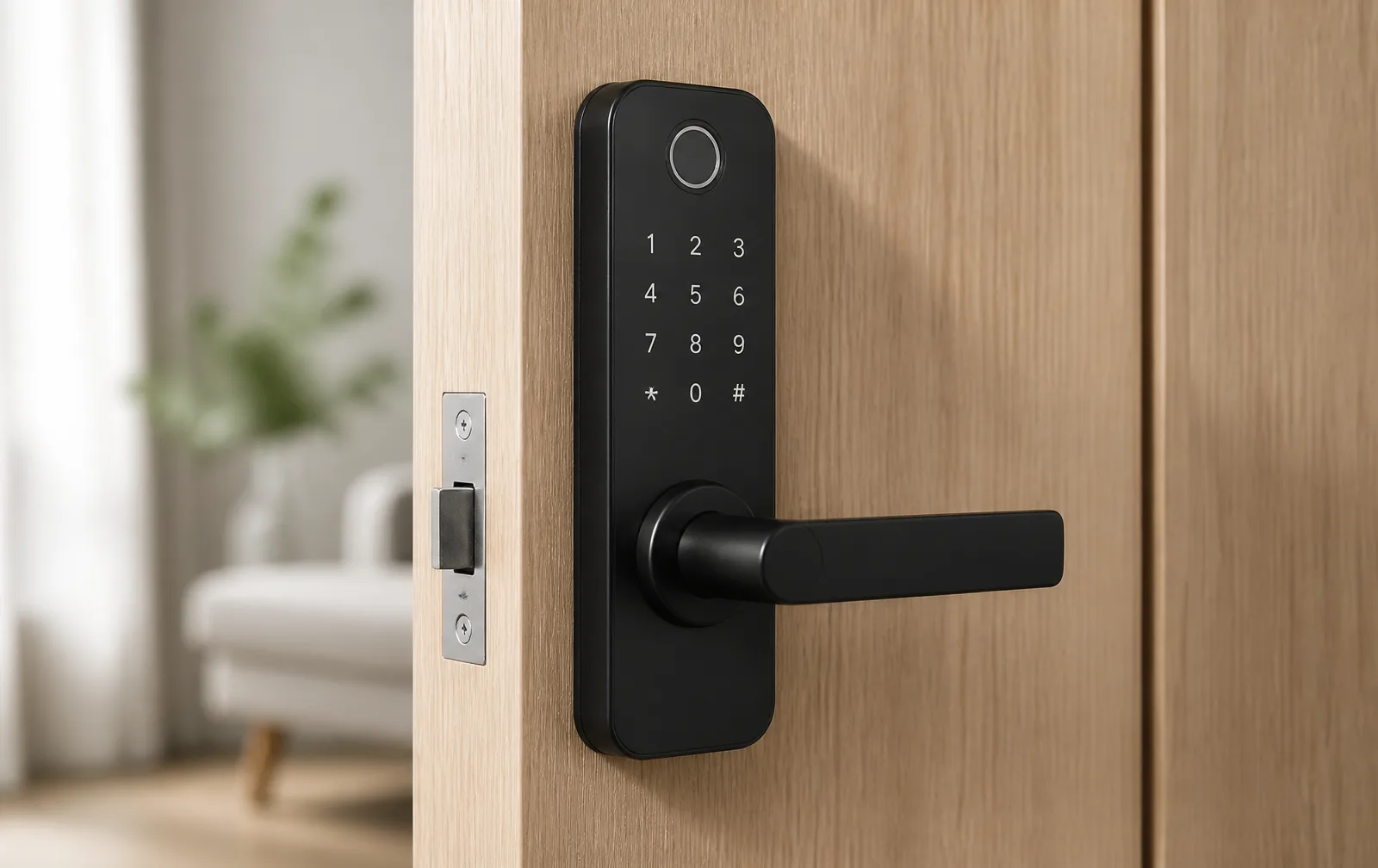
Smart and fingerprint locks can be prepared for wooden, WPC and steel doors when the lock body, backset, spindle position, door thickness, power method and emergency-opening requirement are confirmed for each opening type before machining.
What changes when a mechanical lock becomes a smart lock
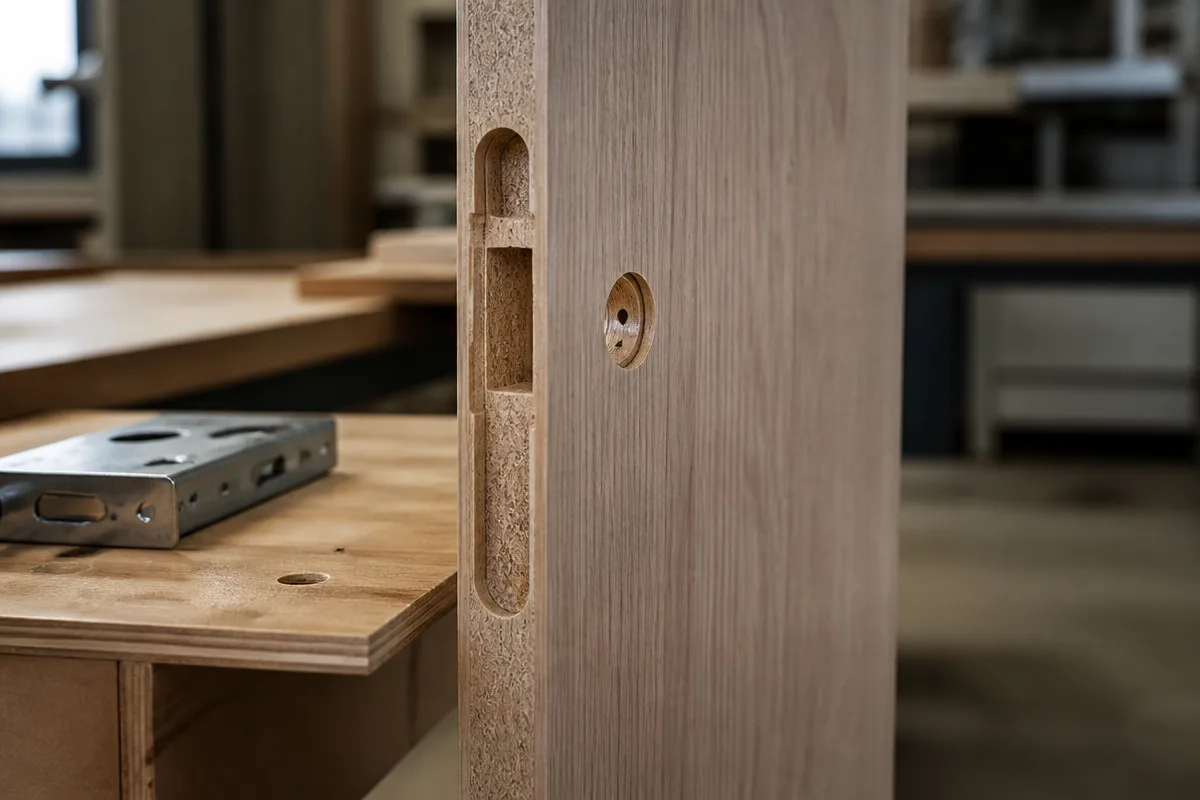
A smart lock normally needs more than a standard handle bore. The door leaf may need a different lock-body pocket, spindle or cable route, fixing-hole pattern and reinforcement zone. Confirm the selected lock model before cutting the first sample so that the leaf core and edge construction match the actual hardware.
Compatibility checks before machining
| Door system | What to confirm | Typical coordination risk |
|---|---|---|
| Wooden or engineered leaf | Leaf thickness, core density, lock pocket, spindle and fixing points | A lock body or through-bolt conflicts with internal construction |
| WPC door set | Leaf thickness, frame detail, reinforcement and privacy or access function | Hardware fixing is assumed without confirming the selected system |
| Steel security door | Lock case, cylinder, electrical route, escutcheon and frame strike | Lock body, strike plate and anti-pry detail are reviewed separately |
Lock cutout, spindle and cable preparation
Send the lock template, side elevation, backset, handle or escutcheon drawing and door handing with the RFQ. If the lock uses a cable between the inside and outside escutcheons, confirm its route and whether the leaf needs a protected pass-through. A typical approved opening is the safest way to verify the preparation before repeated doors are machined.
Hotel and repeated-opening coordination
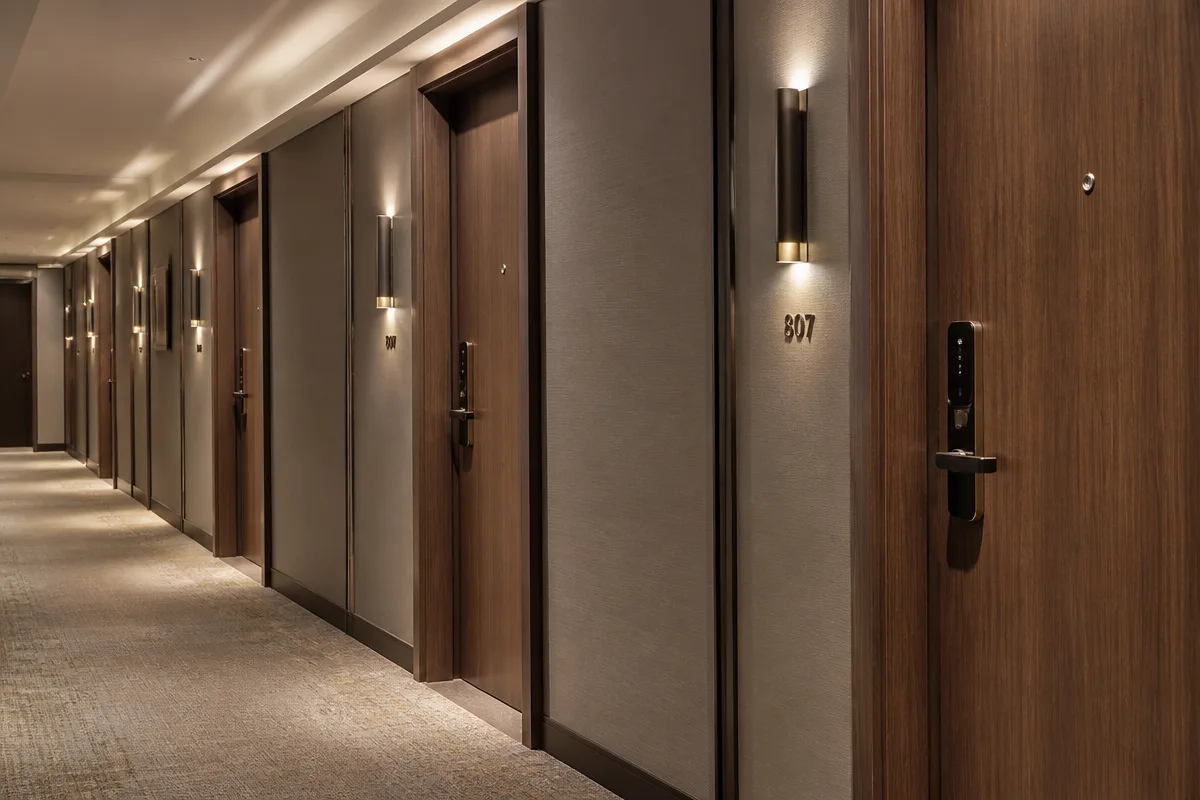
For hotel, apartment or office packages, keep smart-lock openings separate from standard mechanical-lock openings in the door schedule. The schedule should identify the room type, opening ID, handing, lock model, closer or viewer requirement and packing sequence so site teams do not mix hardware-ready leaves with standard leaves.
What to send in a smart-lock door RFQ
- Door schedule with opening IDs, leaf sizes, thicknesses and handing.
- Lock model, template, backset, cylinder or emergency-opening details.
- Battery, low-voltage or mains-power expectations for the destination.
- Any closer, viewer, seal, access-control or fire-door coordination notes.
- One typical opening for sample approval before bulk preparation.
Related VISFURN buyer guides
- Use the door hardware preparation checklist before releasing lock and hinge machining.
- Review compatible entrance solutions in fire and security doors.
Buyer questions
It can. The lock-body pocket, through-bolts, spindle and cable route must be checked against the leaf thickness and core construction before machining.
Confirm the selected lock model’s battery, mechanical key, emergency power or other approved emergency-opening method before the project door preparation is released.
Only when the opening type, leaf thickness, handing and hardware set are genuinely the same. Keep different lock models and room types separate in the schedule.
Yes. Confirm whether the lock is battery-operated, low voltage or connected to a local power system, and check the selected hardware documentation for the destination.
Approve a typical door leaf with the actual lock preparation, finish, handing and hardware template before applying the machining to repeated openings.
Send your lock template, door schedule and one typical opening for a compatibility review.
Request a Project Quote