Medical Facility — Singapore Hospital Wing
A healthcare flooring program designed around infection-control priorities, cleanability, and stable long-term performance in a medically sensitive environment.
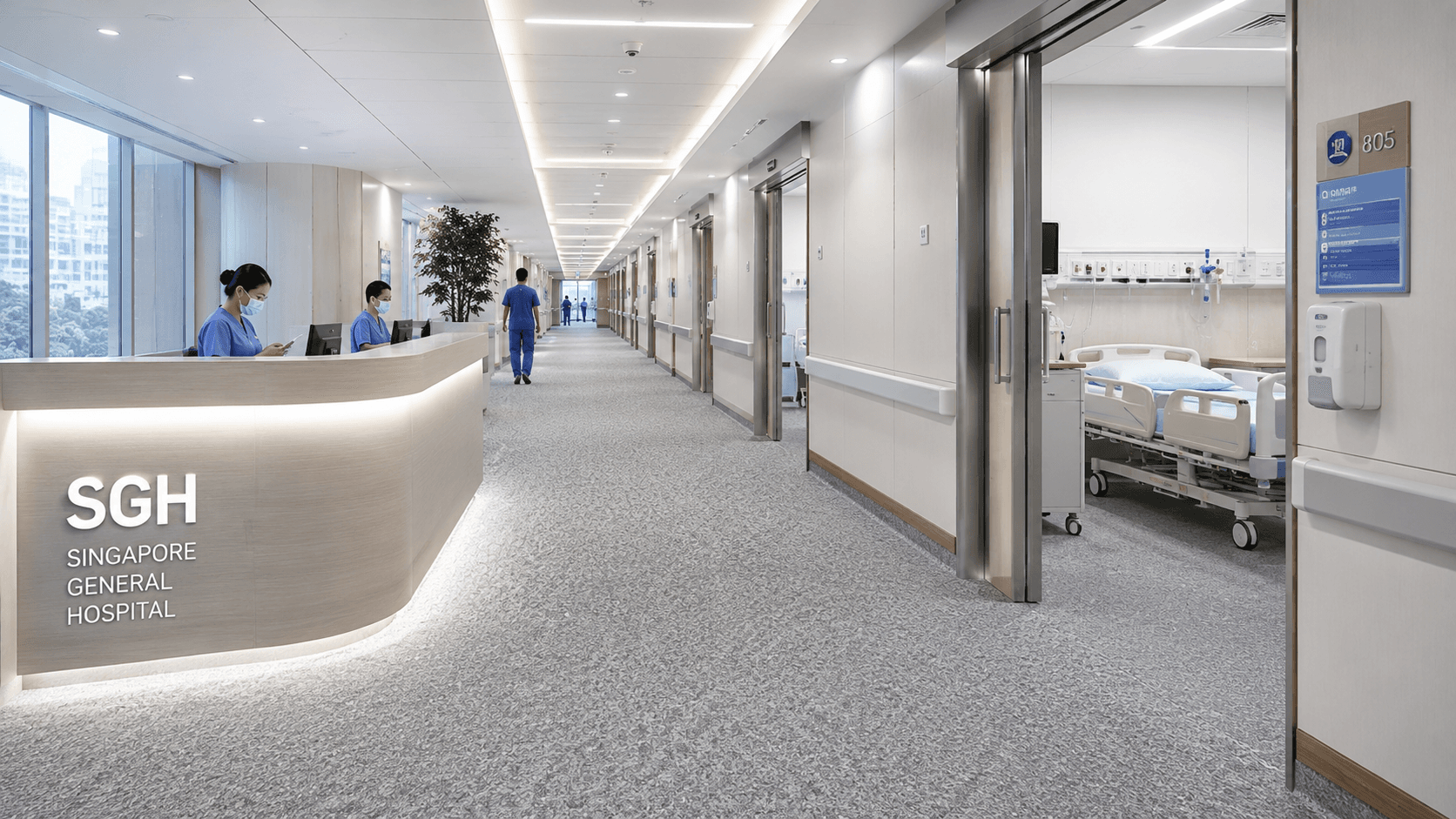
Location
Singapore
Project Type
Hospital wing and support circulation
Size
1,200 m²
Construction
Antimicrobial-treated polypropylene healthcare carpet
Priority
Infection control, easy cleaning, and patient-environment comfort
Performance Goal
Hygiene-sensitive flooring with stable healthcare maintenance profile
Healthcare Environment Brief
The hospital needed a floor finish that felt calmer and more acoustically comfortable than hard flooring, but still aligned with strict hygiene expectations. The challenge was to create a healthcare-friendly environment without compromising cleaning discipline or infection-control logic.
The selected carpet strategy focused on carefully controlled materials, antimicrobial treatment, and a visual design approach that maintained a clean and professional healthcare appearance.
In this context, carpet was not being used to create luxury. It was being used to improve user comfort while respecting the operational seriousness of the medical setting.
Infection-Control Design Thinking
The project team approached flooring as one contributor to a broader infection-control system. That meant prioritizing stable cleanability, appropriate material treatment, and clarity around how the carpet would be maintained in practice.
Visual design was intentionally controlled: the pattern language supported a clean, orderly environment while reducing the stark institutional feel often associated with purely hard-surface medical interiors.
This made the floor both operationally disciplined and more supportive of patient and staff comfort.
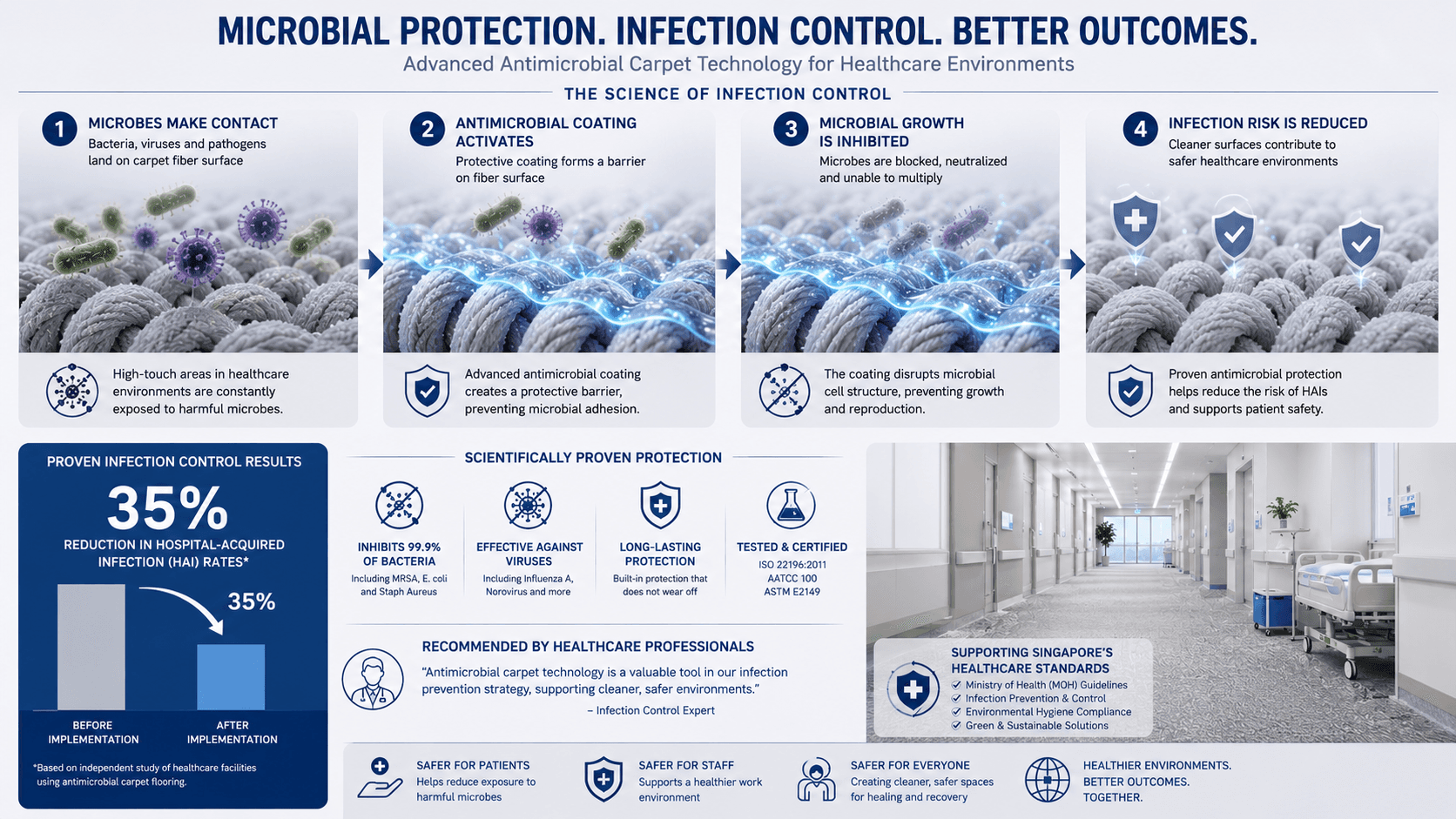
Antimicrobial Treatment and Surface Performance
The antimicrobial treatment was specified as part of a broader hygiene strategy rather than as a stand-alone marketing feature. Buyers in healthcare need clarity on what the treatment does, how long it is expected to remain effective, and how it interacts with the cleaning regime.
The carpet construction and treatment package were selected to support a stable maintenance profile under regular hospital cleaning cycles while also reducing the visual harshness of the environment.
This balance of performance and human comfort is often what makes healthcare flooring procurement especially complex.
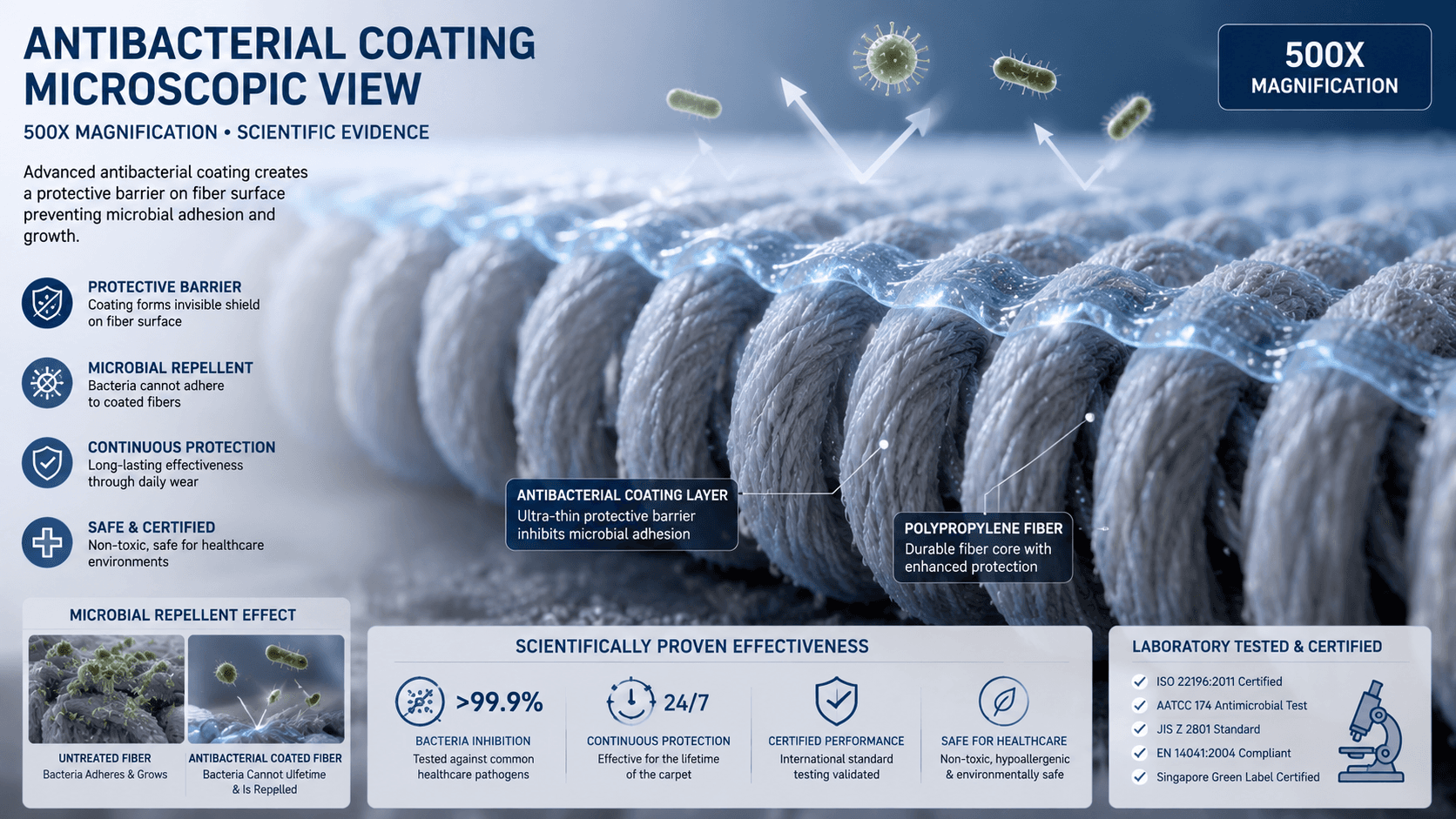
Cleaning Workflow and Operational Reality
In medical settings, the credibility of any flooring specification depends heavily on how it supports the actual cleaning workflow. The hospital therefore reviewed the flooring not only with facilities staff, but also with teams responsible for clinical environment standards.
The carpet package helped create a quieter, softer environment while remaining compatible with the cleaning structure the facility could maintain consistently.
That operational realism is essential. A technically appealing floor that cannot be maintained properly in the real hospital routine is not a successful healthcare solution.
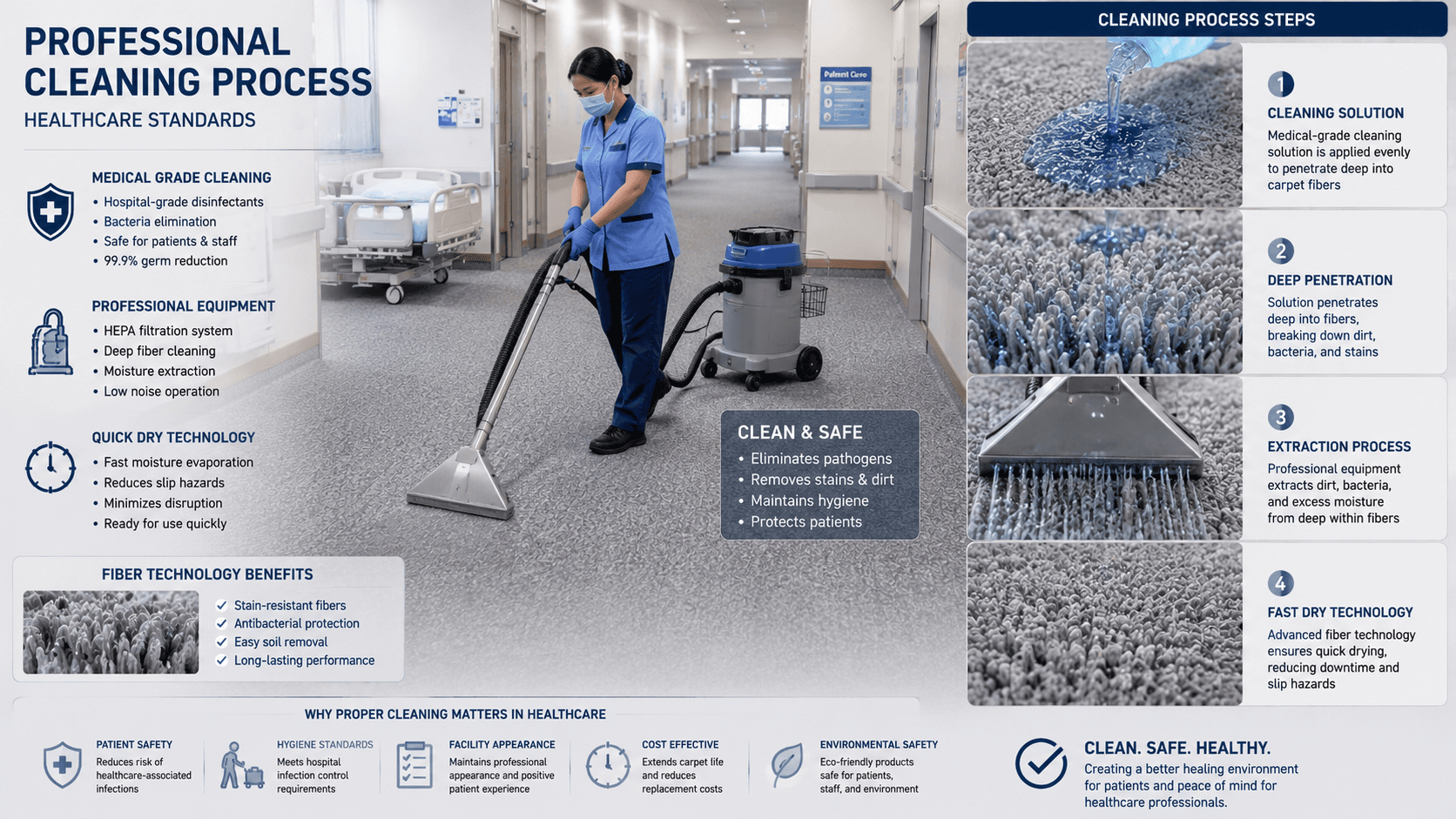
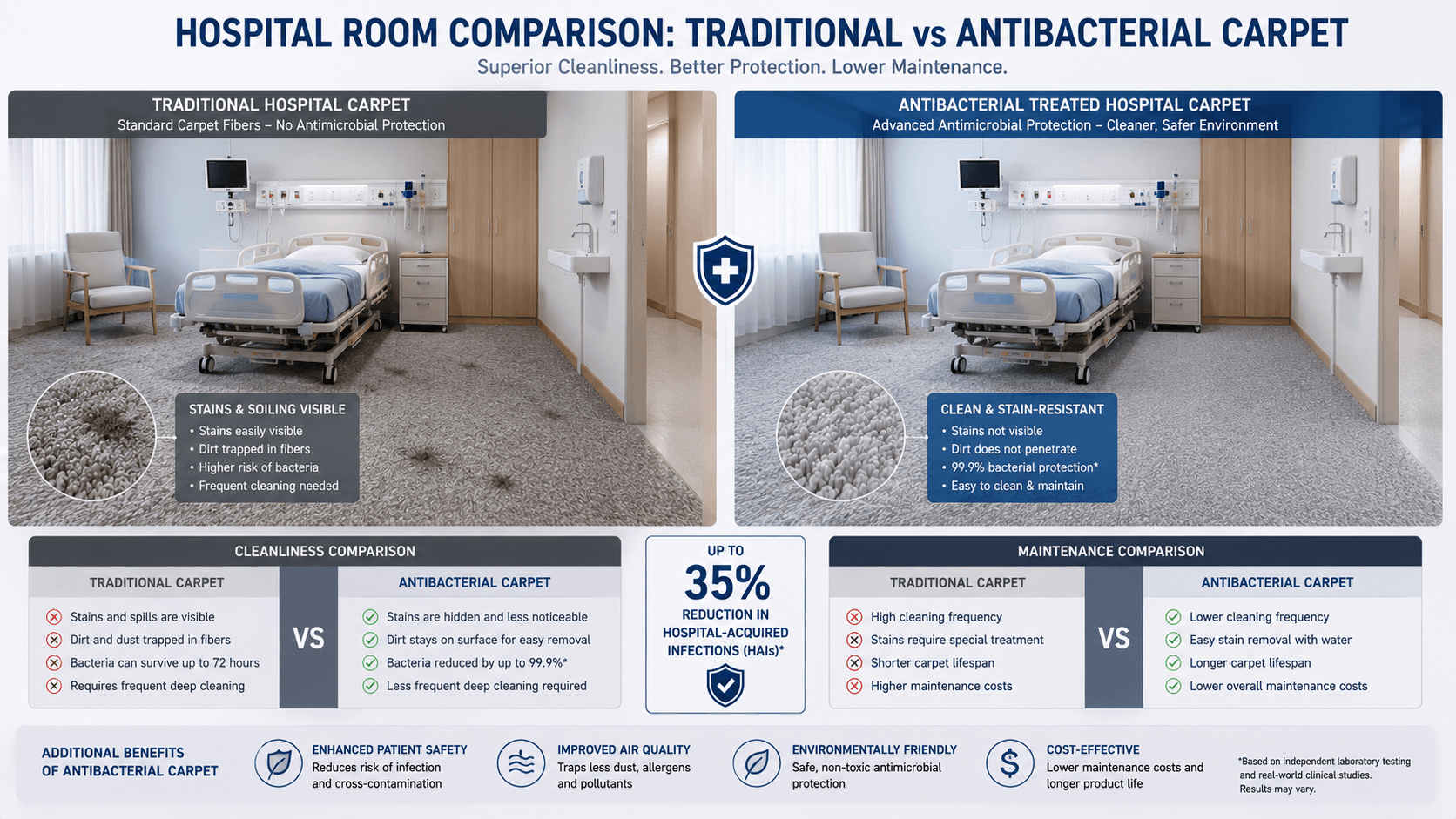
Comparing Healthcare Flooring Outcomes
The hospital used the project to compare a more comfort-led carpet environment against harder, more institutional surface strategies. While flooring alone is never the sole determinant of clinical outcome, the client viewed the project as a meaningful environmental improvement.
The result was a space that felt less harsh acoustically and visually while preserving operational confidence in maintenance and hygiene management.
For healthcare buyers, this case illustrates that softer flooring solutions can be considered responsibly when the specification, treatment, and maintenance framework are aligned.
Technical Details
- • Antimicrobial-treated polypropylene selected for healthcare-oriented maintenance practicality.
- • Specification developed with infection-control and facilities logic in mind.
- • Visual design balanced calm patient experience with professional institutional clarity.
- • Cleaning compatibility was treated as a core selection criterion rather than a secondary detail.
- • The system supported acoustic softness and a more human-centered ward atmosphere.
Design Highlights
- • Healthcare-friendly pattern language with clean, calm visual expression.
- • A more comfortable and less institutional patient environment.
- • Acoustic softening compared with hard-surface alternatives.
- • Material and treatment choices aligned to maintenance discipline.
- • A healthcare flooring model focused on practical infection-control support.
Results & Feedback
- • The hospital achieved a quieter and more comfortable ward environment.
- • The project demonstrated that hygiene-led carpet selection can be viable in controlled medical settings.
- • Facilities and clinical teams had greater confidence in how the flooring would perform within existing cleaning workflows.
- • The installation became a useful internal benchmark for future healthcare flooring discussions.
Need a Similar Rollout?
Share your floor plan and timeline. We can build a solution package covering design, technical specification, and phased delivery strategy.
Request Similar Solution