
Quick answer
Ask the door supplier for care instructions for the specific proposed model and finish, then compare them with the building operator's planned cleaner, contact time, frequency and method. Confirm the leaf face, edges, frame, seals and hardware separately. Do not infer chemical resistance, disinfectant compatibility or a hygiene approval from the term WPC or from a product photograph. Where the routine is undecided, treat compatibility as an approval item before batch release.
Why the cleaning brief belongs in the RFQ
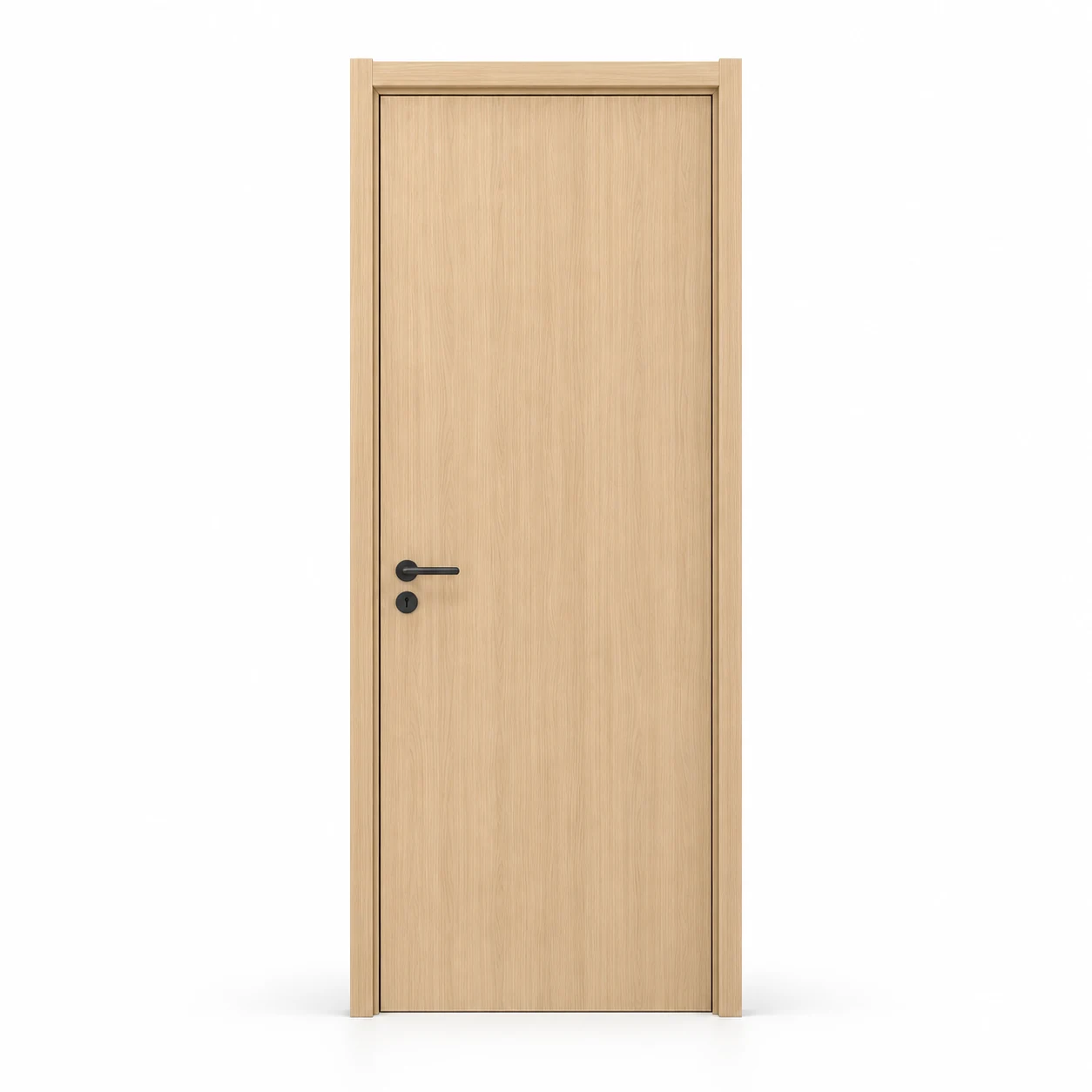
Cleaning is part of the operating environment, not a cosmetic afterthought. A guestroom entry, bathroom, utility room and shared corridor may see different moisture, touch and cleaning patterns. The U.S. CDC advises community facilities to consider surface type and frequency of touch when setting a cleaning routine; its guidance expressly excludes healthcare and other settings with their own requirements. The RAIC maintenance checklist likewise points owners toward the actual project maintenance manuals. Neither source is a VISFURN product test.
A bid that names only “WPC door, woodgrain finish” leaves unanswered which parts of the set can be wiped, how the edges and frame are treated, and whether the planned cleaner can be used on the selected finish. Those omissions can matter across hundreds of repeated openings. The buyer should identify the facility's cleaning plan before approving the sample and ask the supplier to state any unverified exposure or care limitation.
Compare the complete door set, not only the leaf face
| Component | Question for the supplier or operator | Record before approval |
|---|---|---|
| Leaf and finish | Which proposed surface and finish are being evaluated, and what cleaner and wiping method are planned? | Model, finish reference, care document, approved cleaning method and unresolved restrictions. |
| Edges and bottom | Could water collect at cut edges, floor junctions or after repeated wet cleaning? | Edge detail, floor clearance, threshold and the operator's drying procedure. |
| Frame and seals | Does the frame material, joint and seal have the same care instructions as the leaf? | Frame profile, seal type, material-specific cleaning and replacement responsibility. |
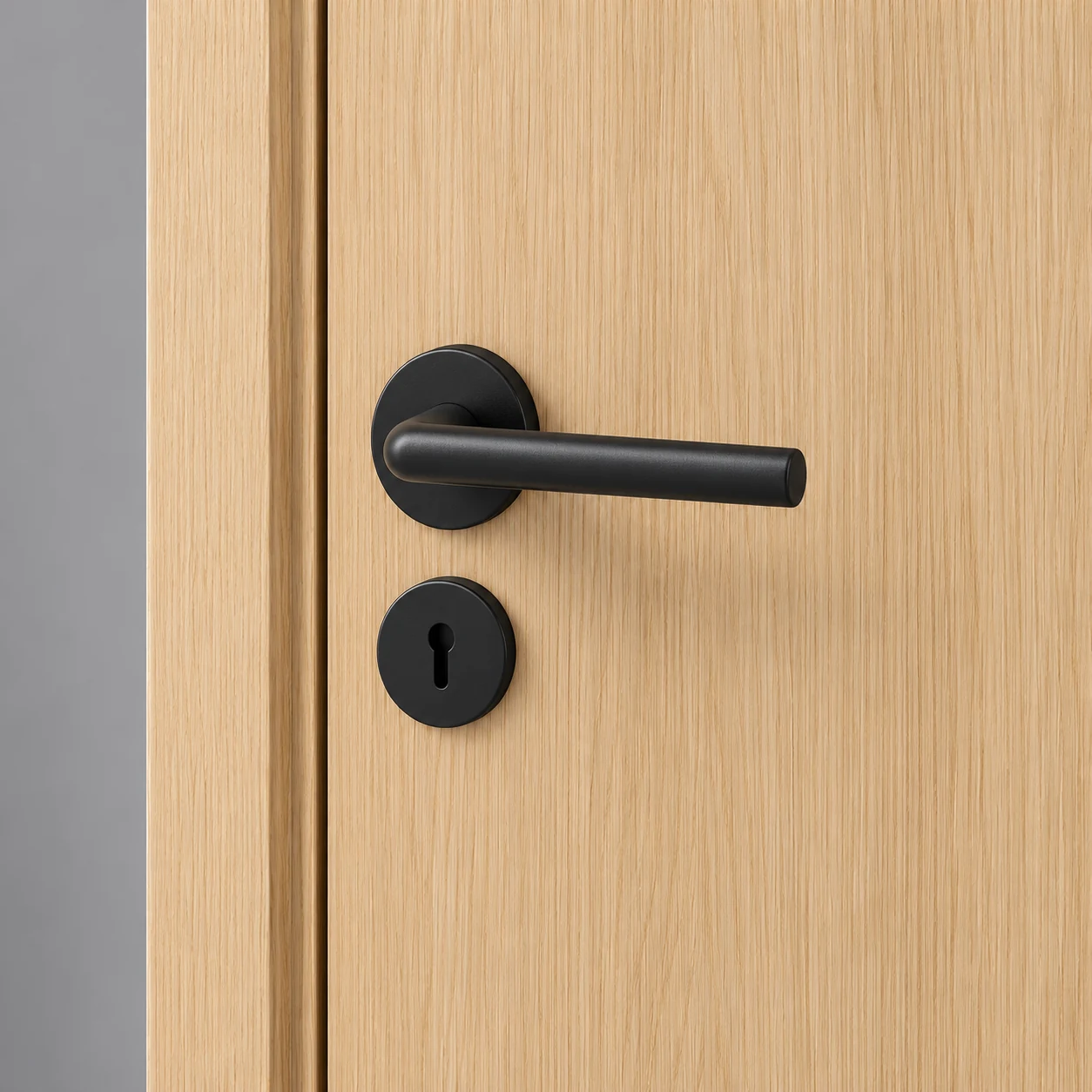
| Hardware | How will handles, locks, hinges and closers be cleaned without damaging finishes or operation? | Hardware schedule, maker's instructions and responsibility for inspection or adjustment. |
Do not turn this table into a claim that every WPC design tolerates standing water, abrasive tools or a particular disinfectant. The proposed construction and finish must be reviewed against the actual maintenance routine. If a door also has specified fire, smoke, acoustic or accessibility performance, its approved assembly and alteration rules require separate review.
Run a sample review before releasing a repeated finish
Choose a sample that represents the intended leaf, edge, frame and hardware combination. Label it with its product and finish code, and record the approved drawing revision. Ask the supplier and building operator to agree on a small-area trial of the operator's actual cleaning process, following the cleaner and door makers' instructions. Record what was applied, where, for how long, who reviewed it and what decision was made. A visual check after one trial is a project approval step; it is not a durability or hygiene certification.
Where the operator has not selected a cleaner, note the decision as open and avoid promising compatibility. If the facility later changes chemicals or procedures, the new routine should be checked against the care instructions again. The same principle applies when a finish, frame, seal or hardware component is substituted after the sample approval.
Handover information that keeps a bulk order usable
Ask for the approved door schedule, finish and hardware references, installation and care instructions available for the chosen model, and the contact route for replacement parts or future matching orders. Record door marks and carton labels so a facility team can locate the affected set without relying on a room description alone. For staged deliveries, identify whether later batches must visually match an earlier sample and how any variation will be approved.
Maintenance staff should receive the same model and finish identification that purchasing used. Record the operator's inspection owner and escalation path for loose hardware, damaged seals, surface damage or persistent water contact. The Royal Architectural Institute of Canada's owner checklist is a useful reminder that general inspection guidance does not replace the more detailed manuals handed over for a particular building.
Send a quote-ready cleaning and maintenance brief
- Project country, building type, room uses, destination and project approval or delivery dates.
- Door schedule with marks, quantities per configuration, opening sizes, handing and wall/frame details.
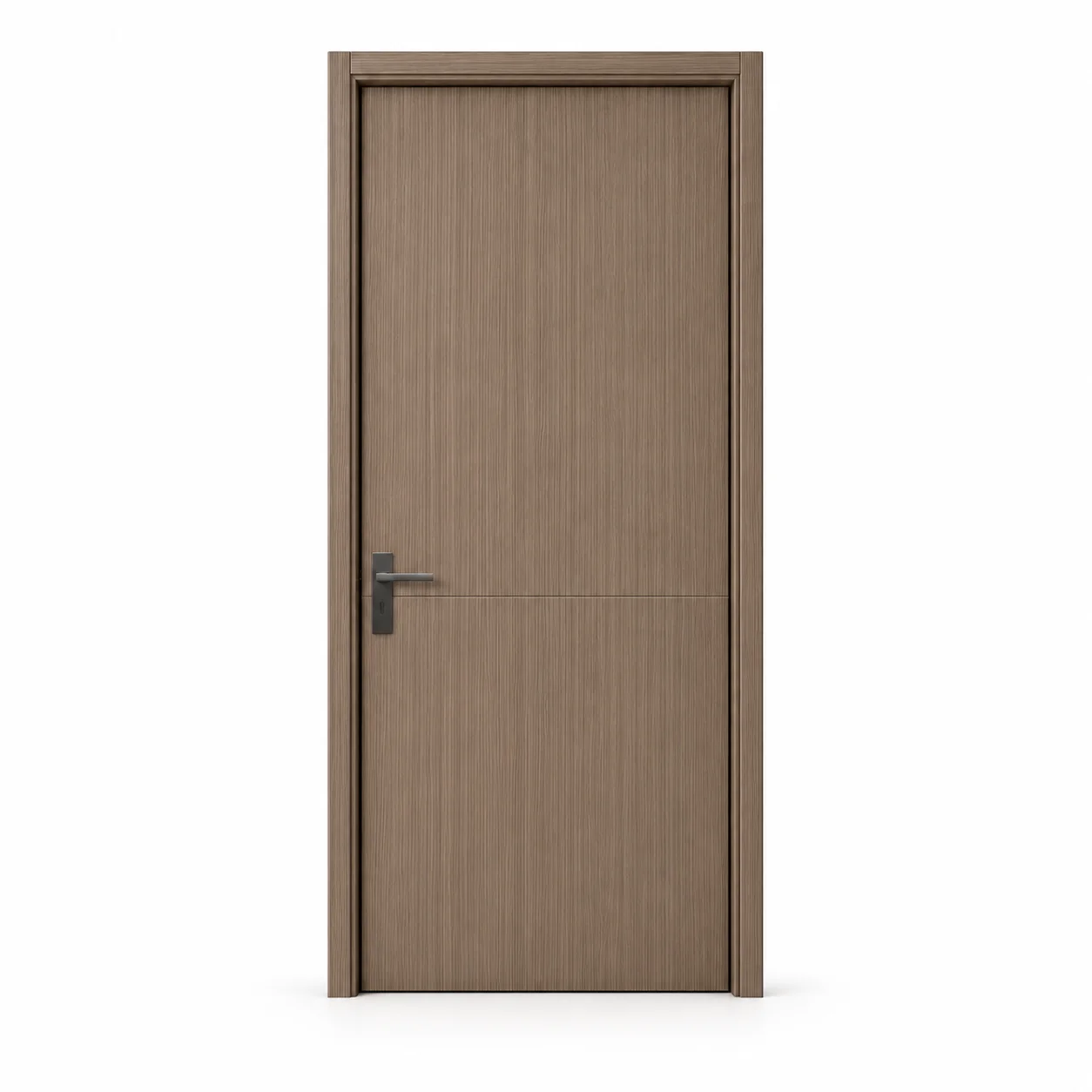
- Chosen WPC or other interior door model, finish reference, edge and frame scope, hardware set and threshold detail.
- Expected cleaning frequency, method, cleaner or disinfectant name and concentration if already selected, contact time and whether water can stand at the bottom or edges.
- Sample review plan, approving party, required care documents and any project-specific standards or hygiene rules.
- Installation, handover, replacement and future batch-matching responsibilities; identify items still pending confirmation.
Start with the WPC door collection for configurations, and the bulk sample approval guide for a separate pre-production sign-off process. The interior door collection helps compare other material routes where the maintenance brief differs.
Buyer questions
Is every WPC door safe to clean with disinfectant?
Do not assume so. The chemical, concentration, contact time, finish and construction all matter. Request model-specific care information and confirm the proposed routine with the responsible parties.
Can we compare doors without a cleaning schedule?
Yes, as a provisional comparison, but identify the missing maintenance decision in the RFQ. Do not treat an unverified cleaning assumption as an approved specification.
Does this guide apply to hospital doors?
Healthcare facilities may have additional infection-control requirements. Obtain the facility's specific brief and review the exact door assembly and documentation; the community-facility source below is not healthcare guidance.
Research sources and limits
- U.S. CDC, When and How to Clean and Disinfect a Facility (16 April 2024; reviewed 3 November 2026): general community-facility cleaning context, not healthcare guidance or a door-material approval.
- Royal Architectural Institute of Canada, Appendix C: Maintenance of Architectural Components (reviewed 3 November 2026): owner maintenance and project-manual context, not a VISFURN warranty or test.
Request a WPC door scope review
Send your door marks, drawings, approximate quantities, finish and cleaning brief, destination, project dates and required standards. VISFURN can discuss the proposed door-set scope and identify details that need model-specific confirmation before quotation or production approval.
Send the WPC door RFQ →