Quick answer
A security requirement, a fire-resistance requirement and a means-of-egress requirement answer different questions. List each one separately for every door mark and ask what evidence applies to the complete proposed door set. Do not infer a burglary rating from a fire label or a fire rating from steel construction. A project designer and the relevant authority must confirm the required standard, classification and approval route for the destination market.
Why the same opening may need different evidence
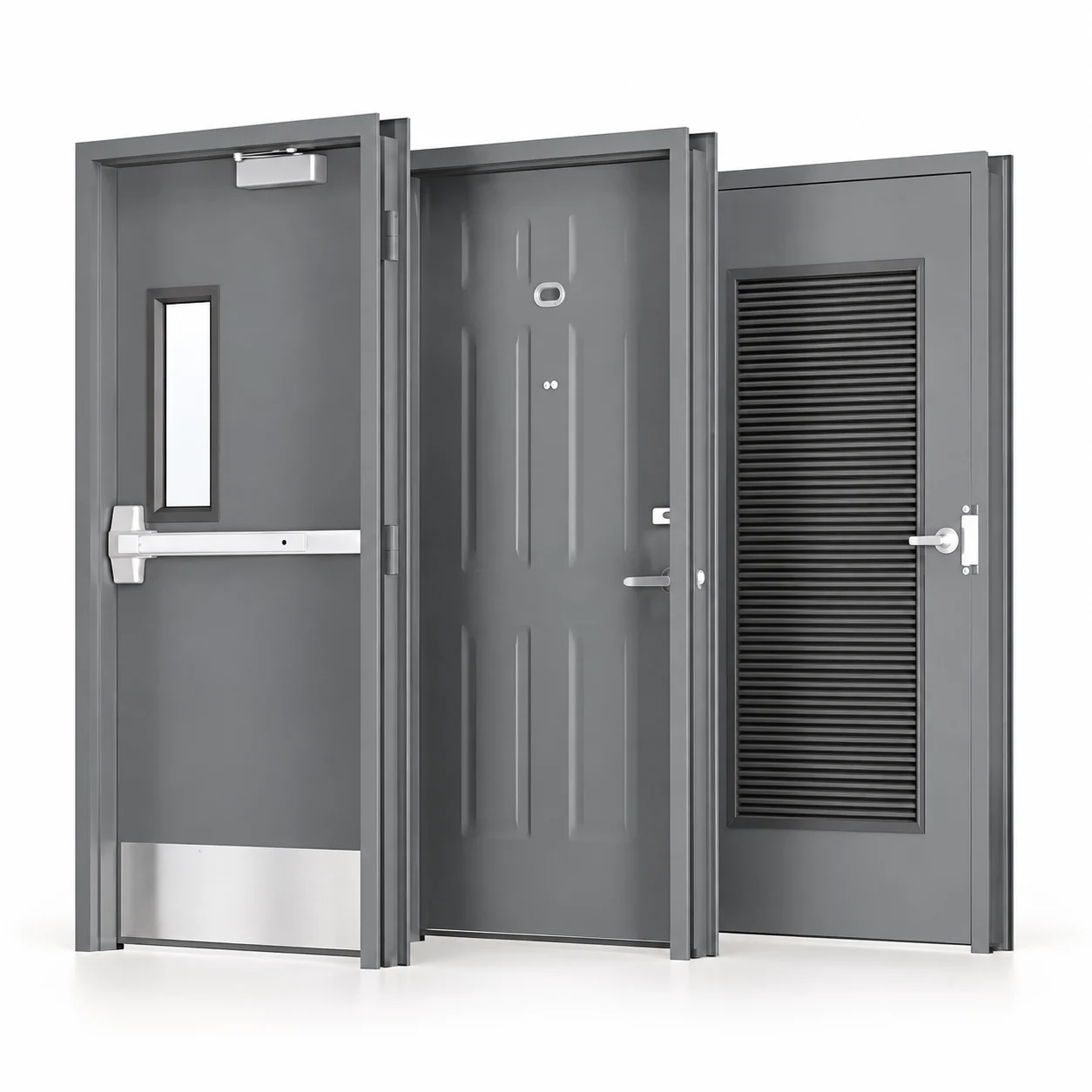
A residential unit entrance may be part of a protected corridor. A plant-room door may protect equipment. A street-facing entry may prompt an intrusion brief. Those uses can overlap, yet their performance claims are evaluated through different requirements and documentation. UL Solutions' fire-rated door guide explicitly separates the fire-door categories it describes from doors certified for burglary or theft protection. Its labels and classifications are relevant only to the specific listed assembly and jurisdiction; they do not establish a VISFURN product claim.
The buyer should obtain the applicable door schedule from the architect, fire consultant or responsible designer before selecting a pictured style. Identify the jurisdiction and approving party. Ask whether the required evidence covers leaf only, or the supplied frame, glazing, seals, hinges, closer and latch as an assembly. Changes to hardware or openings can affect an approved configuration and need review against its documentation.
Separate the decisions in the RFQ
| Requirement | Buyer question | Information to request or approve |
|---|---|---|
| Security | What forced-entry or access-control objective applies to this door mark? | Required test or classification, lock and cylinder schedule, frame/fixing detail, and evidence matching the offered configuration. |
| Fire and smoke | Is this opening part of a fire or smoke strategy, and what exact classification is specified? | Project-required rating or classification, relevant listing or test scope, approved hardware, seals, glazing and installation conditions. |
| Egress and access | Must occupants leave through this opening, and how must it operate? | Handing, clear opening, opening force, latching and release strategy, accessibility and any panic or emergency hardware requirements. |
| Environment | Is the door interior, sheltered or exposed? | Weather exposure, threshold, corrosion/finish brief and wall/structural interface; confirm any project-specific evidence needed. |
A single door may need several of these functions. The table is a briefing tool, not a statement that one VISFURN model meets them. If the evidence is unavailable for the requested combination, ask the supplier to flag the gap instead of substituting a similar-looking door.
Define the supply boundary before comparing prices
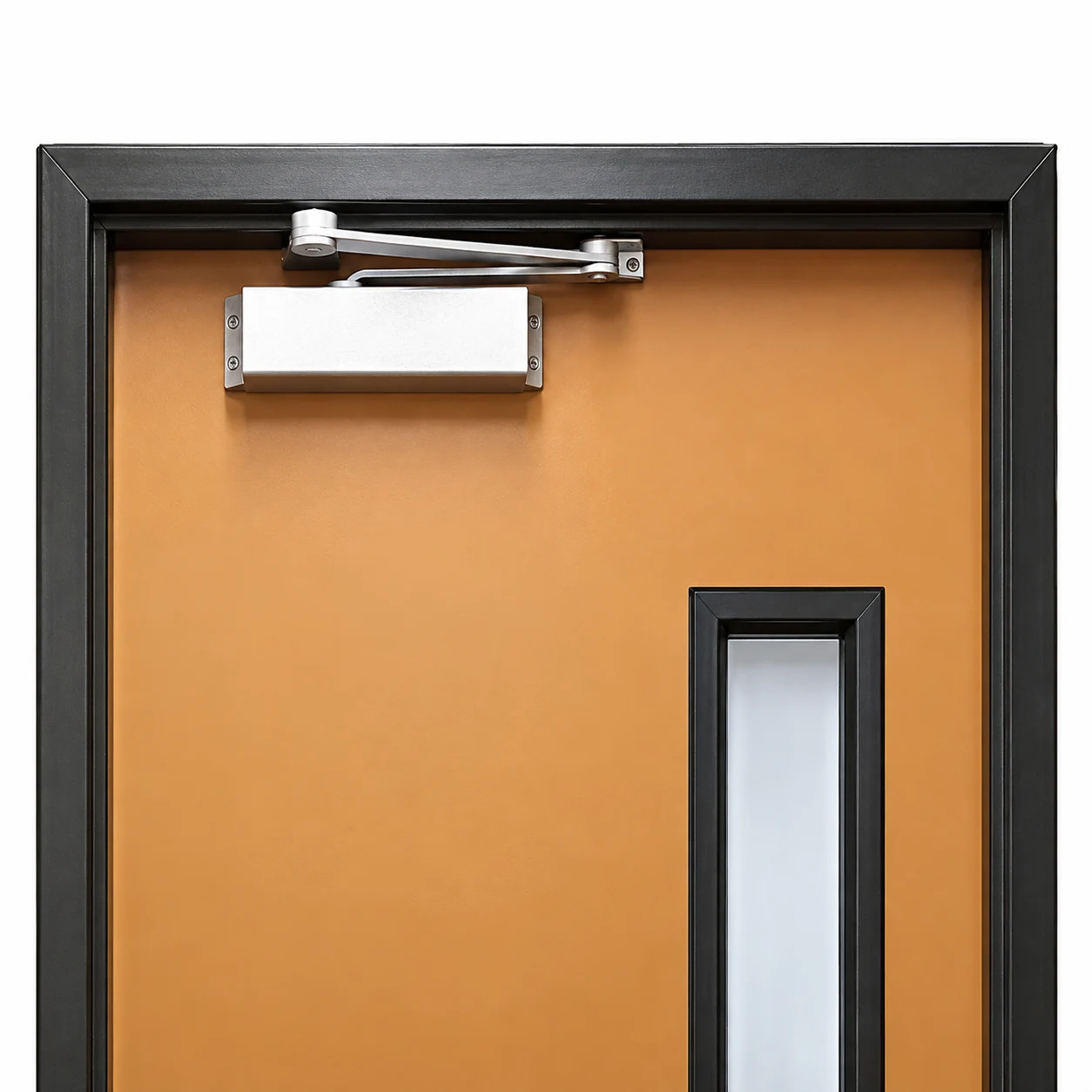
Two offers can describe a “steel security door” while pricing different packages. One may include the leaf only; another may include a frame, threshold, seals, hinges and lock preparation. Record which party supplies the cylinder, closer, viewer, access-control components, door furniture and fixing materials. State whether installation, local certification, inspection and commissioning are included, excluded or handled by others.
Where the design changes after quotation, check the affected evidence. A wider vision panel, different lock case, additional closer, changed frame profile or altered fixing substrate should not be assumed to preserve a prior classification. Request the applicable drawing revision and approval decision before batch release. This is particularly important when repeated apartment doors have a few exceptional fire, security or escape-route marks.
Turn the door schedule into a quote-ready package
- Identify each opening: door mark, room or entrance use, new-build or replacement scope, quantity by type, and whether there are repeated or exceptional marks.
- Send drawings: plan, elevation and section with structural and finished opening sizes, leaf size if fixed, wall thickness, frame profile, finished-floor level, handing and swing.
- State the destination: country, city and delivery location. Name the responsible designer, authority and applicable standards or approved specification; do not assume that one market's label is accepted elsewhere.
- Separate performance requests: security, fire, smoke, egress, accessibility, weather exposure and other required functions. For each, state the classification or leave it explicitly pending designer confirmation.
- Schedule interfaces: locks, cylinders, hinges, closers, handles, access control, glazing, seals, thresholds, wall fixings and finishes. Identify who supplies and installs each item.
- Set commercial timing: sample or drawing approval milestone, expected project schedule, quantity and delivery sequence. Ask the supplier to state any unresolved scope, evidence or lead-time dependency in its offer.
For design references, review VISFURN's architectural steel entrance door configurations and fire-rated steel door category. Their images and descriptions are starting points for scope discussion, not a substitute for model-specific documentation.
Resolve these questions before purchase order
Is every steel door a fire door?
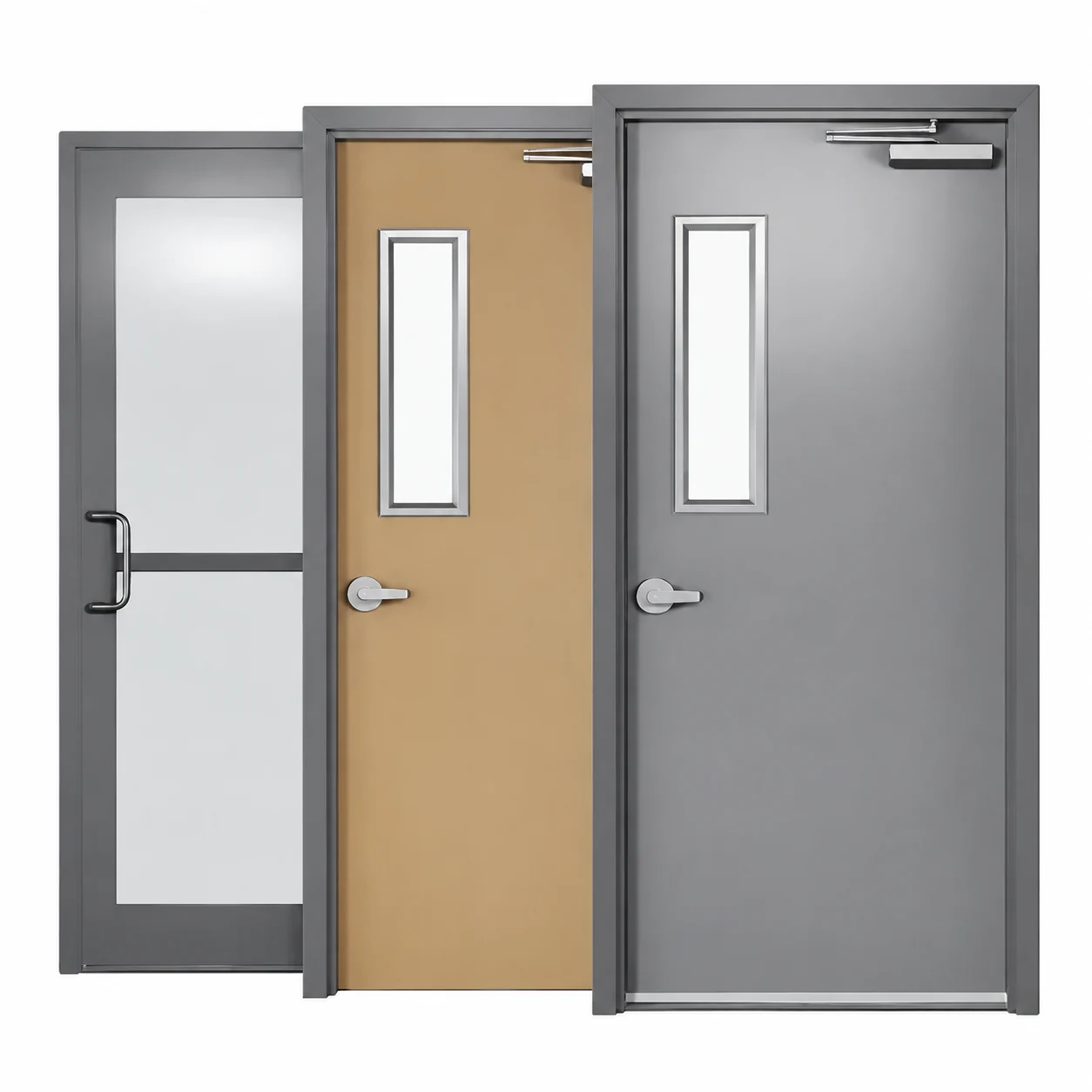
No. Steel is a material description. A required fire classification needs evidence for the applicable assembly and installation conditions. Ask the project authority which documentation is acceptable.
Does a fire label prove burglary resistance?
No. Fire and burglary certification have different scopes. Ask separately for the security requirement and evidence for the proposed configuration.
Can the supplier quote if the classification is undecided?
It can provide an explicitly provisional or option-based scope, but the buyer must identify the unresolved classification and approval owner. Do not compare that price as if it included a verified requirement.
Source and limitations
UL Solutions, Fire-Rated Doors Guide (reviewed 1 November 2026) explains the scope of fire-door categories and distinguishes them from burglary/theft certification. This is a technical reference, not VISFURN test evidence. Standards, labeling, installation and acceptance differ by project and market; the responsible qualified parties must approve the final door-set specification.
Request a door-set scope review
Send your door marks, drawings, quantities, destination, project dates and required standards or classifications. VISFURN can review which proposed configuration and supply items should be quoted, and identify evidence that remains to be confirmed. No fire, security, egress or market approval is promised without the exact supporting documents.
Send the steel door RFQ →