The Hidden Cost of Cheap Carpets: Why Replacing Floor Coverings After 3 Years Destroys Hospitality ROI
Lifecycle economics behind flooring decisions in hospitality assets.
Pain Point Addressed
Low upfront price but high replacement frequency and service disruption.
财务分析(Financial Analysis)
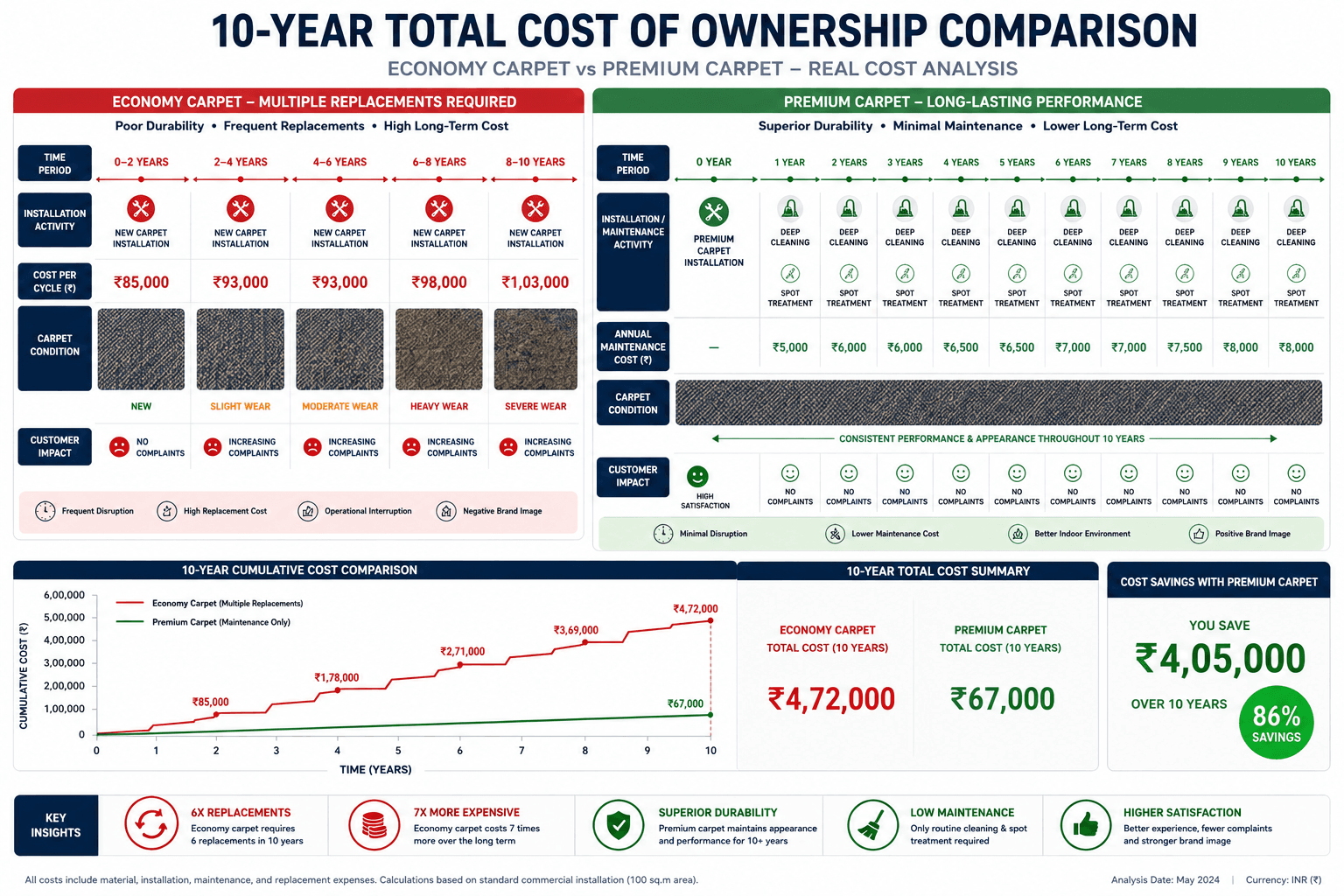
Low unit pricing can be misleading when replacement cycles are short and operational disruption is frequent.
Lifecycle modeling should include reinstall labor, downtime, disposal, and turnover impact.
Over a 10-year horizon, repeated replacement often outweighs initial purchase savings.
Hospitality assets benefit more from predictable performance than from short-term material cost reductions.
品牌影响(Brand Impact)
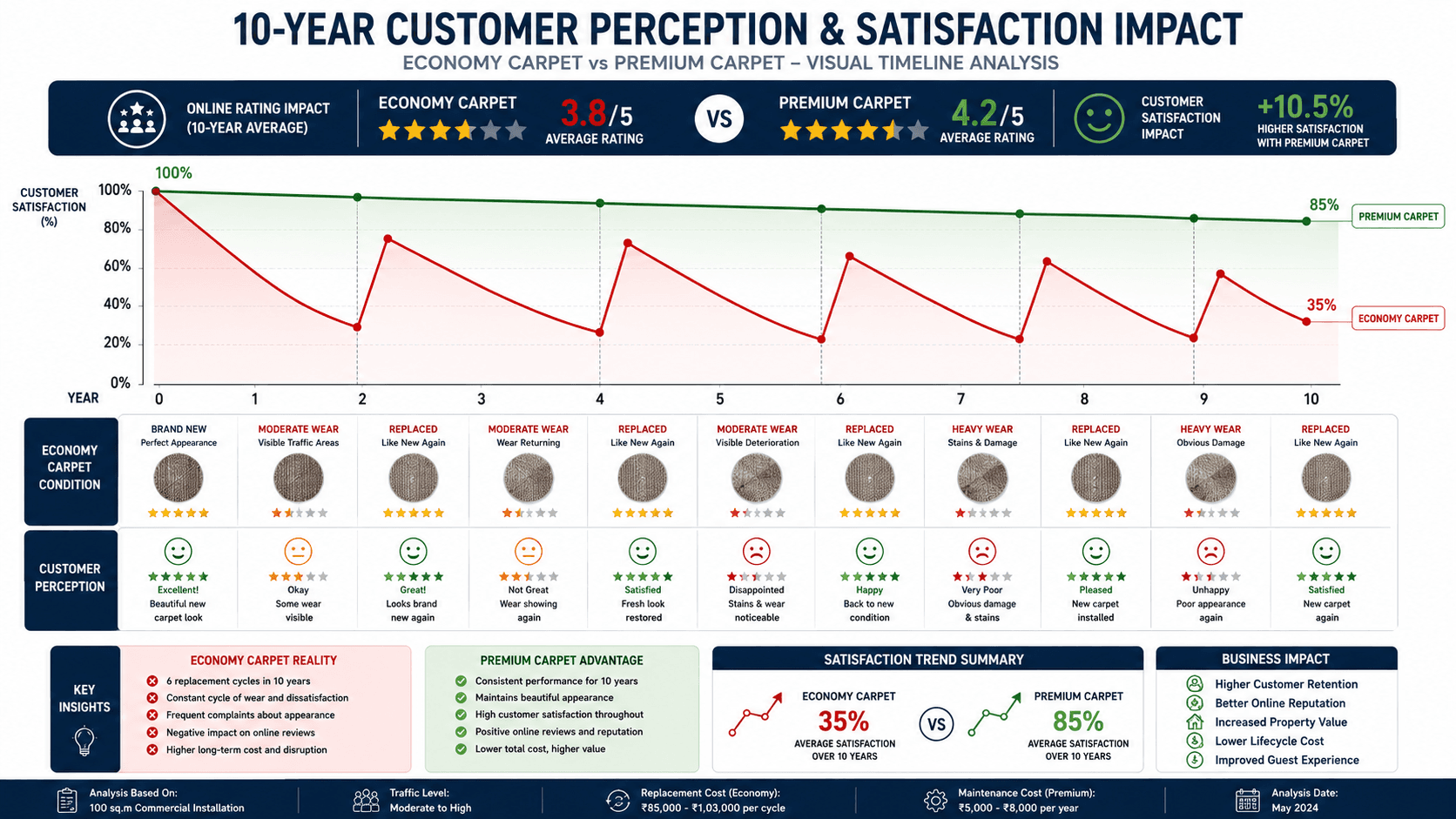
Guest-facing flooring condition directly shapes perceived quality and review sentiment.
Visible wear in lobbies and corridors can undermine premium positioning even when service standards remain high.
Carpet performance is therefore part of brand delivery—not a hidden back-of-house expense.
This link between surface condition and customer trust should be reflected in procurement criteria.
成本明细(Cost Breakdown)
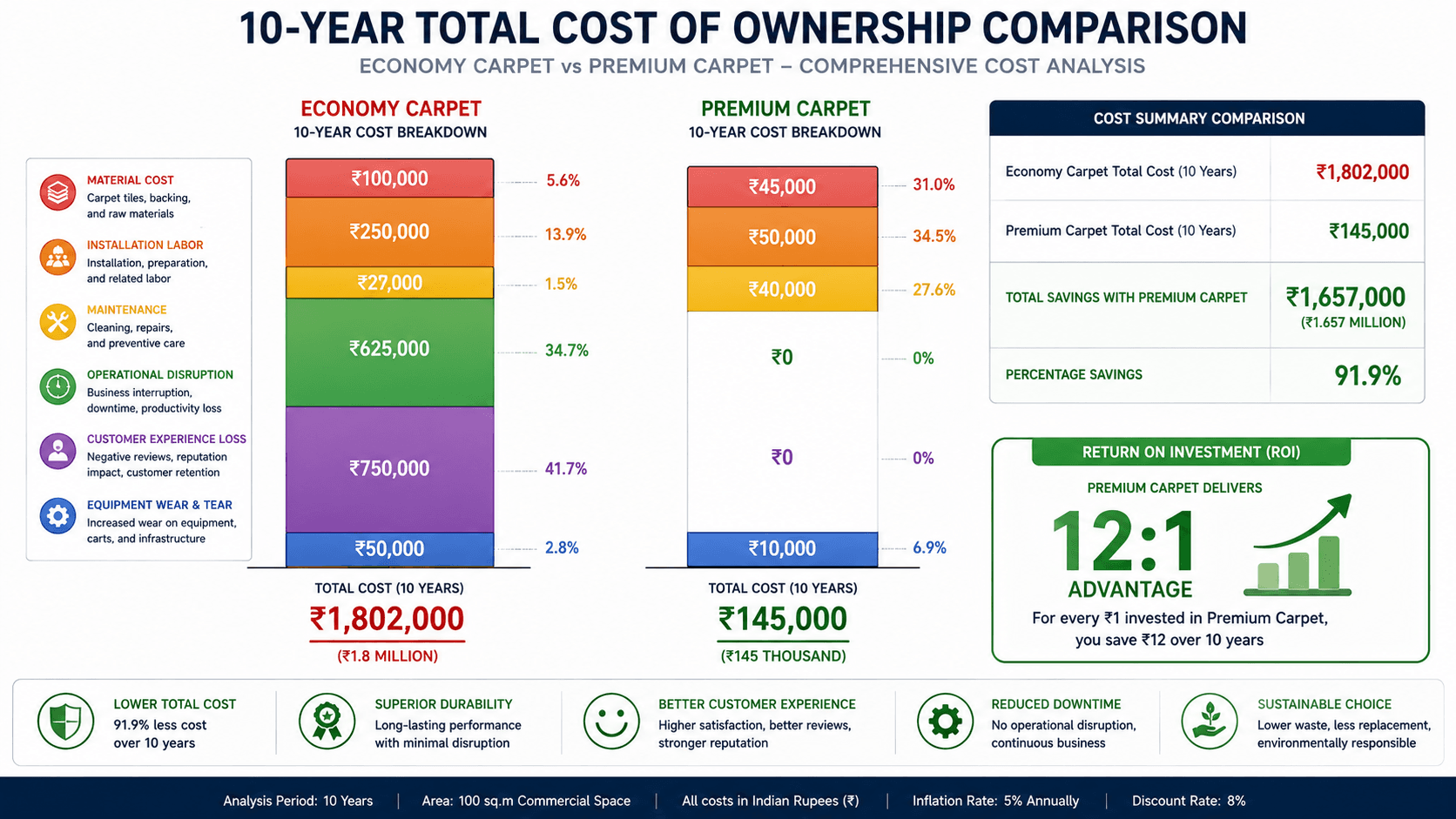
A robust cost model should combine material, labor, maintenance, disruption, customer-impact, and equipment-wear factors.
Category-level breakdown makes trade-offs visible to finance, procurement, and operations teams.
This enables more defensible tender decisions and better capex planning.
In hospitality procurement, cost transparency is often the strongest defense against low-price, high-risk options.