
Quick answer
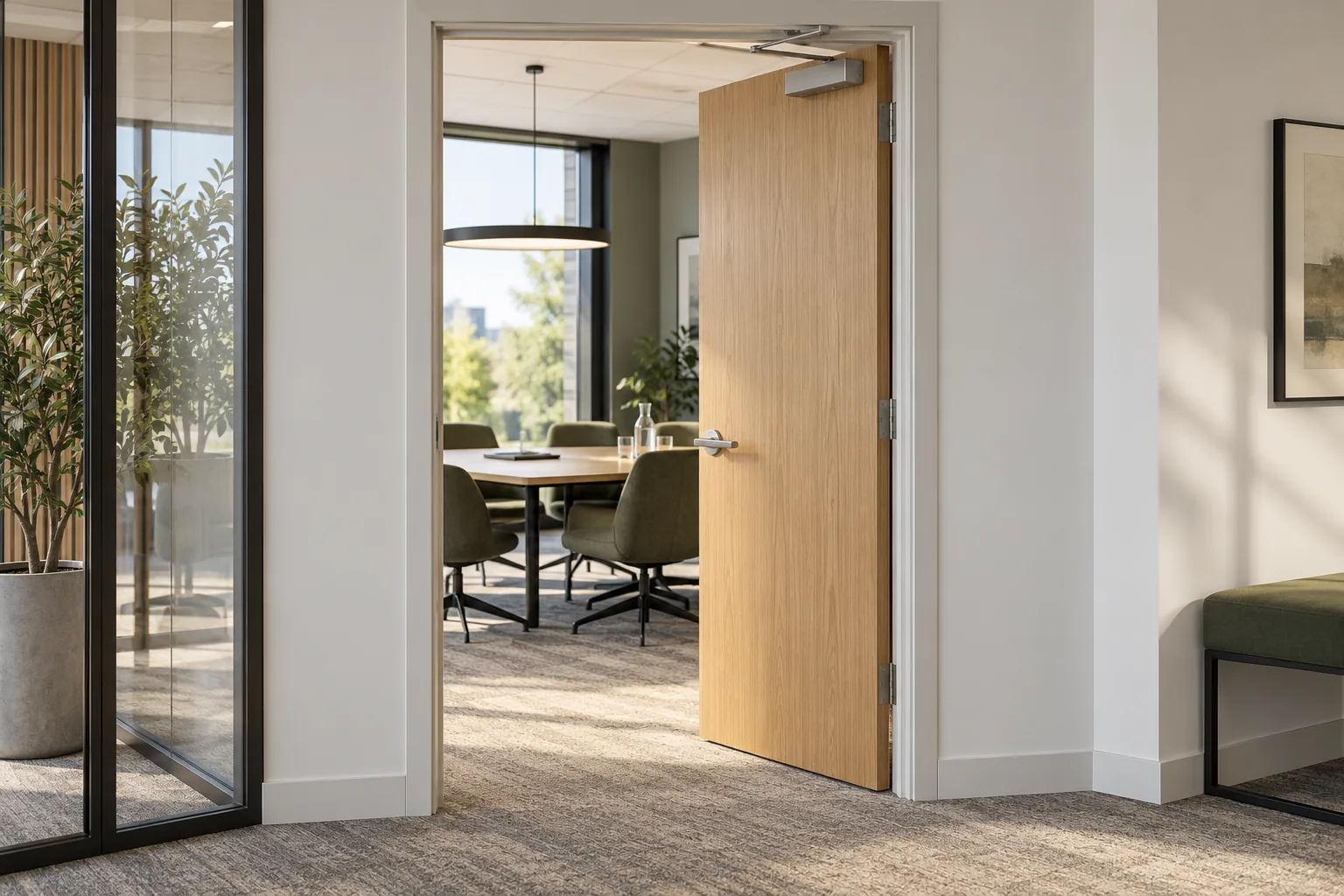
Specify the whole opening, not a stronger closer in isolation. A commercial interior door must be usable when opening, move appropriately when closing, and latch as required in its actual installed conditions. Coordinate the leaf, frame, hinges, closer, latch, seals and any access-control interface before batch release. A heavier leaf or higher closing force is not, by itself, a better door specification.
Why a door that closes can still fail the project brief
Buyers often ask whether the door closes, but that single question misses how occupants open it, whether the latch engages consistently, and what changes when the building is operating. A showroom demonstration does not settle those questions for a hotel corridor, meeting room or controlled office entrance.
In a public locksmith discussion, a contributor described persistent latching problems alongside building air-pressure concerns despite repeated closer work. The comments offered conflicting fixes. That discussion is useful as a real coordination question—not a diagnosis, specification or safe adjustment procedure for another building.
Allegion's LCN guidance explains that a closer influences both the opening and closing cycles, and that application and code requirements matter when selecting it. Procurement should therefore request the nominated configuration and review conditions, rather than a generic promise that the hardware is heavy duty.
Separate the operating questions
| Question | What the review should establish | What it does not prove |
|---|---|---|
| Opening effort | How the complete installed opening is assessed against the applicable project criteria. | A leaf material or weight alone does not establish accessible operation. |
| Closing movement | Whether the nominated assembly operates as required without unwanted impact. | A slower appearance does not automatically establish compliance. |
| Latching | Whether the latch engages under the agreed operating conditions. | A door touching its frame is not evidence that it has latched. |
| Lock or access control | Whether the scheduled release, latch and closer functions are coordinated. | A standalone hardware demonstration does not verify the installed system. |
| Building conditions | Whether ventilation, pressure-related concerns and adjoining openings require specialist review. | Changing closer force is not a universal remedy. |
What belongs in the door-set quotation
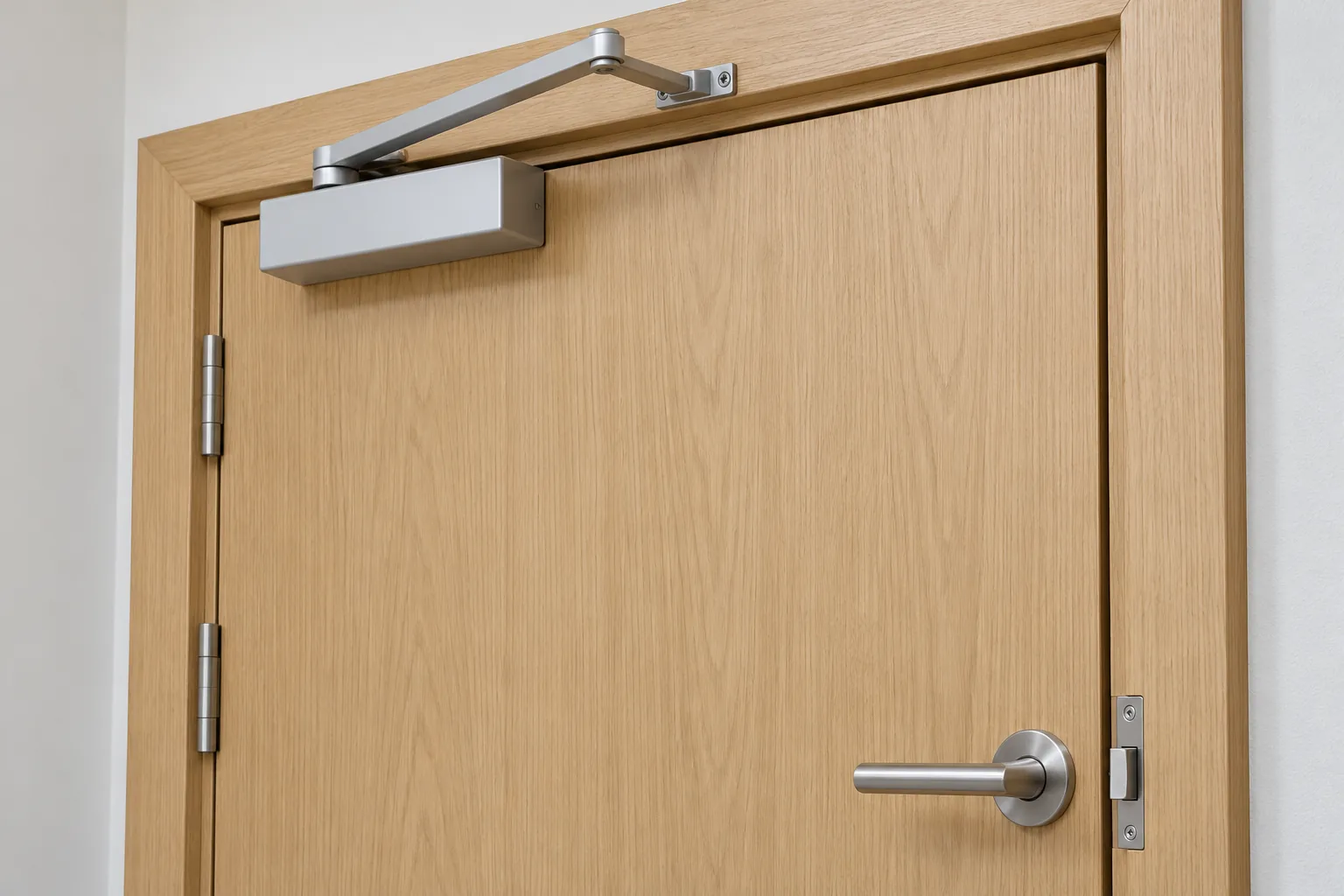
Identify each opening by door mark and room use. Give the proposed leaf dimensions and construction, frame details, handing, hinges, latch or lock function, seals, closer model and mounting arrangement. Ask who supplies each component and who confirms compatibility. If the closer is supplied locally rather than with the door, name that interface before production.
Record any fire, smoke, acoustic, security or accessibility requirement separately. A component's documentation must not be presented as proof that the entire proposed assembly meets a project requirement. Ask the responsible project professional which evidence is needed for the actual opening and jurisdiction.
Our interior door range and WPC door options are starting points for a supply discussion, not a substitute for that complete schedule. Hardware preparation should follow approved drawings for the nominated configuration; do not assume one preparation suits every closer or lock.
Define the closer supply boundary before asking for a price
Two quotations for the same interior door mark can cover different work. Give each bidder one responsibility schedule and ask for written exceptions. For every mark, name whether the door supplier, local hardware contractor or another party supplies the closer and arm, prepares the leaf and frame, installs the hardware, and verifies the completed opening. A door-only quote should not be compared with an installed, tested door-set quote as if they include the same scope.
| Decision to record | Information the buyer should send | Question to resolve before release |
|---|---|---|
| Closer and arm | Nominated model or approved functional brief, mounting side and door mark. | Who supplies each component and confirms compatibility with the leaf and frame? |
| Factory preparation | Approved hardware template, reinforcement or fixing details where applicable. | Is preparation included in the quoted door set or left to the site contractor? |
| Installation and commissioning | Site installer, governing instructions and project acceptance criteria. | Who performs and records the installed-opening review? |
| Changes after approval | Revision number, affected marks, quantity and required date. | Who approves a changed closer, lock or frame before repeated production? |
If no closer has been selected, say so in the RFQ. VISFURN can review a proposed door and preparation scope against the drawings; it cannot certify an unspecified combination or promise an installed operating result. For a project quotation, attach the schedule, drawing revision, quantities by mark, destination and target approval date.
Agree the mock-up and acceptance plan before repetition
A representative installed opening lets the relevant parties review interfaces before the same detail is repeated across a project. Agree which door mark the mock-up represents and what makes other marks different. One approved meeting-room door should not silently approve a different leaf size, lock function or rated assembly.
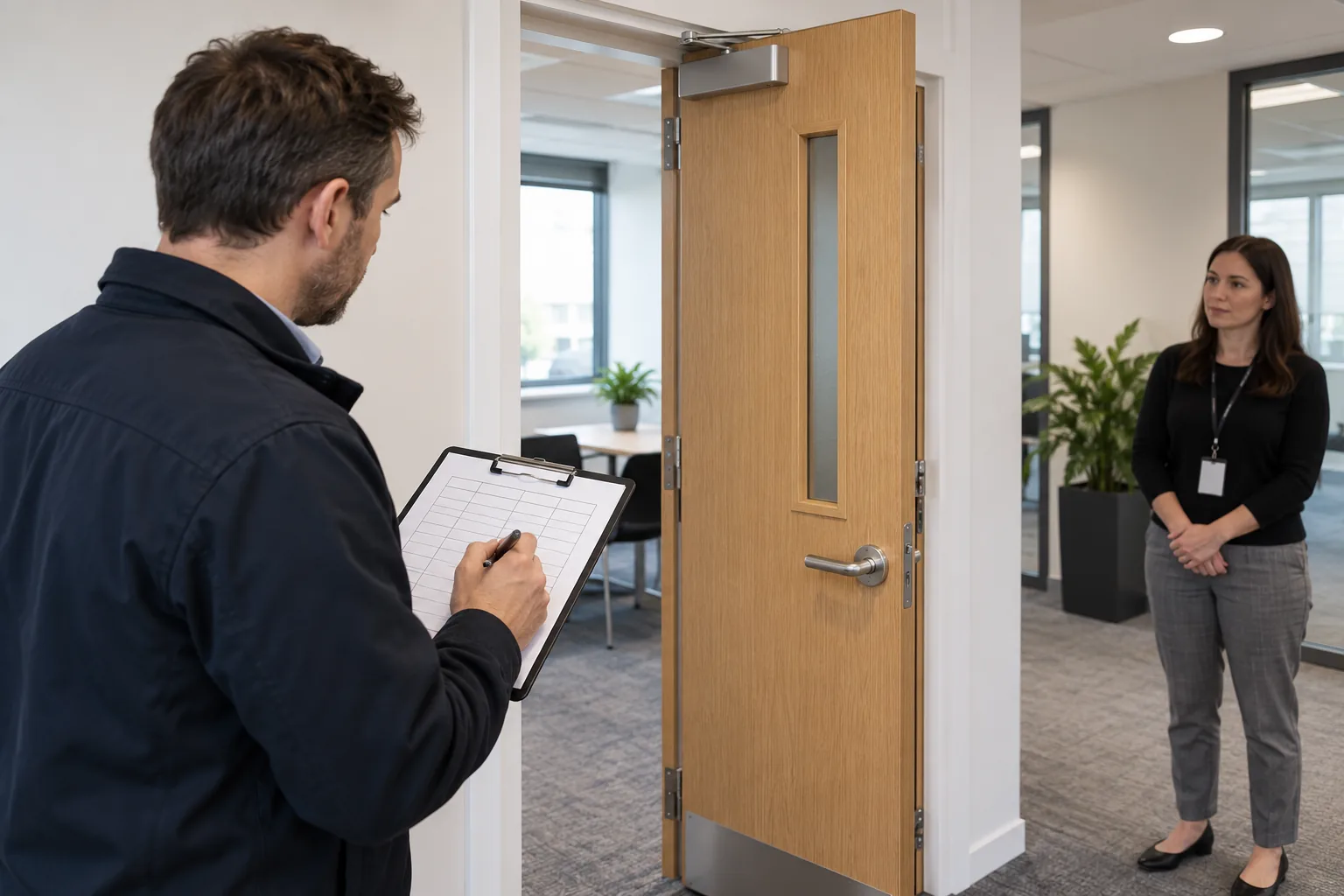
Have a qualified installer or relevant specialist carry out the assessment using the governing instructions and appropriate instruments. Record the method, actual readings where required, applicable acceptance criterion and reviewer. Do not replace measurements with a subjective note that the door feels fine.
The U.S. Access Board guide distinguishes requirements and exceptions for different door types. This illustrates why a number copied from a general article should not become a worldwide specification. The responsible local professional must identify the applicable criteria; this article supplies no universal opening-force, closing-time or pressure limit.
Record the operating conditions, not just the result
Document whether the building systems were in the intended operating state, whether relevant adjoining doors were open or closed, and whether the symptom varied with those conditions. Pressure-related concerns belong with the responsible building-services specialist as well as the door-hardware team. Do not disable ventilation or safety systems to make a door pass.
If the door rubs or binds, first route that observation through an installed-opening inspection. Our sticking and rubbing inspection checklist covers that separate problem. The present review concerns dynamic coordination once the actual assembly and site conditions are known; it is not a trimming or adjustment tutorial.
| Acceptance record field | What to retain |
|---|---|
| Opening identity | Door mark, room, floor and approved schedule revision. |
| Installed configuration | Leaf, frame, closer, hinges, latch/lock and other relevant components. |
| Review conditions | Building operating state and relevant observations, not assumed conditions. |
| Assessment | Method, readings where required, criterion and qualified reviewer. |
| Exception | Exact symptom, supporting record, responsible party and authorized next step. |
| Closeout | Reassessment result and acceptance decision after any approved correction. |
Do not trade one requirement for another
When an opening is hard to use, slams or fails to latch, do not approve an improvised closer change across the project. Ask the responsible parties to investigate the full assembly and conditions. Making opening easier must not silently remove a required closing or latching function; making latching stronger must not silently defeat the applicable usability requirement.
Fire-rated, smoke-control, egress and access-controlled openings require particular care. Follow the assembly documentation and qualified project review before any alteration. This guide does not provide valve turns, spring settings, hold-open modifications or bypass instructions.
Hand over a configuration, not just a box of manuals
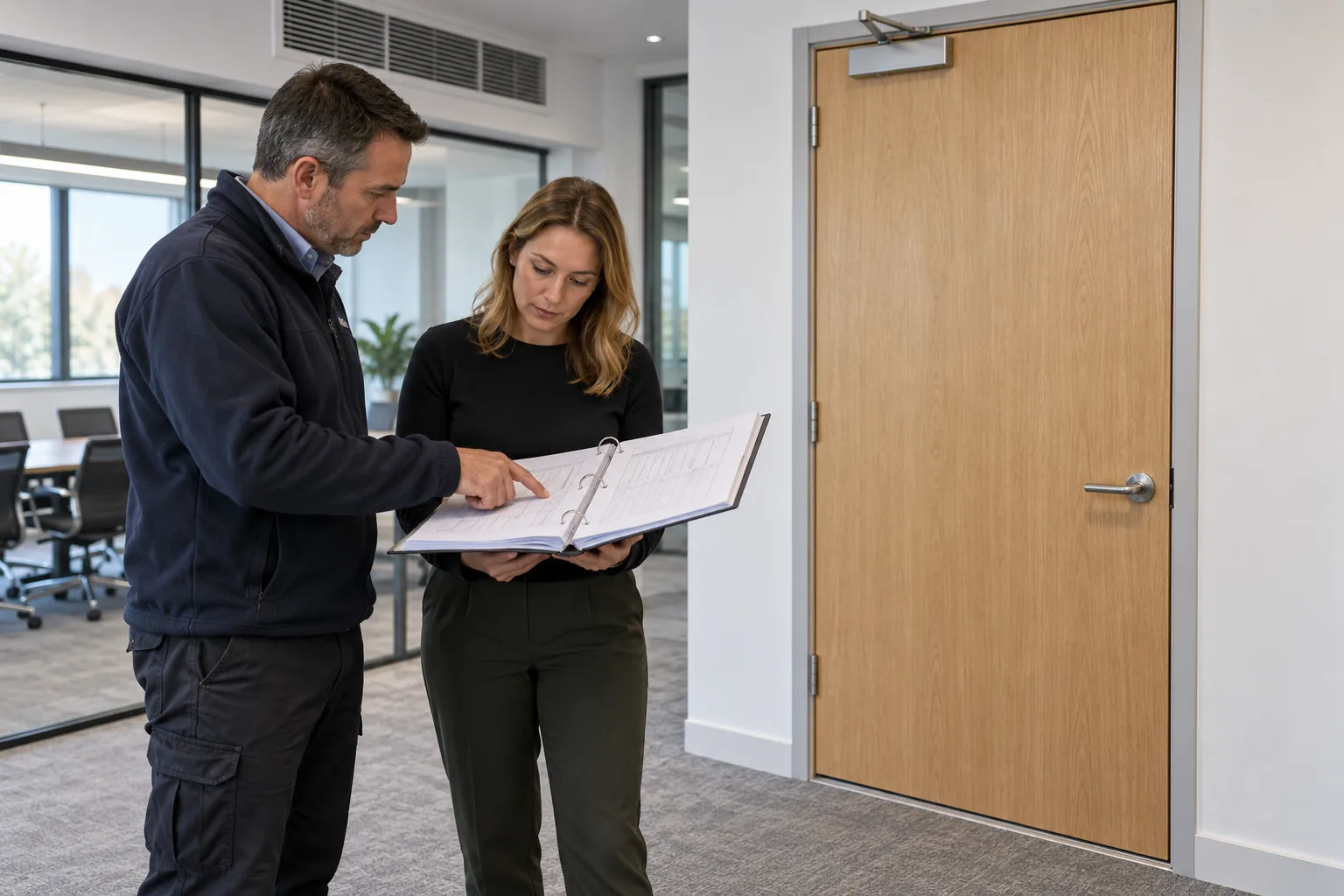
Keep the approved schedule, as-installed component identification, applicable instructions, review records, outstanding exceptions and service contacts together. Name who may authorize future adjustments. A replacement closer or changed lock function should trigger a compatibility review rather than an undocumented like-for-like assumption.
For repeat orders, retain the accepted door mark and document any changes in size, hardware, room use or building conditions. The aim is a traceable decision for each opening—not an unsupported promise that a single door design will work everywhere.
Frequently asked questions
Is a heavier door automatically a better commercial door?
No. Door mass is one input, not a quality or usability guarantee. Select and review the complete leaf, frame, hardware and operating conditions against the project requirements.
Can a stronger closer solve every latching problem?
No. The cause must be investigated across the complete opening and relevant building conditions. Do not substitute more closing force for a qualified coordination review.
What opening-force value should every project use?
There is no single worldwide value suitable for every opening. The responsible professional must identify the applicable jurisdiction, door classification and measurement criteria.
Can a factory video replace on-site acceptance?
No. A factory demonstration can document the supplied configuration but cannot reproduce every installed frame, lock interface or operating building condition. Define site acceptance separately.
Sources and how they are used
- Allegion: Back to basics — LCN door closers. Manufacturer guidance on closer functions and application considerations; not certification of a VISFURN assembly.
- U.S. Access Board: Entrances, doors and gates. U.S. accessibility context with defined scope and exceptions; not a universal international specification.
- Reddit: Adding closing pressure for a concealed closer. Public question inspiration only; commenter diagnoses and proposed fixes are not adopted here.
Build a coordinated interior door RFQ
Send the door schedule, quantities by mark, destination, leaf and frame requirements, nominated hardware and responsible project review criteria. State which components are supplied locally and which decisions remain open. VISFURN can review the proposed supply scope against that brief.
Request a door-set quotation review →