Carpet Printing Technology: From Digital Design to On-Floor Installation
How advanced printing methods create bespoke designs at competitive prices.
Pain Point Addressed
High custom design cost, unpredictable lead time, and quality inconsistency.
技术对比(Technology Comparison)
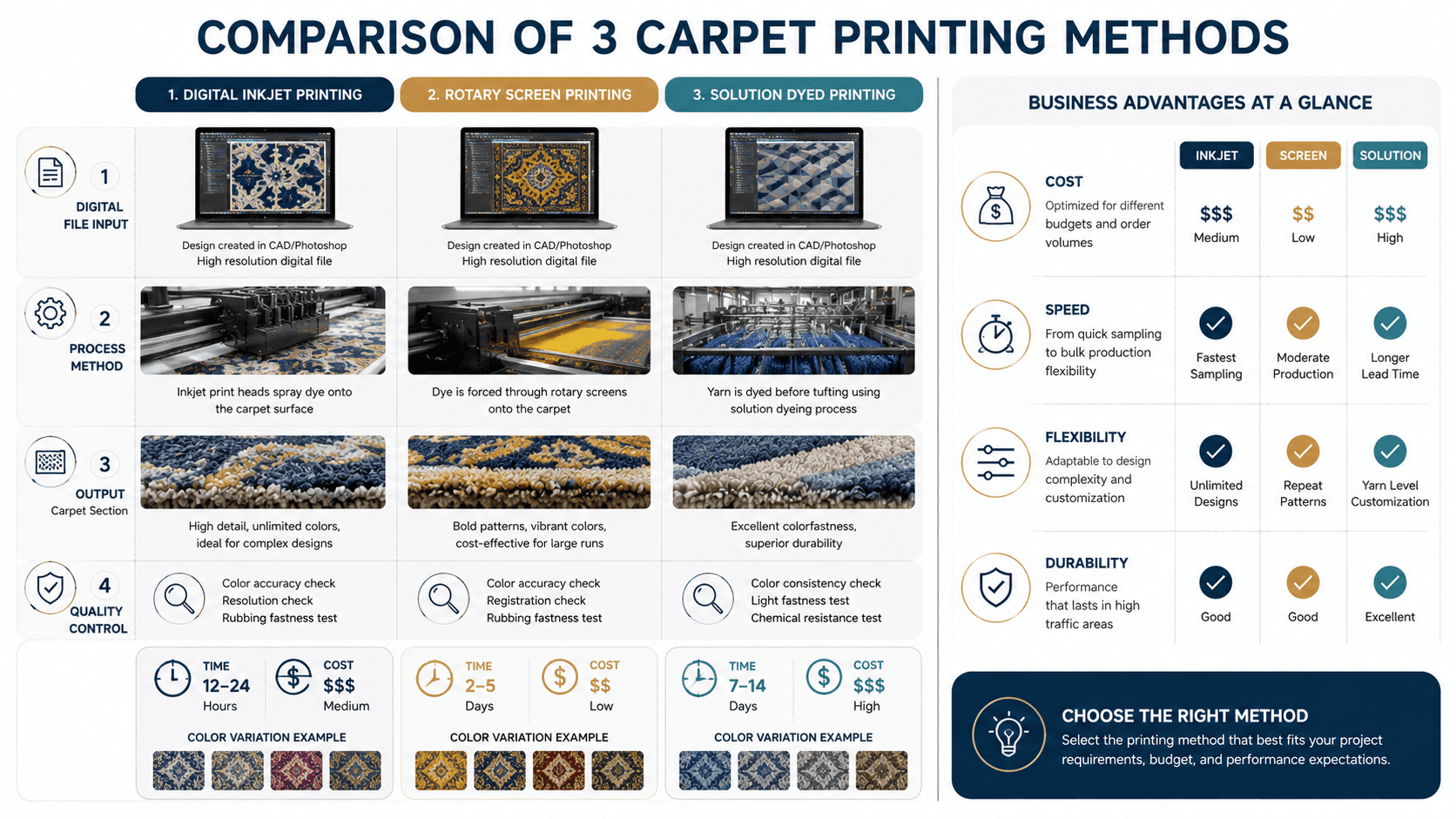
Modern digital printing has reduced entry barriers for custom carpet programs once limited to large-scale budgets.
Unlike traditional screen-based workflows, digital pipelines reduce setup friction and allow faster design iteration.
This is particularly useful for medium-volume hospitality, retail, and branded commercial interiors.
For project teams, faster revision loops significantly improve alignment between design intent and factory output.
应用示例(Application Examples)
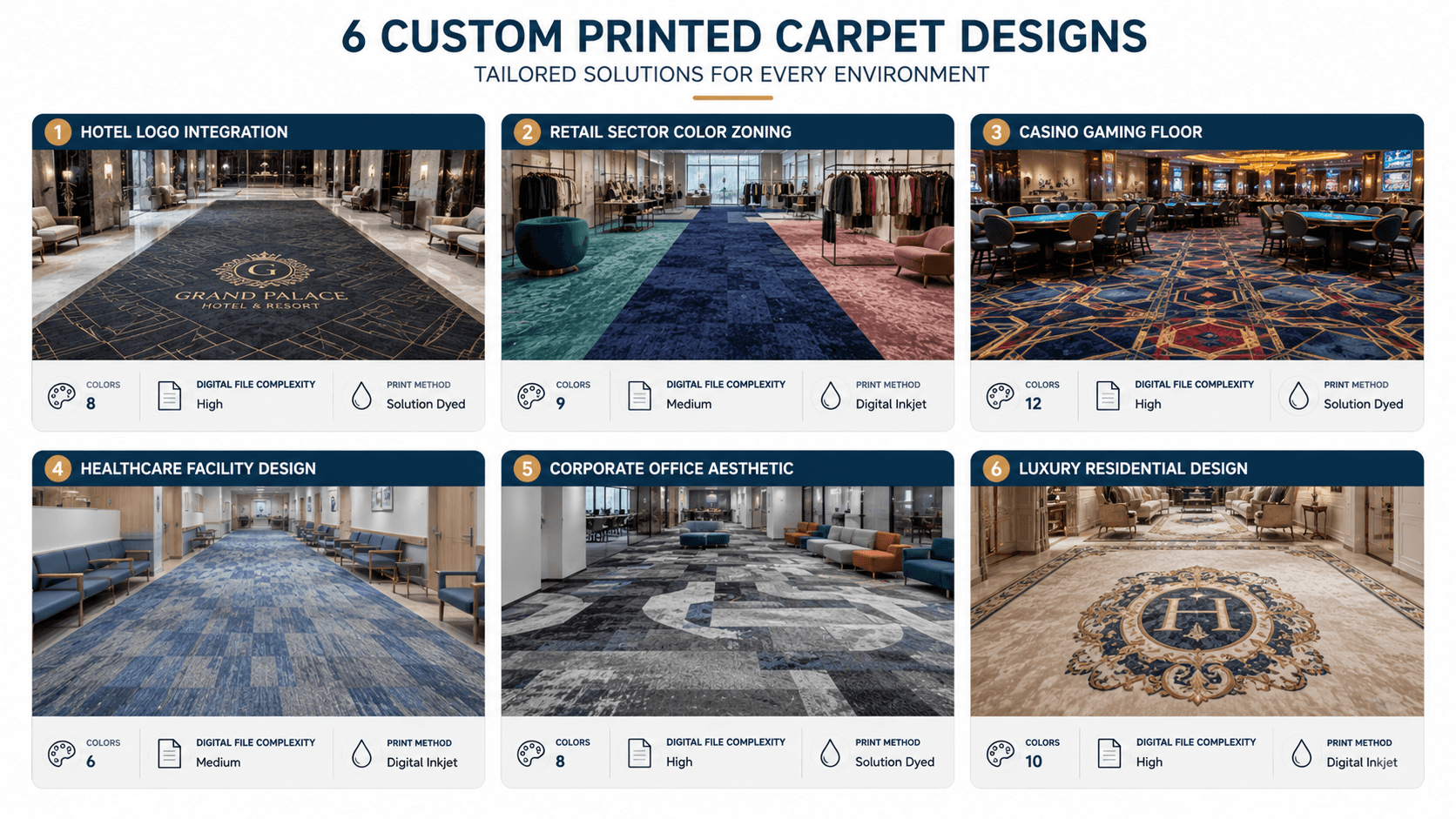
Digital print applications now span hotel branding, retail wayfinding, casino pattern systems, and themed commercial zones.
Design intent can be adapted by zone function without restarting full production tooling.
This flexibility enables stronger brand coherence across multi-space programs.
Application context—not just unit price—should determine which print route is selected.
质量控制(Quality Control)
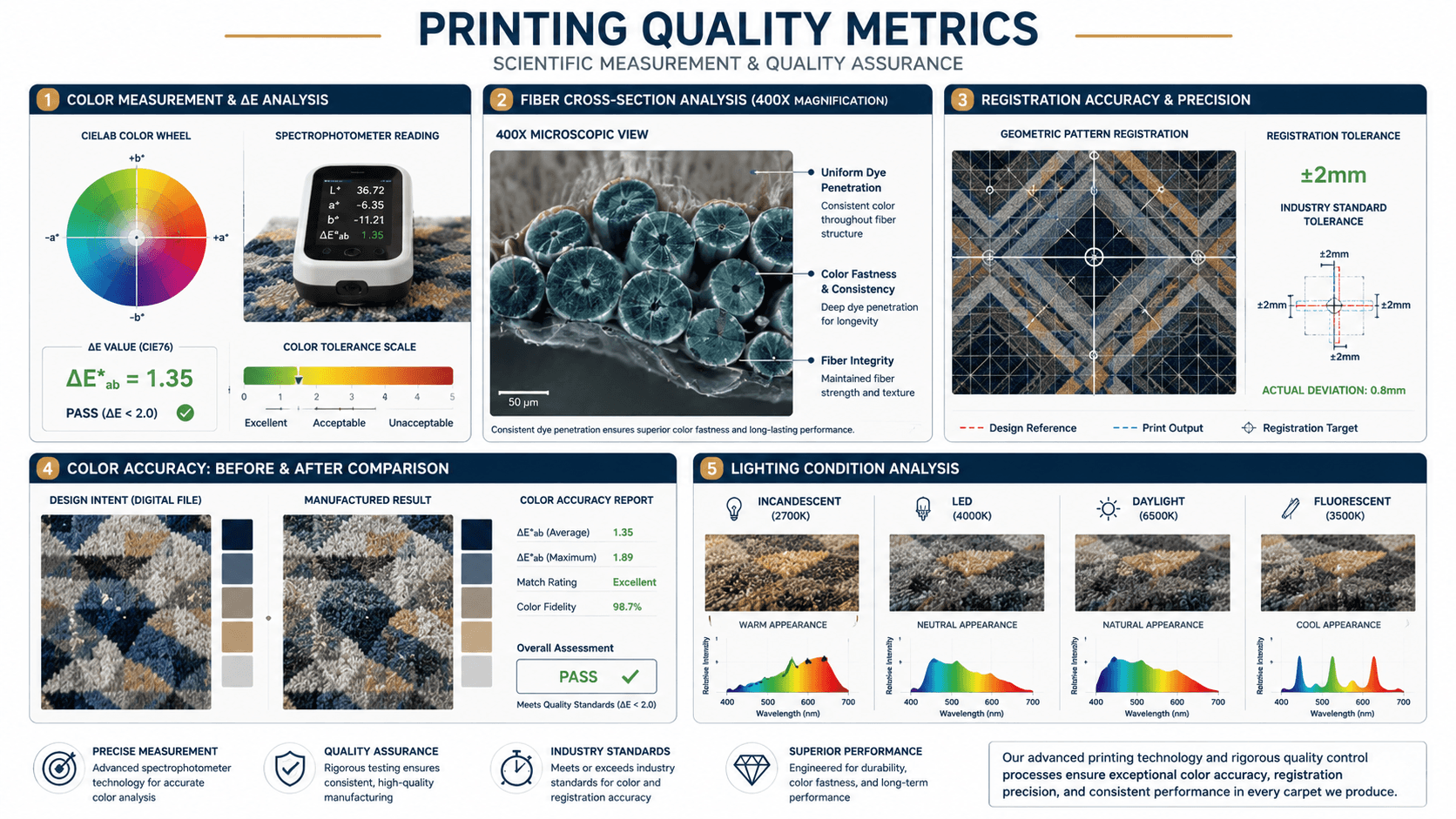
Color precision and registration tolerance must be validated before bulk production release.
QA should include spectrophotometric checks, repeat alignment control, and batch consistency verification.
Lighting-condition review is also essential to prevent on-site color mismatch disputes.
A disciplined QC protocol protects both visual consistency and downstream installation quality.